
Wheelchair Accessibility Sagrada Família
August, 2019, Updated April 2026

When visiting Barcelona, the Sagrada Família is a must for any traveller. Construction began in 1882, long before accessibility was a consideration. Fortunately, significant improvements have been made over the years. Today, wheelchair users and visitors with reduced mobility can experience this extraordinary building. In this guide, we walk you through everything you need to know: how to get there, where to find the Sagrada Família accessible entrance, what to expect inside, and how to make the most of your visit.
Quick accessibility summary
✓ Step-free accessible entrance (Carrer de la Marina, Entrance B)
✓ Lifts available inside the basilica
✓ Accessible toilet on site
✓ Wheelchairs available to borrow on site (subject to availability)
✓ Advance tickets strongly recommended
✗ Towers are not wheelchair accessible
Is Sagrada Família wheelchair accessible?
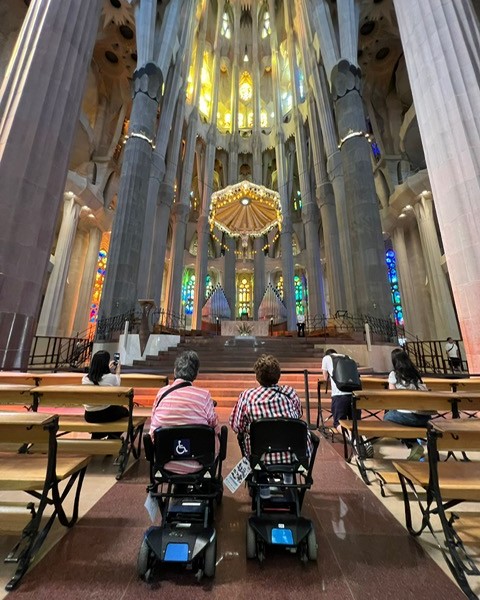
Yes. The Sagrada Família is wheelchair accessible. The main basilica and its museum are step-free, with smooth, even flooring and wide-open spaces. This makes navigating by wheelchair or mobility scooter comfortable throughout. Staff are present and happy to assist.
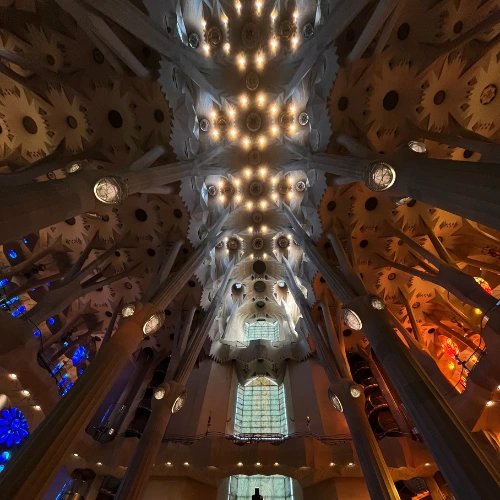
The exception is the towers. Although lifts exist inside the towers, several steps must be climbed to reach them. This makes tower access unavailable for wheelchair and scooter users. However, the interior of the basilica is where most visitors find the greatest impression: The light, the scale, the stained glass. All of this is fully accessible from the ground floor.
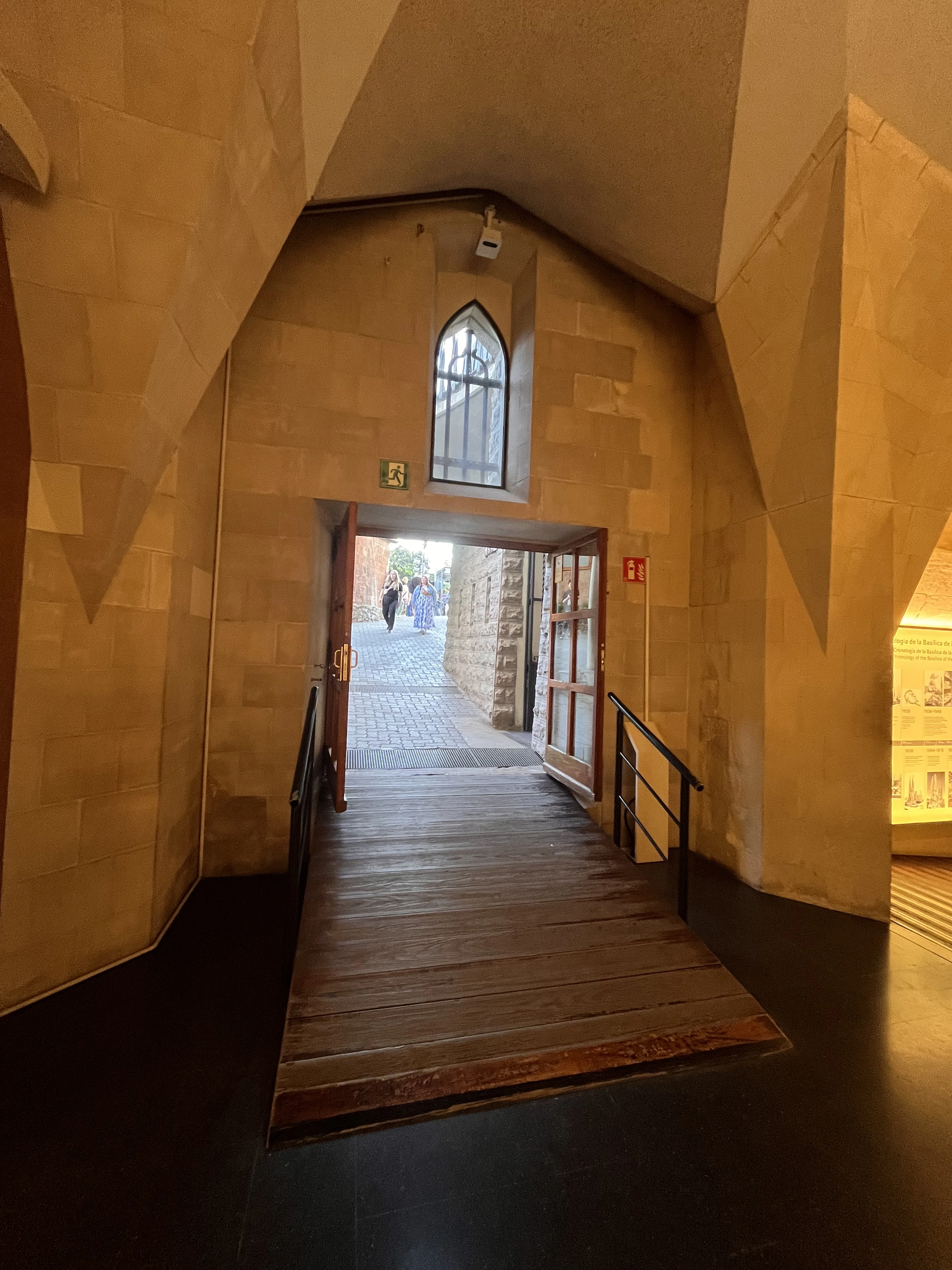
Accessibility note: the ramp leading down to the lower-level museum is quite steep. It is manageable for most electric wheelchair users. However, manual chair users may benefit from having a companion along to assist with the descent.
The history of the Sagrada Família
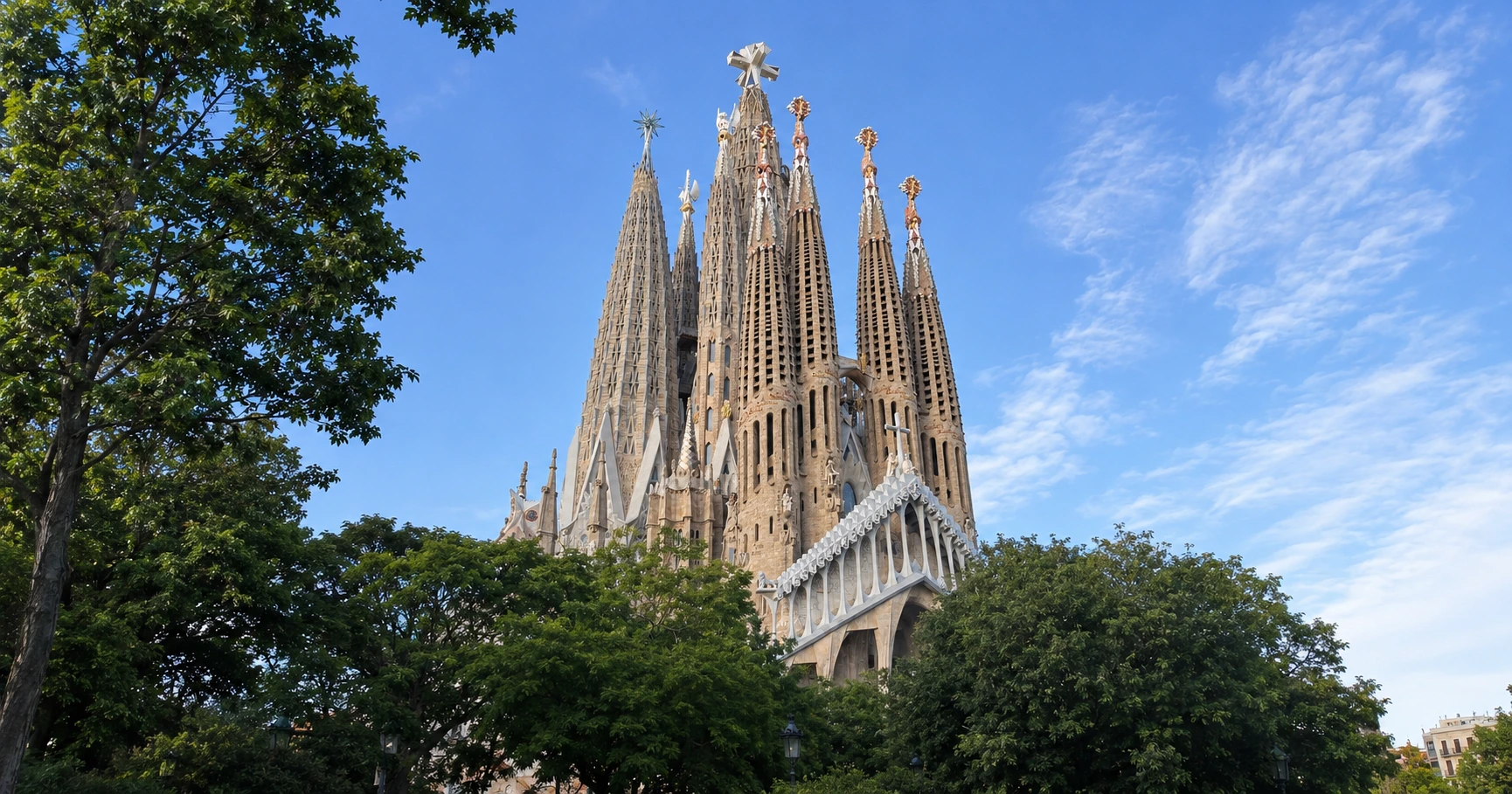
The Sagrada Família has one of the most fascinating stories of any building in the world. Construction began in 1882, when architect Francisco de Paula del Villar laid the first stone. Just one year later, the young Antoni Gaudí took over the project and transformed it into something the world had never seen before.
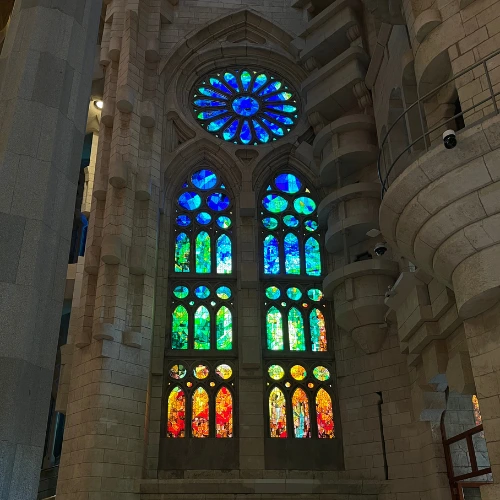
Gaudí took inspiration from nature, designing the structure to feel as alive as a real forest. Its towering columns represent trees, and the spiral staircases mimic the shells of snails. Upon entering the basilica, visitors are immediately struck by the dazzling colors streaming through the stained-glass windows.
A life dedicated to one building
Gaudí dedicated the last 43 years of his life to the basilica, eventually even moving into the building site itself. In 1926, he was hit by a tram on a Barcelona street and passed away three days later. At the time of his death, less than a quarter of the building was complete. Today, Gaudí rests in the crypt beneath the very building he gave his life to.
Construction has continued ever since, funded entirely by visitor tickets and donations, never by the government. Over 140 years after that first stone was laid, the basilica is finally nearing completion. Today, the wheelchair accessible Sagrada Família welcomes millions of visitors from around the world every year.
Accessible entrances and ticketing
Sagrada Família accessible entrance: where to enter
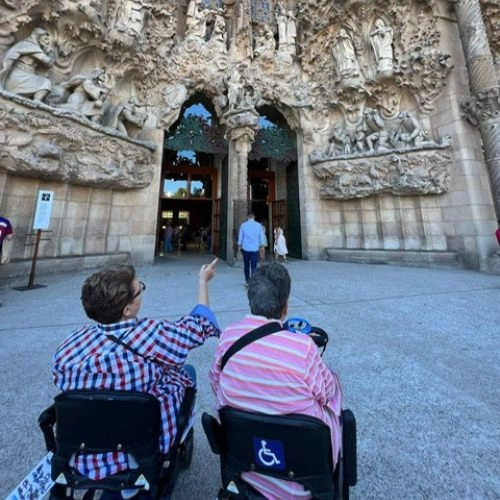
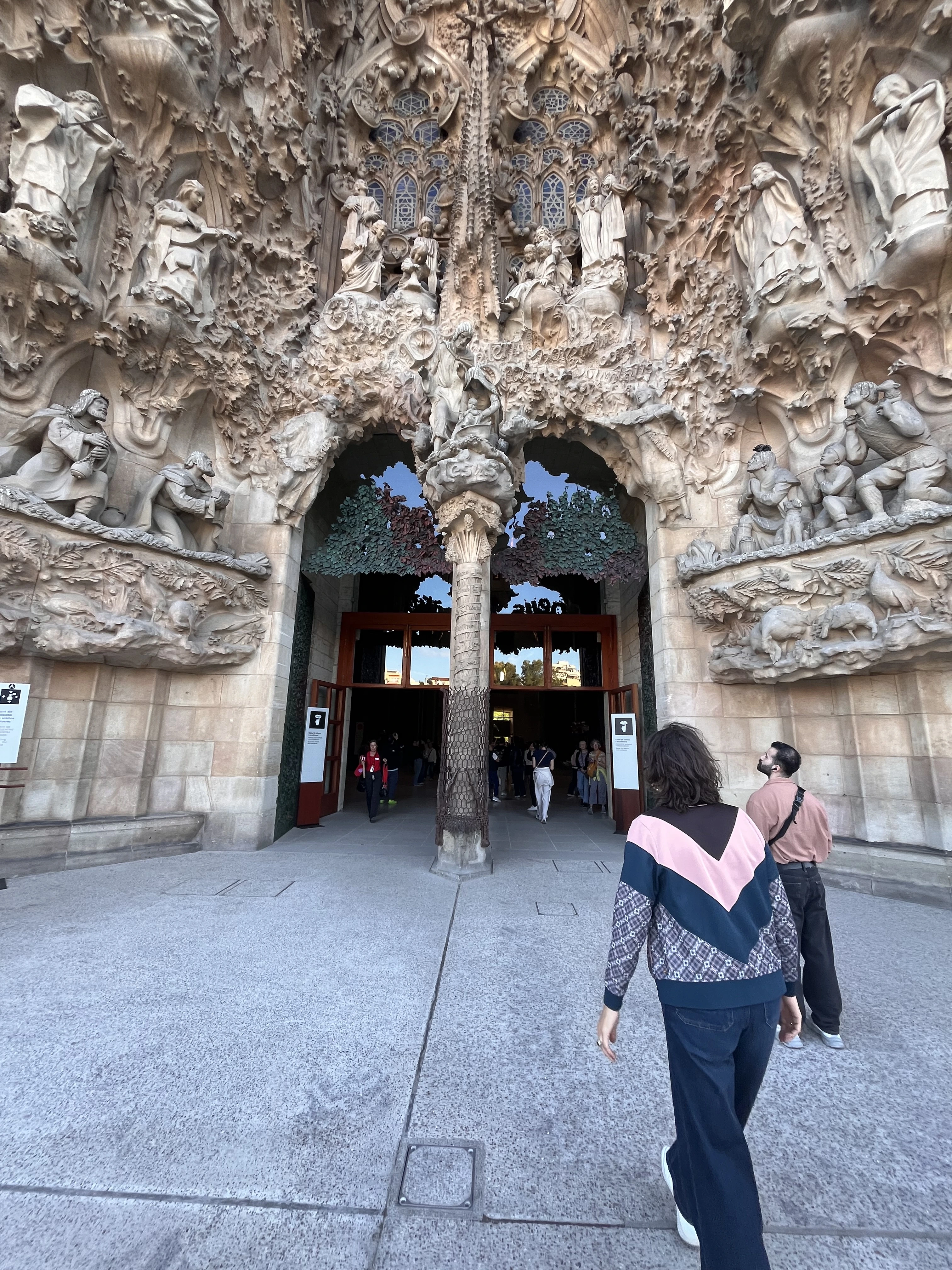
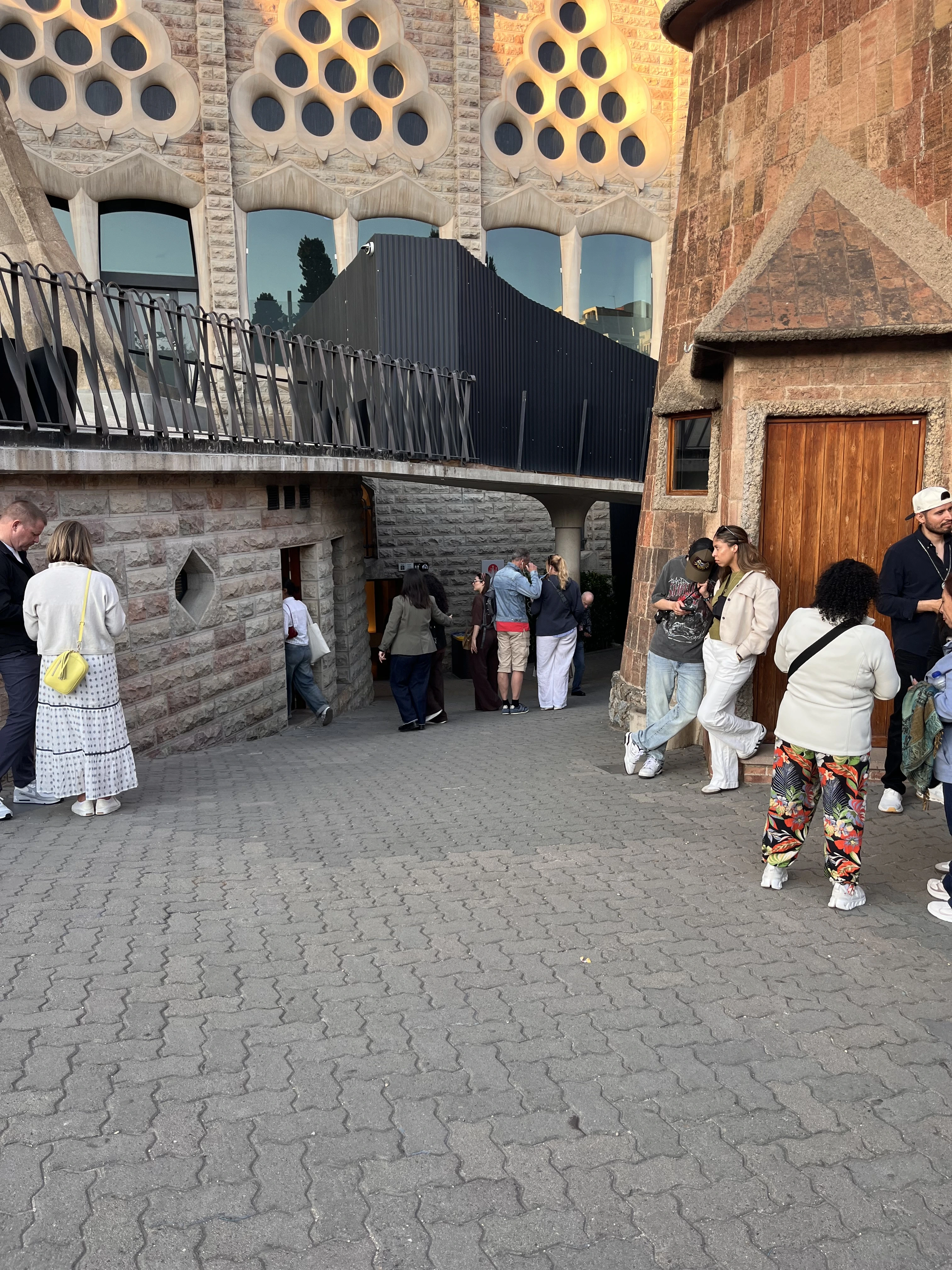
Wheelchair users and visitors with reduced mobility should use Entrance B on Carrer de la Marina, located next to the official Sagrada Família shop. Staff at this entrance will assist you past the turnstiles. You will also find the lift here that takes you up to the basilica level, bypassing the steps used by the general visitor flow.
If you use the metro, the L2 line’s elevator exit places you closer to Entrance B than the L5 exit. This is a useful detail if you are arriving by public transport.
Wheelchairs available on site
The Sagrada Família offers wheelchairs that visitors can borrow during their visit. You can request one at Entrance B on Carrer de la Marina, subject to availability. If you plan to rely on this, we recommend arriving early.
Free admission for visitors with a disability
Visitors with a certified disability of 65% or higher can enter the Sagrada Família free of charge, together with one companion. To qualify, you need to present a valid medical certificate at the entrance. This certificate must be signed by a doctor and clearly state your disability percentage. Staff will check this document on arrival, so make sure you have the original or an official printed copy with you.
The exact documents accepted depend on your country of residence. Here we have written a full blog about this disability tag, so you know exactly what to bring before your visit.
Keep in mind that the Sagrada Família requires at least one paid ticket per booking. This means that if you are traveling as a group of two, one ticket will still need to be purchased. Tickets must be booked in advance via the official Sagrada Família website. When booking, select the ‘Disabled’ tariff.
We strongly recommend booking your tickets in the high season weeks prior to your stay to ensure a visit to the impressive church.
Inside Sagrada Família: lifts and routes
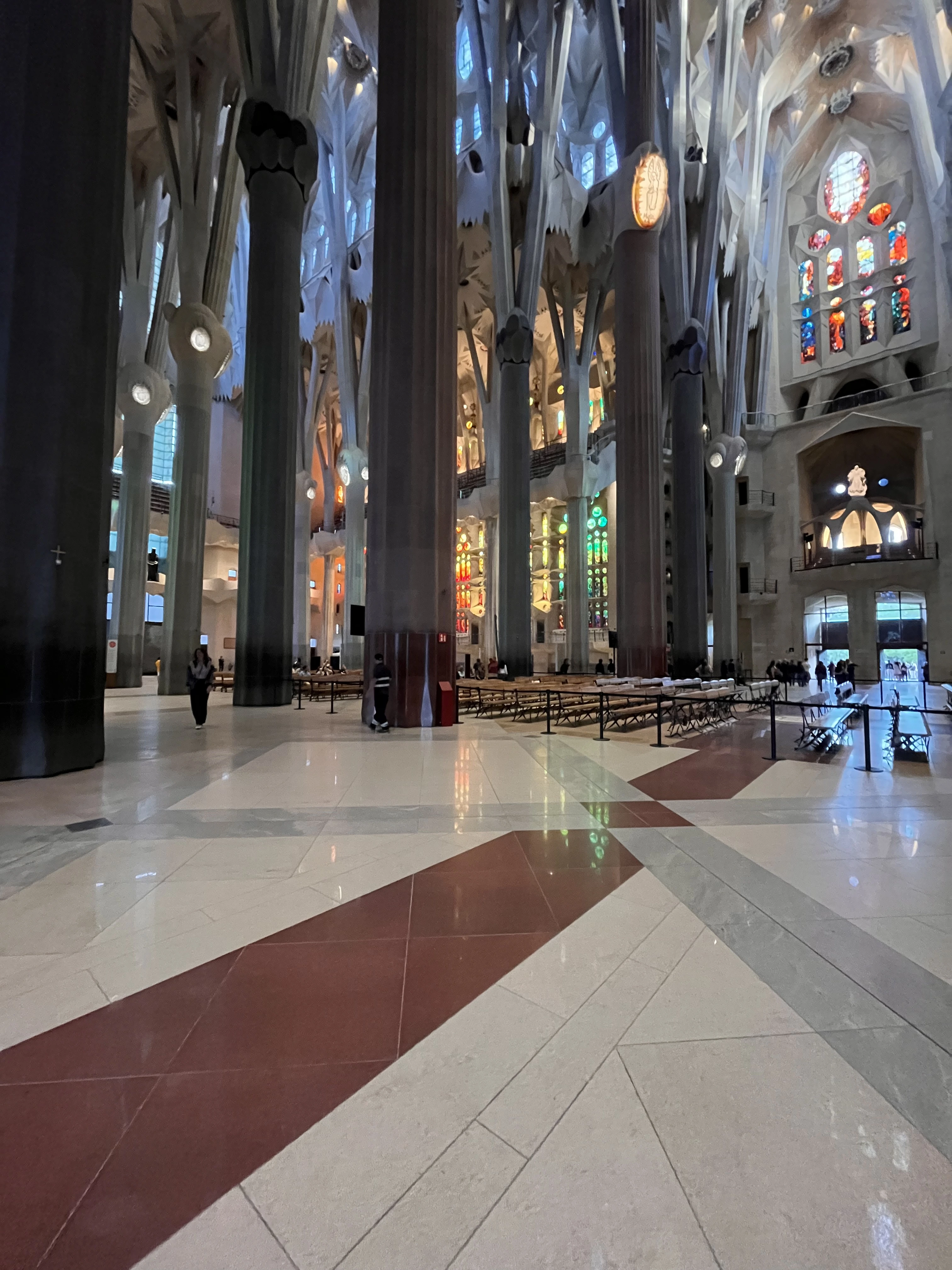
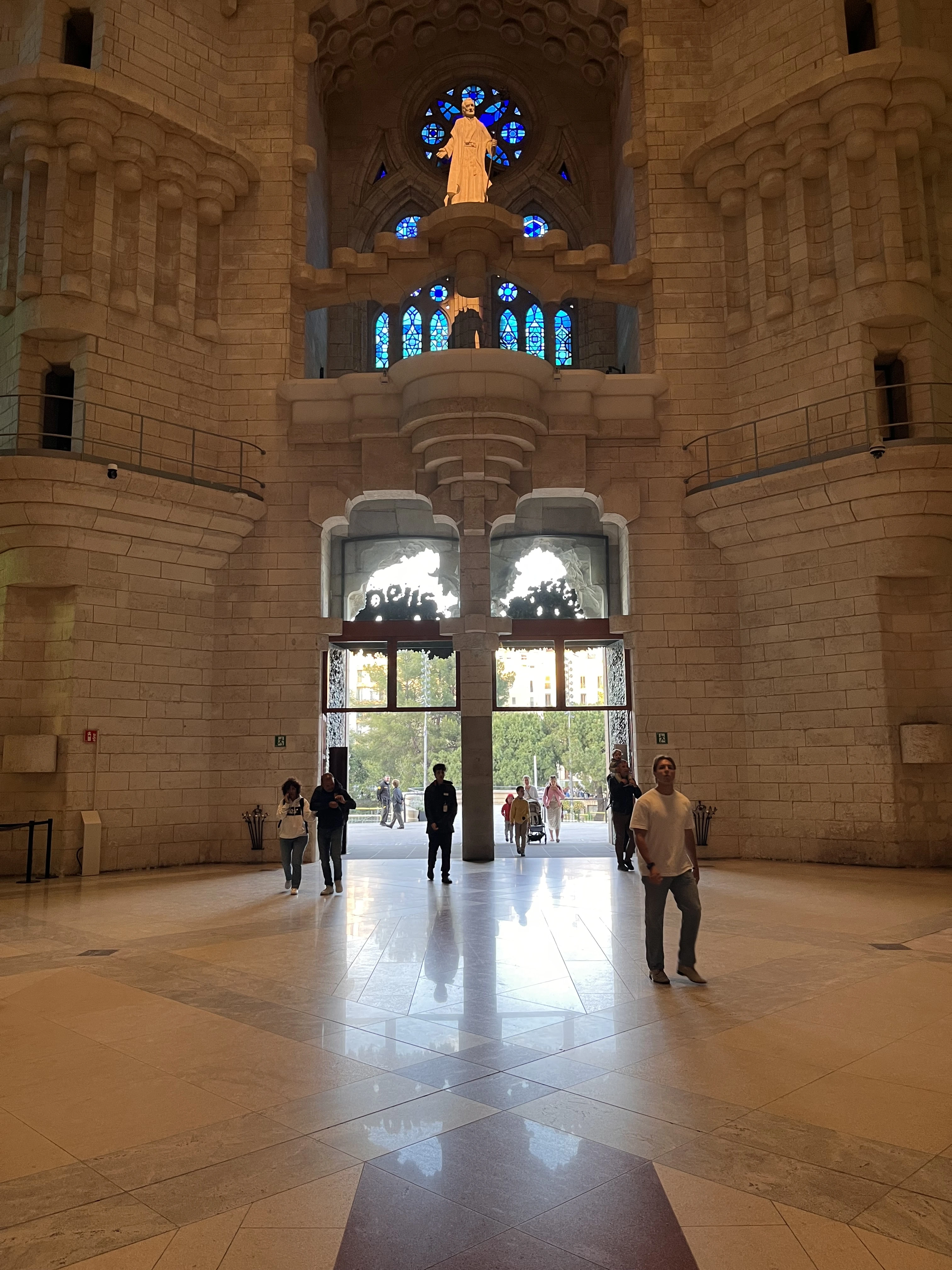
Throughout the inside of the cathedral, the ground level is entirely step-free and flooring is smooth and even. Circulation spaces are wide enough for wheelchair users and scooter users to move comfortably. Overall, the wheelchair accessible Sagrada Família offers a genuinely inclusive experience at ground level.
The lift inside the building goes up to the towers. However, as mentioned above, reaching the lift requires climbing a few stairs first. This makes tower access unavailable for wheelchair and scooter users.
After exploring the nave, you can access the lower-level museum via a ramp. The ramp is steep in sections. Therefore, manual wheelchair users are advised to bring a companion who can assist with the descent and return climb. The museum covers the history of the building’s construction and is well worth the visit.
Accessible toilets
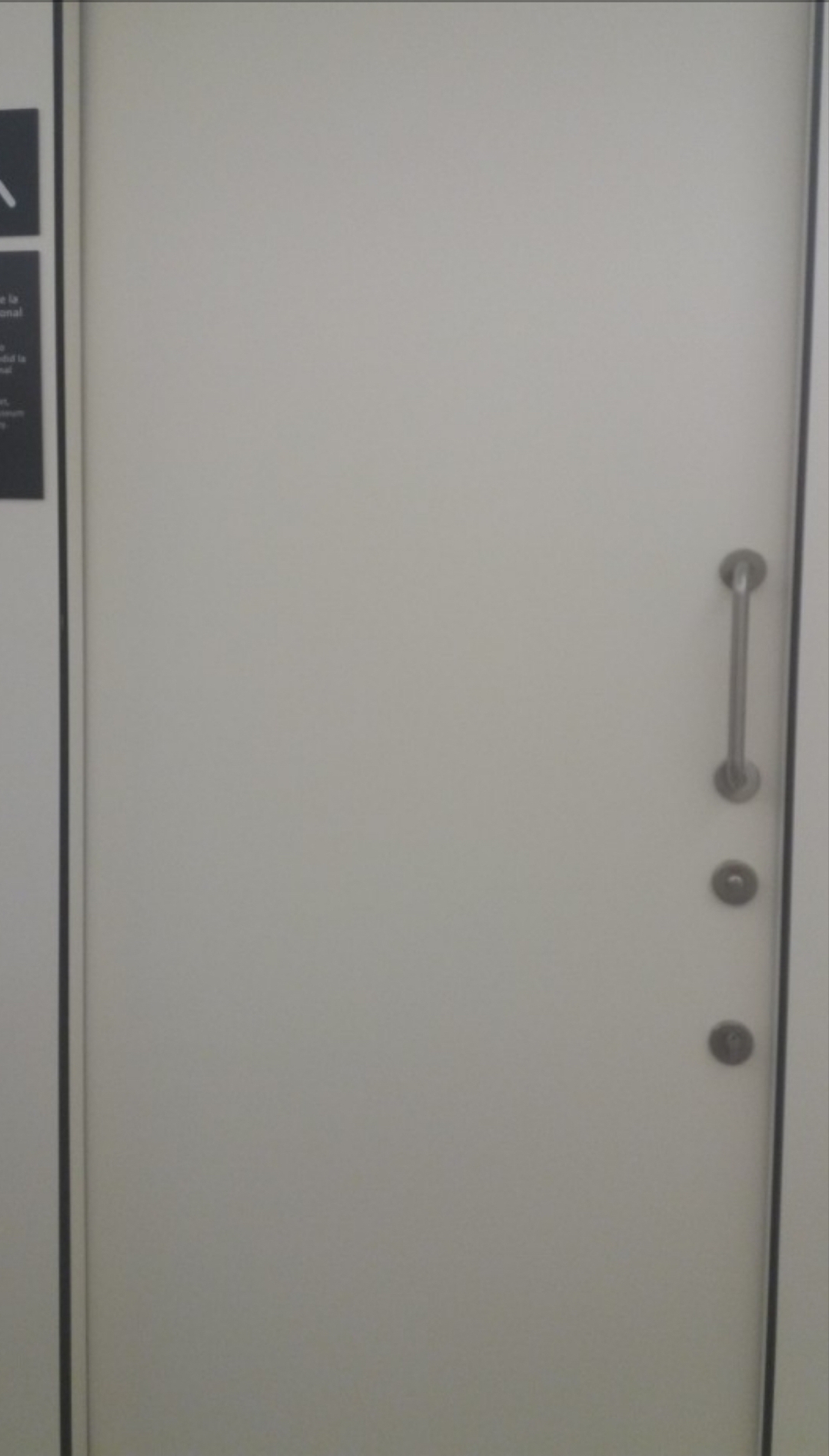
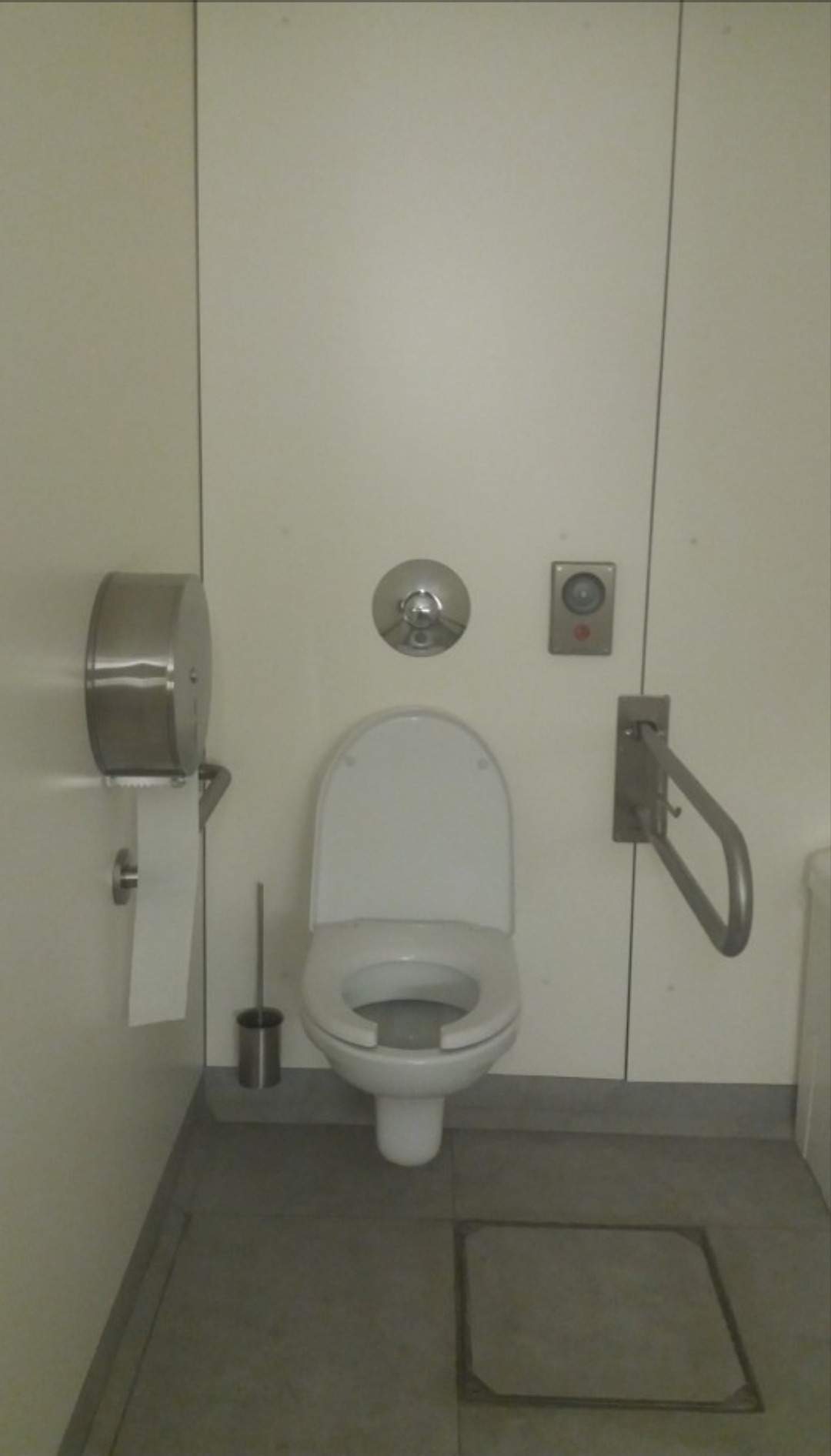
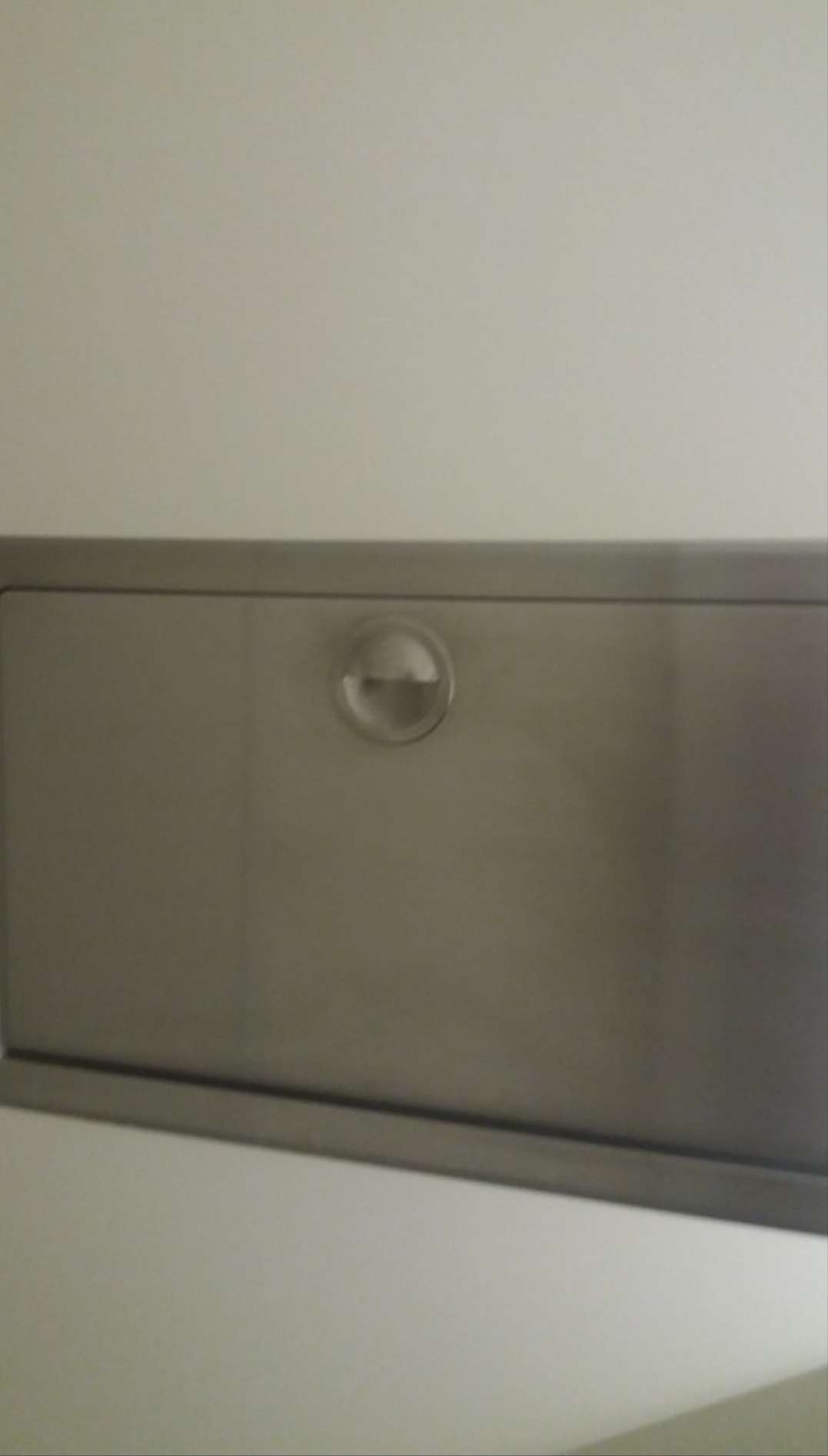
An accessible restroom is available inside the basilica, marked with clear signage. However, the doorway is on the narrow side. This may be a challenge for larger power wheelchairs. If you are unsure whether your chair will fit, ask a staff member on arrival. They will be able to advise you.
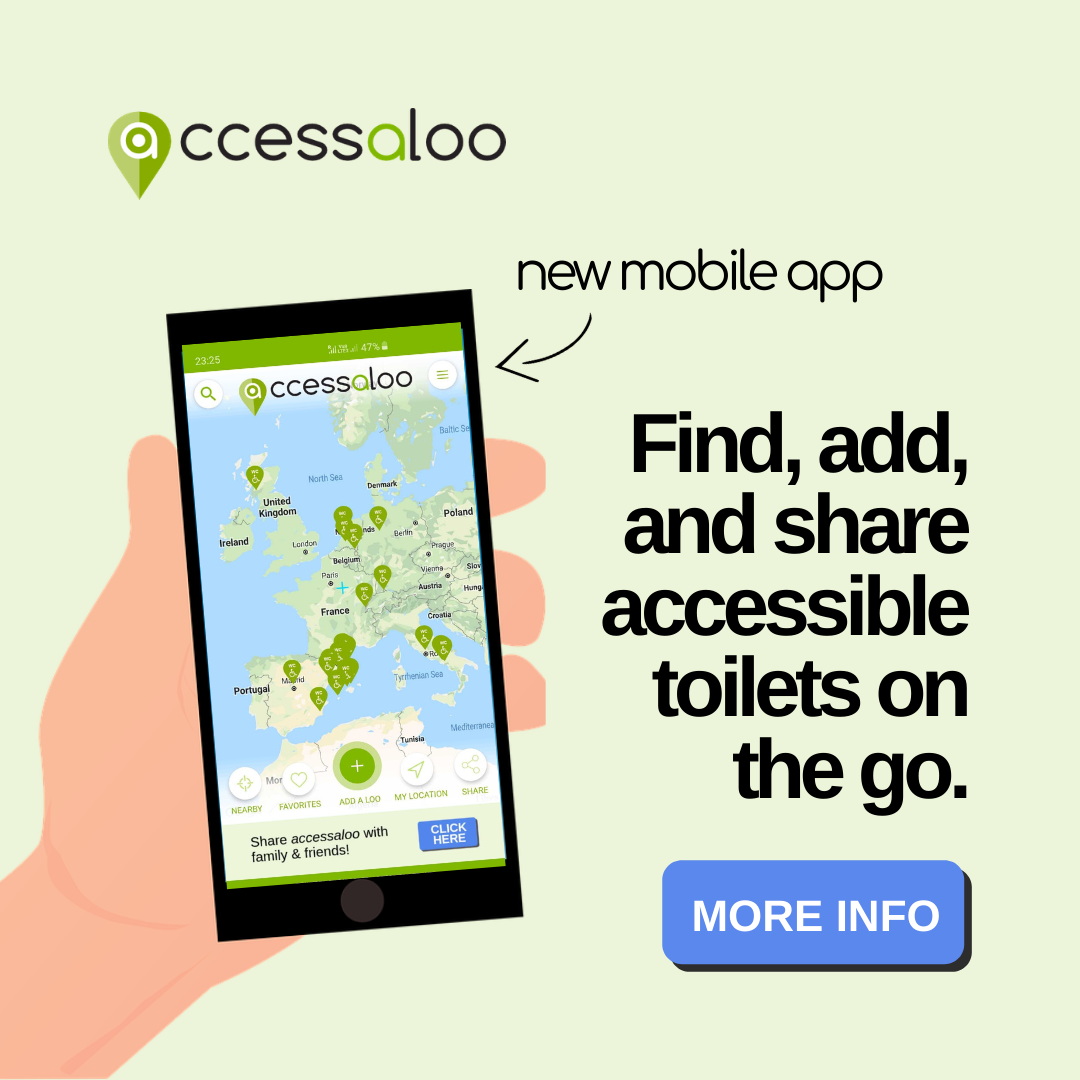
For finding accessible toilets elsewhere in Barcelona, we recommend downloading Accessaloo. It is a user-generated app that helps travelers find, review, and share accessible toilet locations in Europe. Available for free on the App Store and Google Play.
Accessibility considerations
Practical notes to help you plan your visit:
Quiet hour. From February 2026, the basilica introduced a dedicated quiet hour from 9:00 to 10:00 AM. During this time, visitors keep noise to a minimum and use earphones for audio content. For visitors who find sensory overstimulation challenging, this is a particularly good time to visit.
Lighting and floor reflections. The interior is famous for its extraordinary play of light and color through the stained-glass windows. The flooring is highly polished and reflective, which is visually spectacular but can occasionally be disorienting. If glare is a concern for you, this is worth knowing in advance.
Museum ramp. The ramp down to the crypt museum is noticeably steep. Manual wheelchair users might need a companion to manage this comfortably. See two pictures below for the ramp to the museum.
Staff assistance. Staff at Entrance B are experienced in welcoming visitors with reduced mobility. Do not hesitate to ask for guidance on routes, lift access, or any specific needs. They are genuinely helpful and well-practiced.
Waiting at the entrance. Even with tickets purchased in advance, there may be a wait at the accessible entrance. This is generally shorter than the main visitor queue.
Visiting tips for wheelchair users
- Book your tickets well in advance, ideally weeks ahead during high season.
- Arrive by adapted transport or taxi to avoid crowded public transport.
- If you take the metro, use the L2 line. Its elevator exit puts you closest to Entrance B on Carrer de la Marina.
- Allow extra time at the accessible entrance, especially during peak season.
- Ask staff at Entrance B about wheelchair availability if you need to borrow one.
- Have your disability documentation ready if you are claiming free entry.
How to get to the Sagrada Família with a wheelchiar
Fortunately, there are several accessible ways to reach the wheelchair accessible Sagrada Família.
Metro: The Sagrada Família metro station is served by lines 2 (purple) and 5 (blue). Both lines are wheelchair accessible with lifts to street level. As noted above, the L2 elevator exit places you closest to Entrance B on Carrer de la Marina. For full details on the metro’s accessibility, see our dedicated guide to Barcelona’s accessible metro.
Bus: All buses in Barcelona are accessible, equipped with ramps and designated spaces for wheelchair users and scooters.
Private transfer: For the most comfortable option, an adapted vehicle takes you door-to-door. This removes the need to navigate public transport entirely.
Guided accessible tour option
If you want to explore the wheelchair accessible Sagrada Família without worrying about logistics, an accessible private tour is the most relaxed option. Our wheelchair accessible Gaudí tour includes door-to-door adapted transport, a private licensed guide, and timed skip-the-line entry. It also covers other Gaudí highlights across Barcelona.
Alternatively, our full and half-day accessible Barcelona city tours combine the Sagrada Família with the city’s other major sights, with adapted transport included throughout.
To see all available accessible tours in Barcelona, visit our wheelchair accessible Barcelona page.
A note on the 2026 construction milestone
If you are visiting in 2026, you are arriving at a historic moment. On 20 February 2026, 100 years after Gaudí’s death, the cross atop the Tower of Jesus Christ was installed. This completed the exterior works of the basilica’s tallest tower and made it the tallest church in the world at 172.5 meters. A formal ceremony is planned for 10 June 2026 during which Pope Leo XIV will bless the tower.
Construction on the building as a whole is ongoing. Interior works on the tower continue in 2027 and 2028. The final façades and decorative details are expected to be completed around 2034 and 2035. For visitors, this means the site continues to evolve, but the basilica itself is fully open and more spectacular than ever.
Is Sagrada Família wheelchair accessible?
Yes. The Sagrada Família is wheelchair accessible at ground level, with smooth floors, wide spaces, and a step-free entrance at Entrance B on Carrer de la Marina. The towers are the exception. They are not accessible for wheelchair users due to stairs leading to the tower lifts.
Can you reach the towers of the Sagrada Família with a wheelchair or scooter?
Unfortunately not. Although lifts exist inside the towers, reaching them requires climbing a set of stairs first. This makes the towers inaccessible for wheelchair users. The ground-level areas of the basilica do not require lifts to navigate.
Do wheelchair users skip the queue?
Wheelchair users and visitors with reduced mobility enter through Entrance B on Carrer de la Marina, rather than the main visitor entrance. The wait here is typically shorter than the general queue. That said, booking tickets in advance is still essential.
Are accessible toilets available?
Yes. An accessible restroom is available inside the basilica. The doorway is somewhat narrow, which may present challenges for larger power wheelchairs. If in doubt, check with staff on arrival.
Can I borrow a wheelchair at the Sagrada Família?
Yes. The basilica provides wheelchairs that visitors can borrow at Entrance B on Carrer de la Marina.
Is the Sagrada Família suitable for visitors using a mobility scooter?
Yes. Scooter users can access the basilica through Entrance B and navigate the ground-level areas of the interior. Note that the museum ramp is steep, so it is worth checking whether your scooter handles inclines comfortably before attempting it.
What is the best time to visit with reduced mobility?
Early weekday mornings outside the peak summer season are the least crowded. Furthermore, from February 2026, a quiet hour runs from 9:00 to 10:00 AM, making this a calm and pleasant time to visit.
EXPLORE MORE