

Disability Discounts in Europe: Documentation, Eligibility & How It Works
April, 2026

When you are planning your holiday in Europe, many tourist attractions offer a discount or free entry for visitors with disabilities. The policy of every site is different, which can be confusing. Having the right documentation, such as a disabled parking tag or an official document from your doctor, can allow you to take full advantage of the benefits available.
In this blog, you can read everything you need to know about the documentation you need in Europe to receive free entry or discounts at tourist attractions. This way, you can focus on enjoying your holiday without worrying about missing out.
Discounts and Free Entry
Many tourist attractions in Europe offer benefits for visitors with a disability. By showing disability documentation, you may receive a discount or free entry. However, this varies for every site, and although many attractions offer these types of benefits, some don’t.
When they are available, benefits can include things such as:
- Free entry or discounts for the person with a disability
- Free entry or discounts for a companion
- Priority access to skip lines
The specific benefits are different for each site, so it is a good idea to check the accessibility and disability policies of each site before you visit. This way you can know what support or discounts are available, and what kind of proof you might need to bring.
What is a Disability Tag?
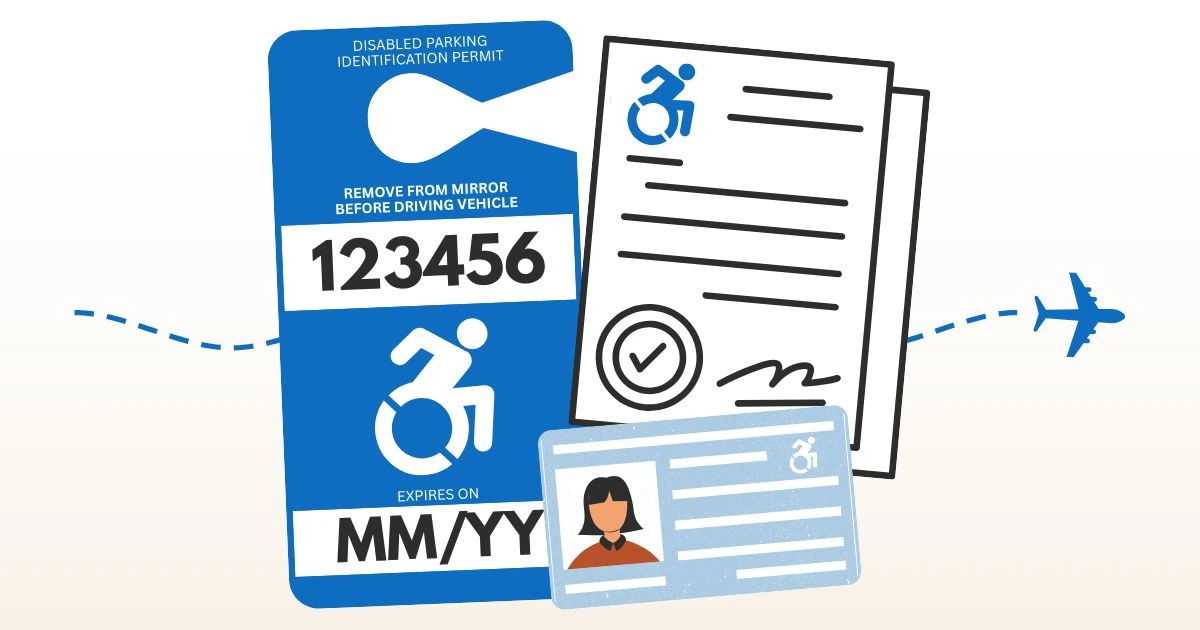
A disability tag in tourism can be a card, badge or document that shows a person has a disability and may qualify for support when visiting tourist attractions. This support can include discounted tickets, free entry, a free ticket for a companion, or discounts for a companion.
This type of documentation helps staff understand who is eligible for these benefits without the person needing to explain their medical condition in detail. However, there is no universal disability tag that works in every country. Each country, and often each tourist attraction, has its own rules about what proof is accepted.
What Counts as Proof of Disability?
What counts as proof of disability depends on the country and the attraction you are visiting. In some places, you may not need to show anything, while other attractions require official documentation.
Sometimes, a disabled parking tag is accepted, but since it usually does not include your full name or details about your disability, it may not be enough on its own.
We recommend having an official document from a health professional that includes the following elements:
- Your full name and date of birth
- A description and the percentage of your disability
- A signature and/or stamp of the issuing doctor or institute
If your document does not contain these details, it may not be accepted, and you may miss out on discounts or free entry.
An Example: The Acropolis
If you visit The Acropolis in Athens, Greece, you may be eligible for free entry for you and a companion, upon showing a disability card. This needs to be an official document from a hospital or doctor, stating the name, and describing the disability and the percentage of disability, which in this case should be over 67% to be eligible for free entry.
Visitors should also make sure to bring an official document of identification in addition to the document.
Travel With Your Documents
By always bringing your official document issued by a health professional with you, you can ensure that you don’t miss out on any discount or free entry you are eligible for when visiting a site. This way, you can make the most of the benefits available for you. Additionally, please make sure to also bring an official identification document, such as an identity card or passport.
Why Do Tourist Attractions Ask for This Information?
Tourist attractions often ask for proof of disability to make sure that discounts, free tickets, or other benefits are given fairly. Over time, attractions experienced abuse of these benefits, which led to them creating clearer guidelines and policies.
Why Are Visitors Sometimes Asked to Prove the Degree of Disability?
We understand that information about a disability can be very personal. However, to help explain why many sites in Europe ask for this information, it is important to know that certain benefits depend on the level of support a person needs.
At some tourist attractions, you are asked to provide proof of the degree of disability because specific arrangements, such as free entry for a companion, are often granted only when you can prove assistance is required.
Requesting this information helps attractions apply their policies fairly and consistently, prevent misuse of discounts, and ensure that resources remain available for those who need them, including people with invisible disabilities.
Our Accessible Tours
With private wheelchair accessible tours, when an inside visit is included, we always make sure you are fully up to date with the policy and that you know what kind of document to bring. If an inside visit is not included in one of our tours, we are always happy to check for you.
Are you curious about the tours we offer? Check out all our accessible destinations and enjoy our carefully planned tours which are all wheelchair accessible.
How to Prepare Before Your Visit
It’s entirely your choice whether to request discounts or benefits but planning ahead can make your visit easier and more comfortable. Therefore, we recommend checking the official website of each attraction to understand specific requirements, as the decision to offer discounts or free entry is at the discretion of the site.
Additionally, make sure to bring your documentation with you during your trip, so it is ready if staff ask for proof. Having the right papers on hand can allow you to have a smoother experience and enjoy the benefits you may be eligible for.
Need Help Planning an Accessible Trip?
Do you have a specific destination in mind? Contact us and we will help you organize a fully accessible trip, including checking attraction policies and making sure you know about the benefits that are available!
Requirements of Top Destinations in Europe
Below, we have created a list of some popular destinations and what they ask visitors with disabilities when getting tickets with a discount or free entry.
FRANCE

Eiffel Tower
If you have a disability, you and one companion can get a reduction when presenting a justification document, such as a disability card with your name on it. If you buy your tickets in advance, you should bring this document with you on the day of your visit.
See more about the accessibility of Paris in our blog post about the four most accessible highlights

Louvre
The Louvre offers free admission for people with disabilities and their companions. Please note that only one companion can enter for free per person with a disability. To receive the free entry, you need to have proof with you.
Accepted documents are: a disability card, a priority parking permit, a recognition of disabled worker status, proof of disabled adult allowance, or a medical certificate. Your document must be valid, and if it doesn’t include a photograph, it must be accompanied by an ID or passport matching the name on the document.

Palace of Versailles
A person with a disability and one companion can get free tickets to the Palace of Versailles. However, the Palace asks to bring proof of disability, a disability card with identification, on the day of your visit.
GERMANY

Neuschwanstein Castle
If you have a disability, you can purchase tickets at a reduced price. However, you need to be able to present an ‘appropriate identity document’. One (adult) companion can enter for free if their necessity is also registered in the document that proves your disability.
GREECE

Acropolis
When visiting with a disability of +67%, you and one companion can enter for free when showing a disability card. This document needs to be official, state your name, and describe the disability and its percentage. In addition, you should also bring an official identifying document, such as a passport.
Read more about the accessibility of the Acropolis
SPAIN

Sagrada Família
If you have a 65% or higher disability and are visiting Sagrada Familia, you are eligible for a free ticket for yourself and for one companion. To receive this free entry, you need to present a valid medical document on the day of your visit. This document must state your disability percentage and must be signed by an official entity.
Please note that Sagrada Família requires at least one paid ticket per booking. If there are only two people in your travel party, one ticket needs to be purchased.

Alhambra
Visitors with a disability of 33% or more can purchase discounted tickets. However, you need to present an up-to-date document issued by an official entity at the ticket office on the day of your visit in order to validate the reduced price.
In case the document you bring is not accepted at the box office, you will be asked to pay the difference there.
Read more about the accessibility of the Alhambra

Royal Alcázar of Seville
The Royal Alcázar of Seville allows free admission for people with a disability of more than 33% and one companion. However, you need to be able to show a document that proves the degree of disability.
ITALY

Colosseum
Upon presentation of a document certifying a disability, you can enter the Colosseum for free. In addition, one companion who can demonstrate their affiliation with social and health care services can enter with you for free.
Read more about the accessibility of the Colosseum

Uffizi Galleries
If you have a disability, you and one companion can enter the Uffizi Galleries for free with priority. To be entitled, you need to bring a document of proof issued by a public authority.
Accepted documents are the following: a medical certificate, a disability badge, a disability card, or a valid disabled parking card. The document should include your personal data and should be accompanied by your identity card or passport.

Saint Mark’s Basilica
There is free admission at Saint Mark’s Basilica in Venice for people with disabilities who can show a document of proof. If registered in the proof, any accompanying persons can also enter for free.
NORWAY

Fram Museum
As a visitor with a disability, you do not get any reductions. However, if your companion has documentation, such as a companion ID, proving you need their assistance, they can enter with you for free.
SWEDEN

ABBA The Museum
The museum does not offer reduced prices for guests with disabilities, but you can take up to two companions with you for free as long as they have a companion certificate.
THE NETHERLANDS
Rijksmuseum
If you have a disability, you need to purchase a regular ticket. However, if you need a companion, they can enter the museum for free. Please note that, despite the entrance fees being free for them, they still need to reserve a ticket. This can be done via the ‘I already have a ticket/voucher’ ticket option, and the ticket can then be picked up at the box office.
UNITED KINGDOM

Westminster Abbey
Westminster Abbey states that they offer free admission to registered disabled visitors and their essential companion. No degree of disability is mentioned, but it is best to take your documents of proof with you on the day of your visit to be safe.
Buckingham Palace
Visitors with disabilities can buy tickets at a reduced rate. In addition, a companion can enter with you free of charge. No proof is required.
VATICAN CITY

Vatican Museums
If you have a disability of 67% or more, you can enter the Vatican Museums for free togehter with one companion. You do need to bring the appropriate documents with you that prove the degree of disability. These free tickets are not available online but are issued at the site when you present your certification or proof of disability.
Read more about the accessibility of the Vatican Museums

READ RELATED BLOGS