

Visiting Park Güell in Barcelona with a Wheelchair or Scooter: Accessibility Guide

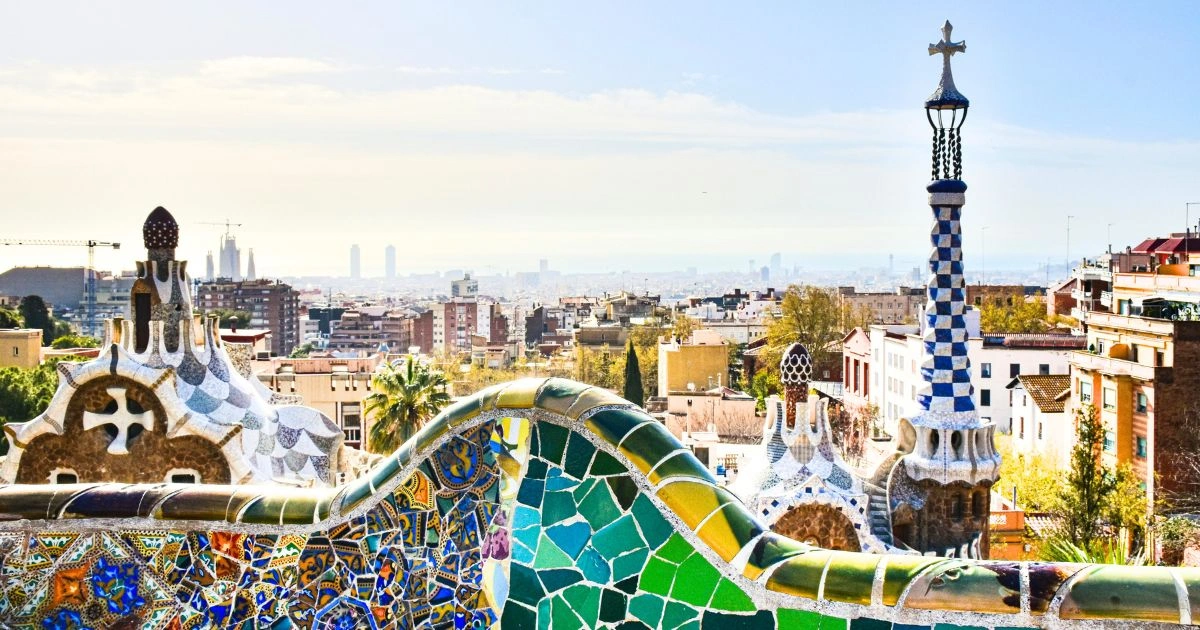
With its bright mosaics, flowing architecture, and sweeping views over Barcelona, Park Güell is one of the city’s most popular landmarks. But if you are visiting with a wheelchair or mobility scooter, what can you expect? For visitors using a wheelchair or mobility scooter, exploring the park is definitely possible, though some areas are not as accessible.
Because of its hillside location and historic layout, accessibility at Park Güell is rather uneven. That said, this guide walks you through what to expect of Park Güell’s wheelchair and scooter accessibility so you can prepare accordingly.
Quick Accessibility Summary
✓ Step-free access via Carretera del Carmel entrance & Carrer Marianao
✓ Adapted routes available (app/map)
✓ Accessible toilets on site
✓ Wheelchairs available (subject to availability)
✗ Uneven terrain and slopes throughout
✗ Some areas and paths not step-free
The History of Park Güell
This renowned park in Barcelona was designed by Antoni Gaudí, after Eusebi Güell asked him to create plans for a neighborhood for wealthy families. Güell, also known as Eusebio Güell, was a Spanish entrepreneur who earned significant wealth during Catalonia’s industrial expansion in the late 19th century.
The location of the park was a big piece of land bought by Güell, in an area called the Muntanya Pelada, or “bare mountain,” overlooking Barcelona and the sea. The plan included about 60 triangular plots linked by intricate paths, viaducts, and stairways, with strict rules to preserve sunlight and views. Construction began in 1900, and workers gradually completed key features by 1914.
Meanwhile, early buyers, including friends of Güell, purchased plots, and Gaudí moved to the estate in 1906. However, due to the high costs, complicated contracts, and limited accessibility, most plots were not sold and only two houses were built.
Opening the Estate to the City
As there were only two houses, the park initially functioned as a large private garden, but Eusebi Güell allowed it to host public events. Over time, it began to be featured in Barcelona tourist guides as one of the city’s attractions.
After Güell passed away at his home in 1918, his heirs offered the park to the city, which purchased it in 1922. Through the efforts of the organization Friends of Gaudí, Gaudí’s house within the park was opened to the public as the Gaudí House Museum in 1963.
Park Güell gradually became a beloved public space for residents and a major tourist attraction. It was officially recognized as an artistic monument in 1969 and later, in 1984, declared a UNESCO World Heritage Site.
Accessibility Overview of Park Güell
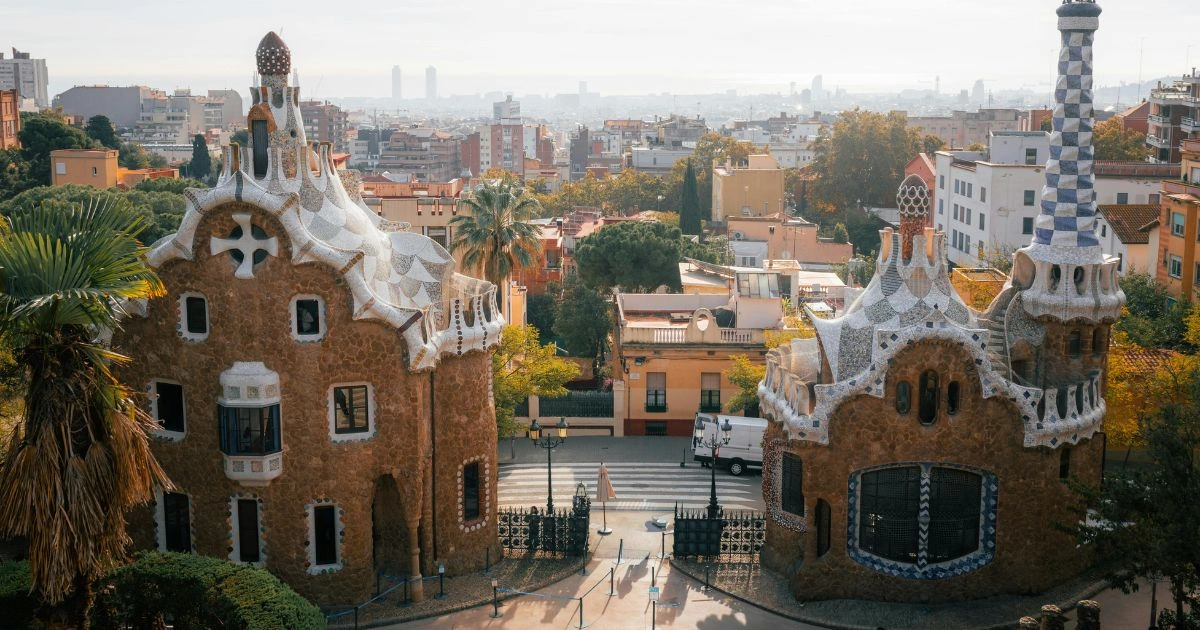
While Park Güell follows the natural contours of the hillside, with winding paths and unique viaducts, visitors using wheelchairs can still enjoy its charm. Several areas of Park Güell are wheelchair accessible, offering step-free routes and stunning viewpoints that capture the essence of Gaudí’s vision.
To make navigating the park easier, you can use the official Park Güell app. On this app you can indicate any needs you may have, or the entrance through which you’re accessing the park. Once you are on the app, you can click on the different location markers to get more information about the sights.
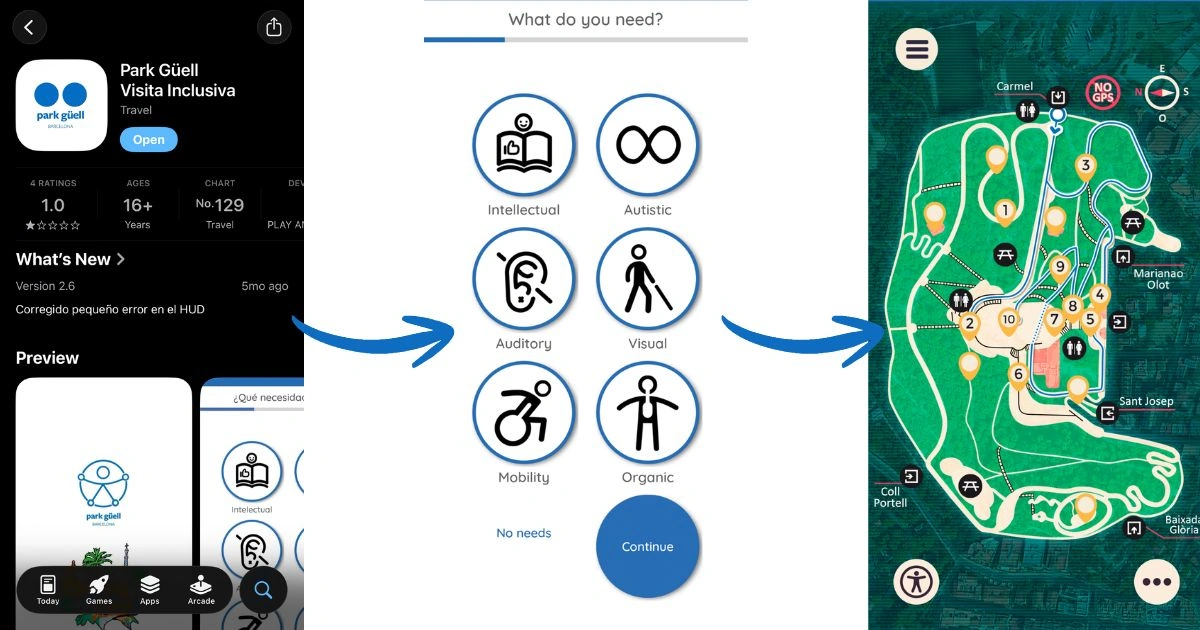
In addition, on the official website, you can find a page dedicated to accessibility. This page also includes a map with recommended routes for people with reduced mobility.
Choosing the Right Entrance
For wheelchair users, the Carretera del Carmel entrance is generally the most practical. It provides access to the park’s main adapted paths and avoids some of the steepest slopes of other entry points. The second accessible entrance is the one from Carrer Marianao. You can find the entrances on the map by looking for the accessible icon.
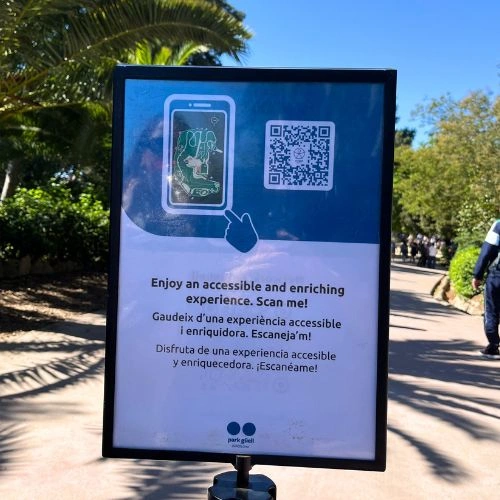
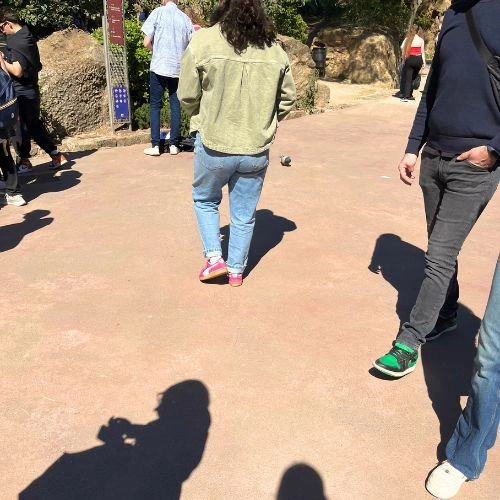
At the Carretera del Carmel entrance, you may find a QR code for the official app, as you can see in the image below. The terrain at this entrance is rather flat and smooth since it is asphalted. However, during peak hours or high tourism seasons, the area may be a bit crowded.
The Terrain Throughout Park Güell
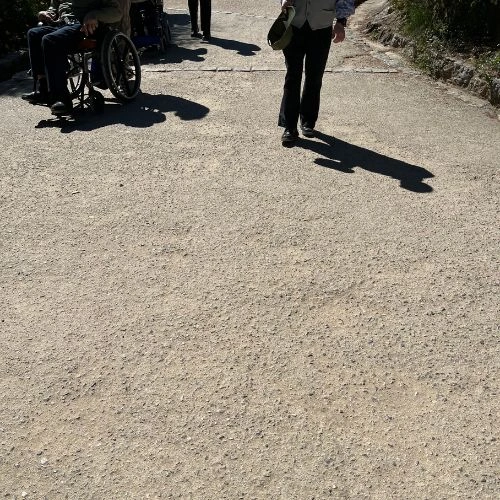
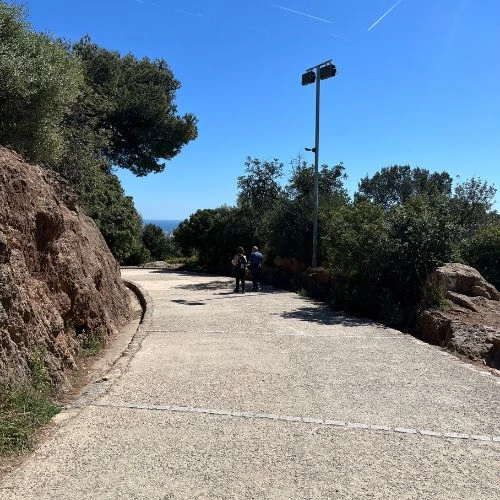
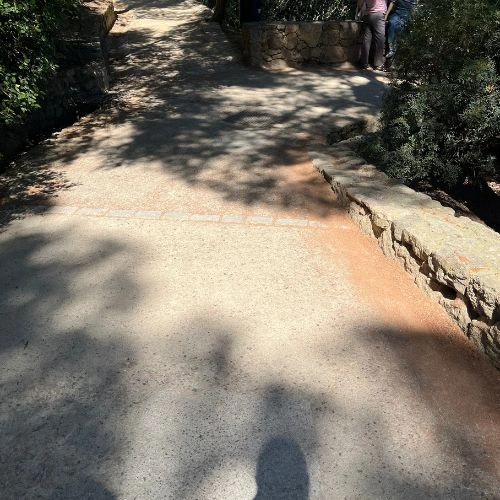
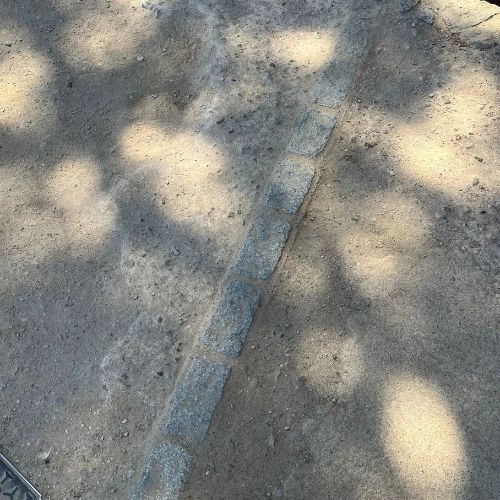
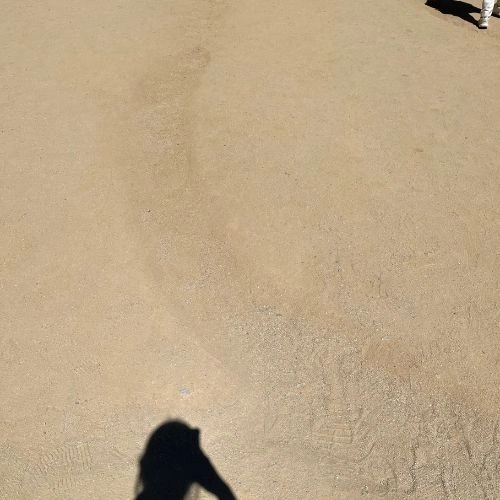
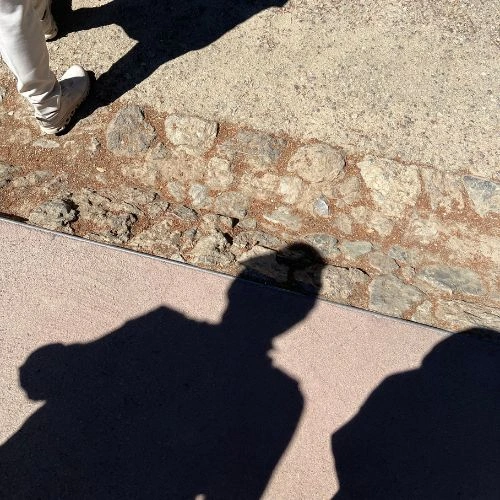
Throughout the park, you will find asphalted pathways, as well as stone, compacted gravel, and concrete roads. There are some parts where the terrain is very uneven and bumpy, but other parts where the road is smooth. Due to its hilly location, you will find many slopes and uneven pathways throughout the park.
Accessibility note: if you are a manual wheelchair user, we strongly recommend you take a companion with you that can help you with the climb, as the walk/roll may be physically demanding. Make sure to prepare accordingly.
On the images below, you can see some of the pathways.
Route to Casa Trias
When entering through the Carretera del Carmel entrance, you walk/roll on asphalted roads. If you want to start your visit by going up to Casa Trias, you should turn right when entering the park. You will see a slightly rough concrete road leading up, passing through the viaducts.
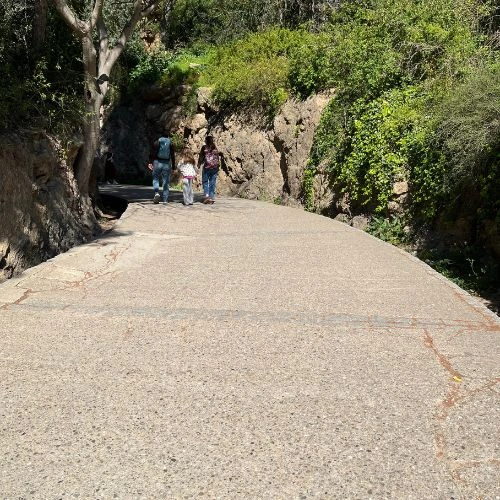
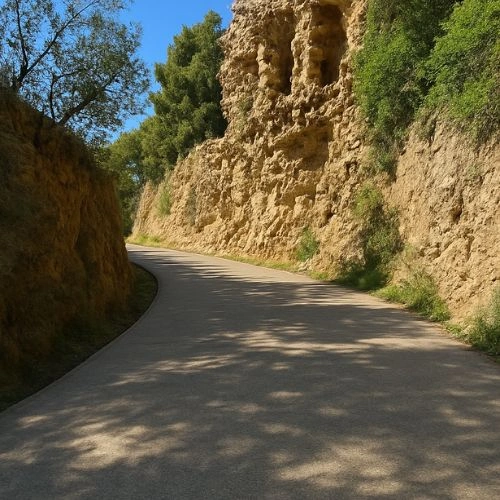
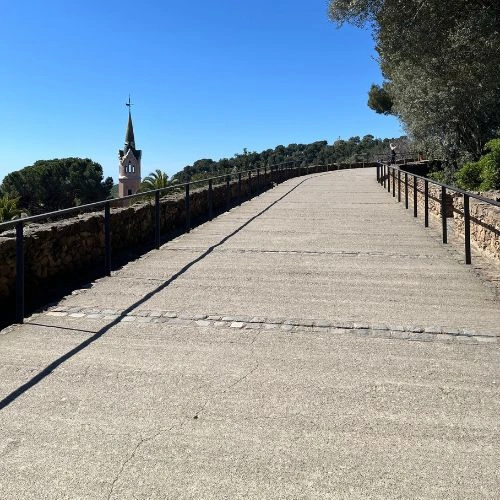
While going up, you will spot other pathways that allow visitors to go below the viaducts as you can see on the images below. However, these paths are unfortunately not step-free, and sometimes quite rough.
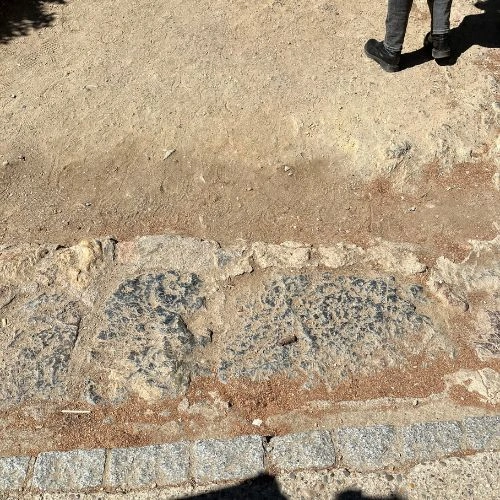
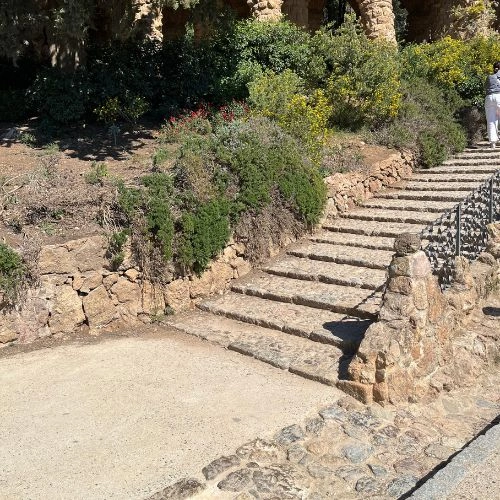
Once you are at the top, you will be able to see Casa Trias and the beautiful nature surrounding it.
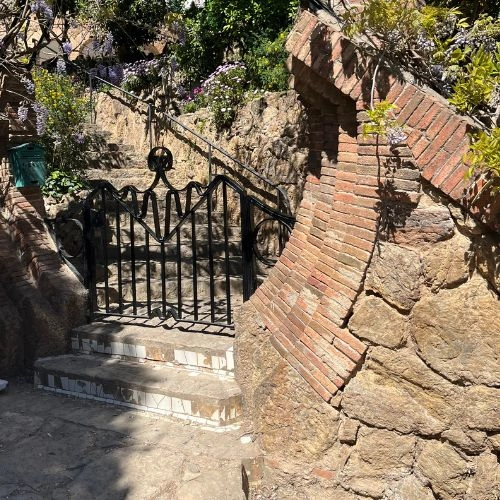
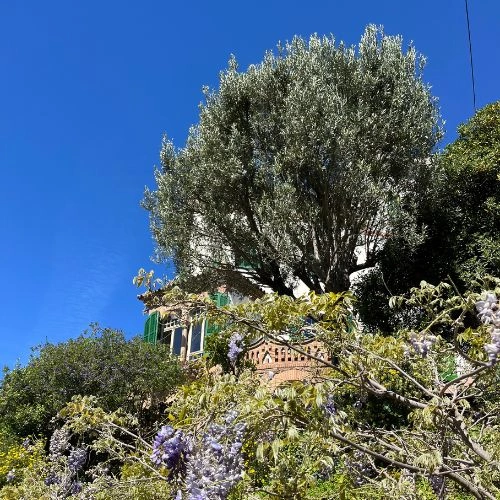
Going up to Casa Trias
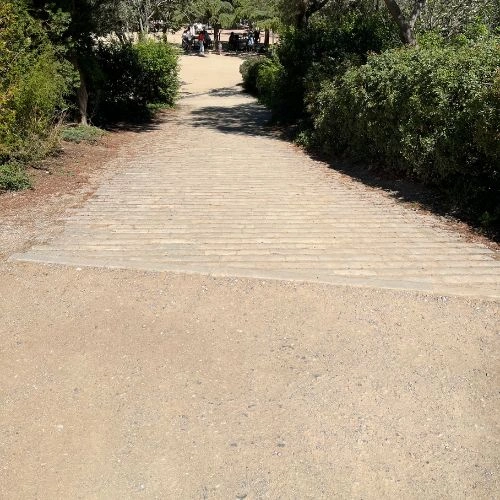
It is possible to go up to the other side of Casa Trias at this point. However, be advised that the path is a little steep and brick-paved, making the way up a bit bumpy. After reaching the top of this road you will need to return from where you came from, as the other options are exits. Once you exit the park, you cannot re-enter.
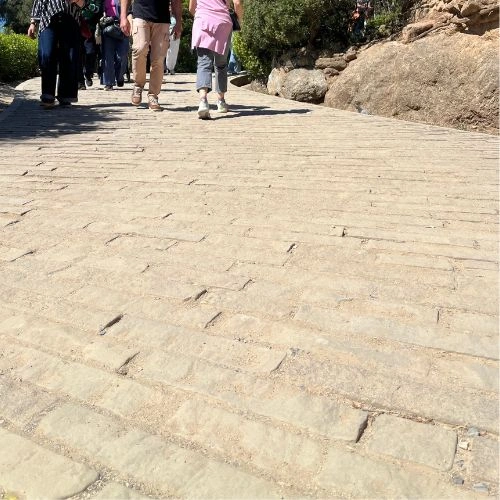
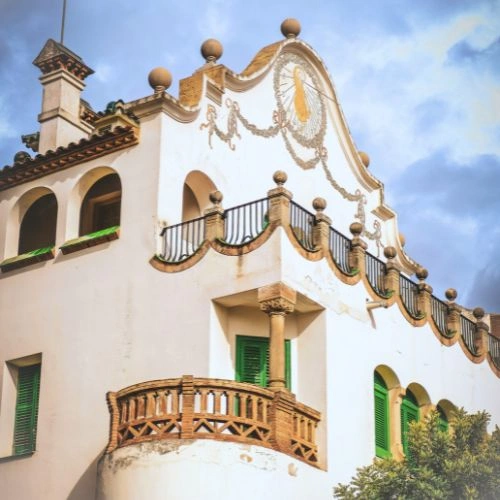
The Pathways Ahead
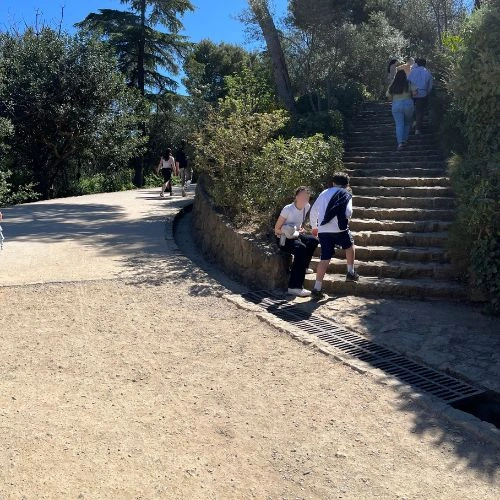
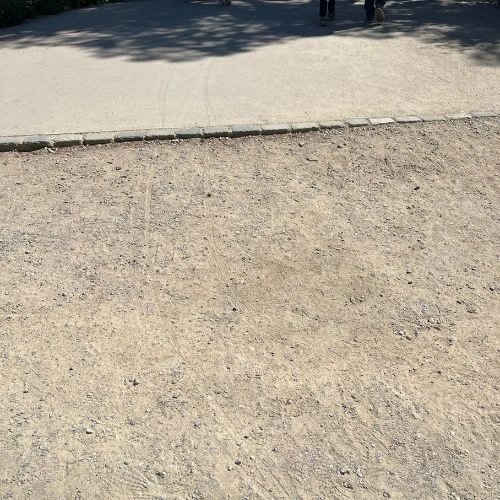
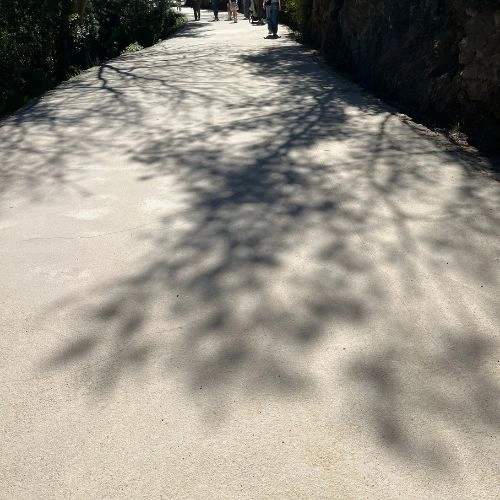
Here, you will notice the pavement changes from concrete to compacted gravel. This is where the recommended route for people with reduced mobility ends.
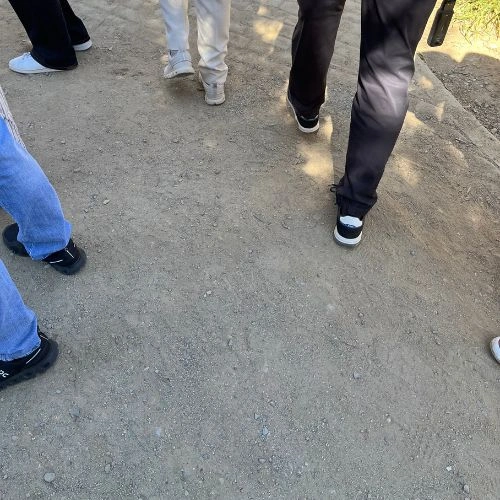
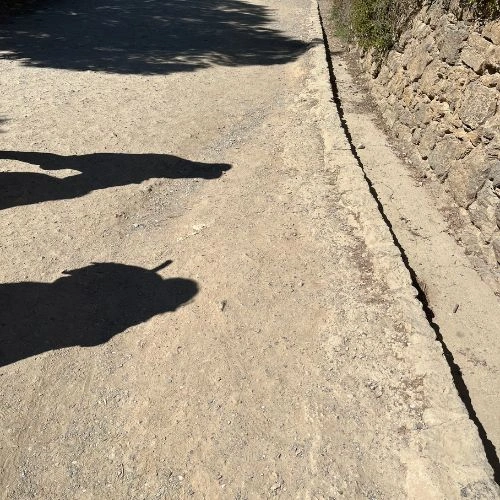
If you choose to continue, you will find different pavements along the route, together with some uneven pathways, slopes, and some obstacles or steps at certain parts. Although it is possible to get to the Nature Square step-free from here, be advised there are some rough and uneven terrains, as well as some pathways that have some small level increases or stones sticking out. You can find some images of the terrain below.
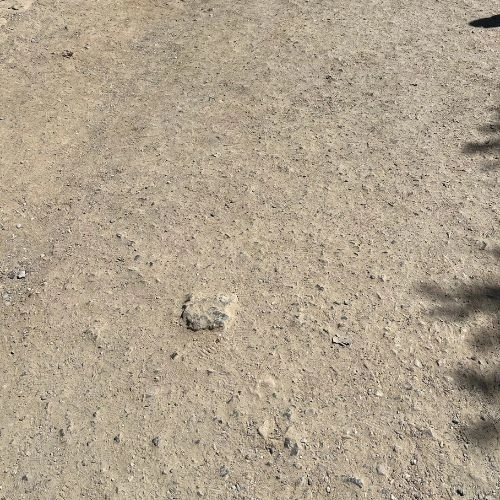
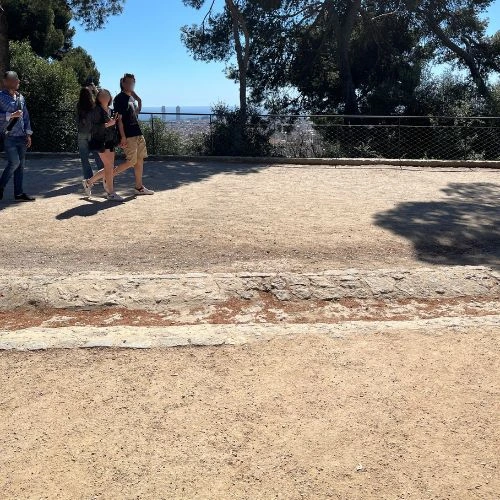
If you prefer, you can go back down the way you came to the Carretera del Carmel entrance and take the second recommended route to see the other highlights of the park.
Further Along the Road: The Hill of the Three Crosses
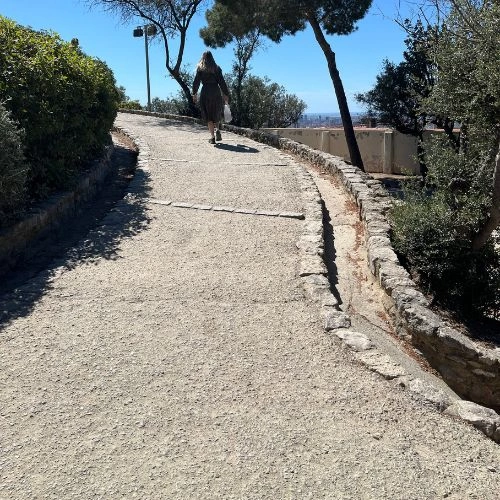
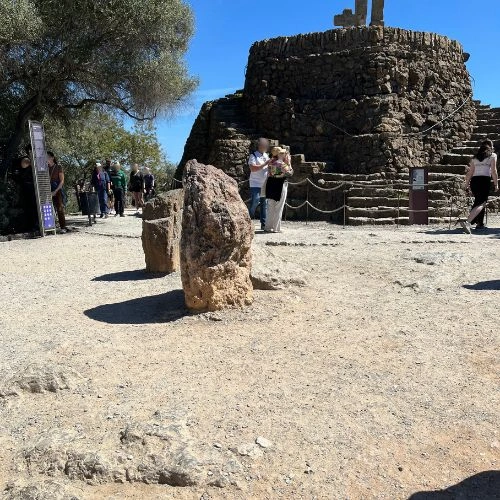
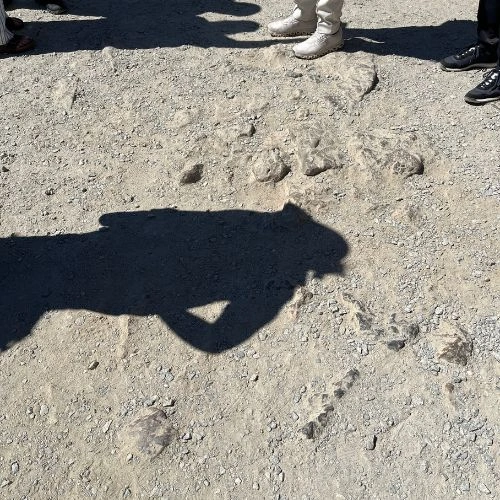
If you choose to continue the path, you will eventually reach the Turó de les Tres Creus, or the Hill of the Three Crosses. It is one of the highest points in Park Güell, known for its panoramic views over the city.
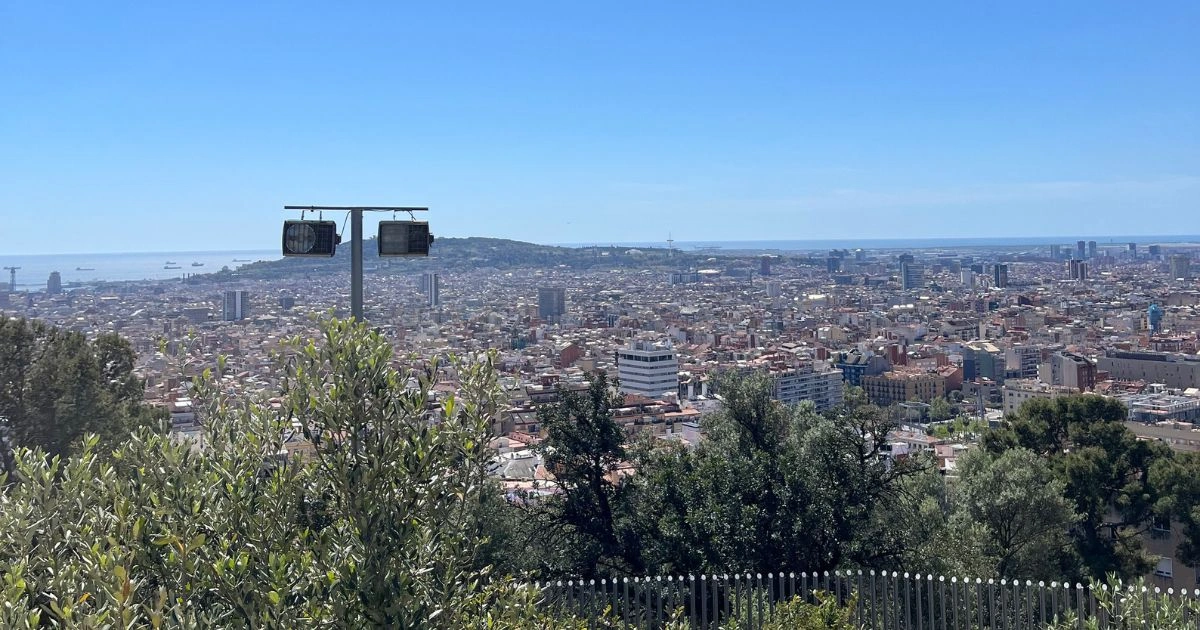
As you can see in the images below, the path leading to this hill becomes increasingly uneven, with compacted dirt, loose gravel, rocky surfaces, and sections that may be difficult to navigate with a wheelchair or mobility scooter.
The Architectural Route
The second recommended accessible route by Park Güell is called the Architectural Route. This route focuses more on Gaudí’s iconic designs and allows you to experience some of the park’s most recognizable features, and allows you to visit a viewpoint of the middle bridge, the Palm Trees Path, go over the lower bridge, pass the Casa del Guardia at the park’s main entrance, as well as the stairway featuring the famous Dragon or Salamander, which you can also visit from closer by. You can also get views of the Laundry Room Portico, visit the Hypostyle Room, the Austria Gardens, and the Nature Square.
Most of the terrain here is asphalted, concrete, and compacted gravel, with some slopes here and there. Below, you can find some images of the roads.
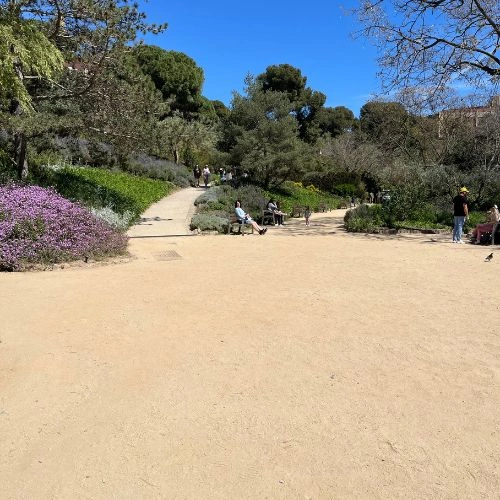
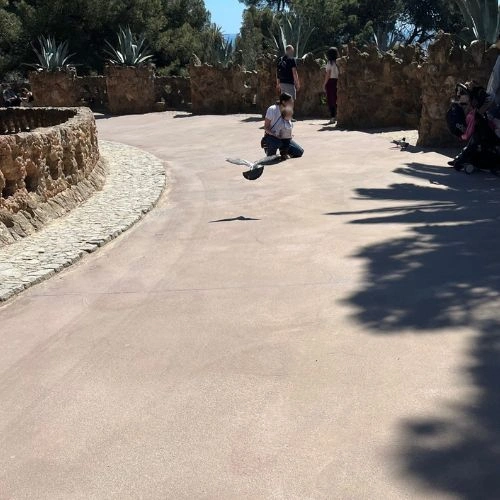
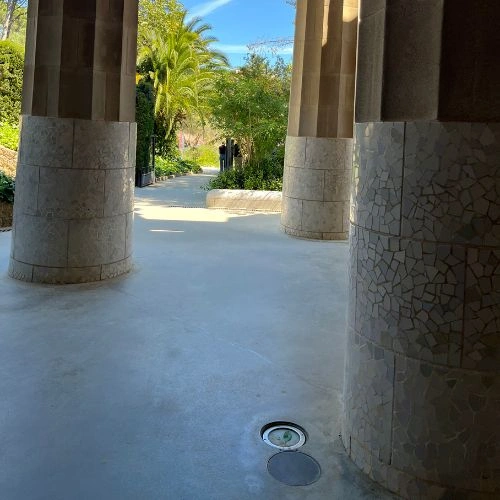
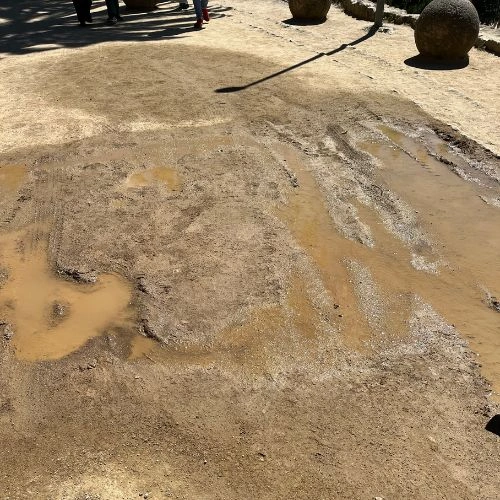
Some of the gravel paths can get a bit muddy in rainy weather, as you can see in the picture below, but the paths are generally well-maintained and in a good state.
The Nature Square: Views of the City and the Sea
Together with the stairway and its Dragon or Salamander, the Nature Square is one of the most popular parts of Park Güell. The path here is made from compacted gravel and is completely flat, except for the borders, where one step is required to go up to the edge. Below, you can find pictures of the ground at the Nature Square.
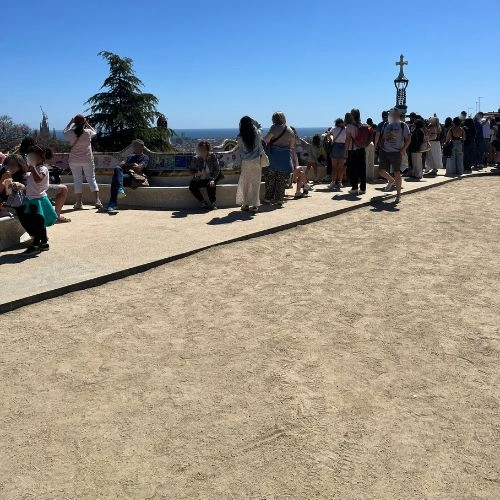
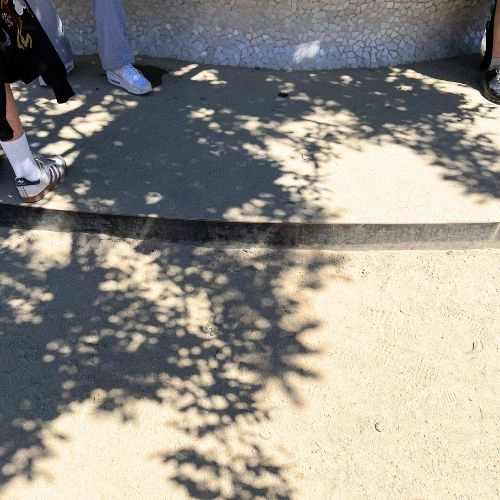
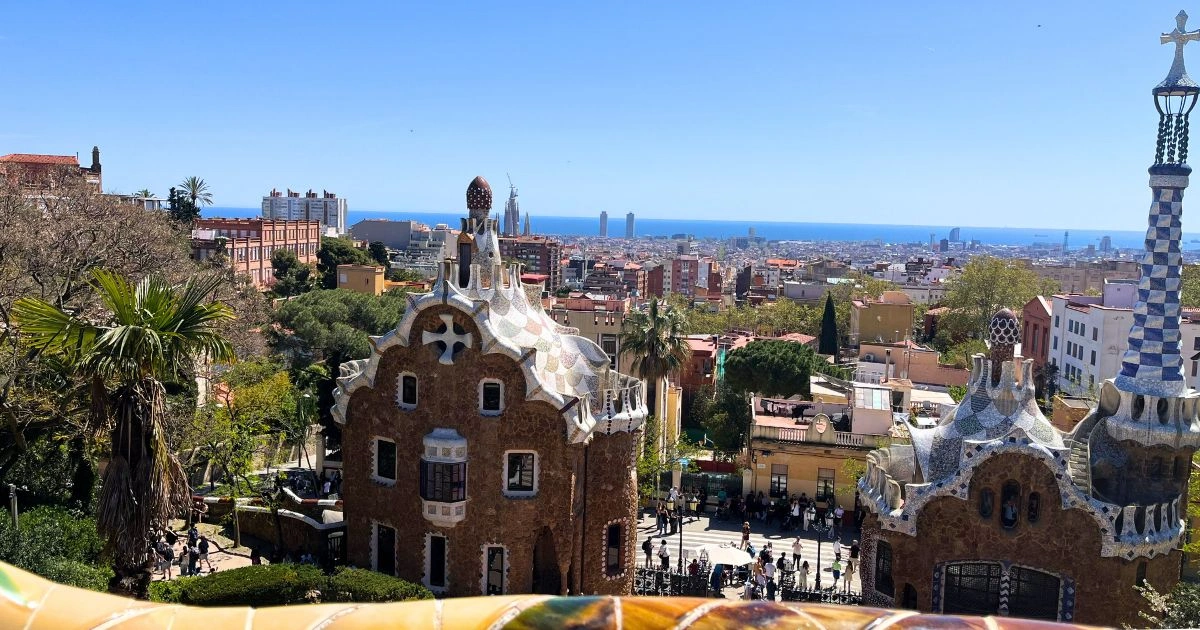
As this spot is rather popular, it might get a bit crowded, especially on the borders near the benches that also serve as the ‘railing’ of this platform. From this square you can enjoy the gorgeous view over Barcelona and the sea. You can even spot the Sagrada Familia!
Virtual Tour of Park Güell
Do you want to get a little sneak peak of the park before your visit? Check out this virtual visit provided by the park and discover the different areas!
Facilities and Services at Park Güell
Park Güell offers several facilities and services to support visitors with reduced mobility and make the experience more comfortable.
First, wheelchairs are available upon request, although availability may vary depending on demand. If you have specific needs or require assistance in advance, you can contact the Visitor Attention Service via email.
Second, to make your visit easier, it is recommended to download the official Park Güell app before arriving. With this app, you can view the most accessible routes, helping you plan your visit more efficiently.
Accessible Restrooms
Accessible restrooms are available at two locations, at both the men’s and woman’s restrooms:
- Near the Carretera del Carmel entrance
- At the lower end of the Dragon Stairway
Here, you can find some images of the restrooms at the Dragon Stairway.
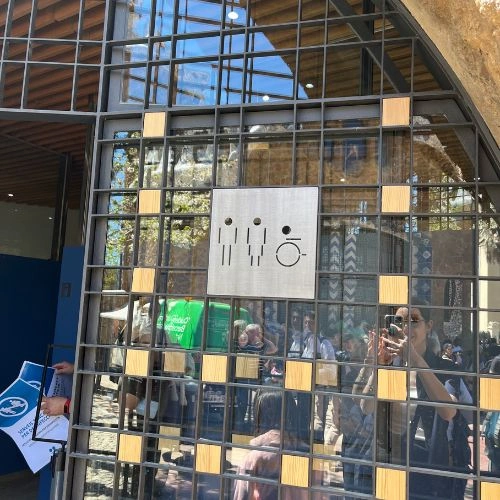
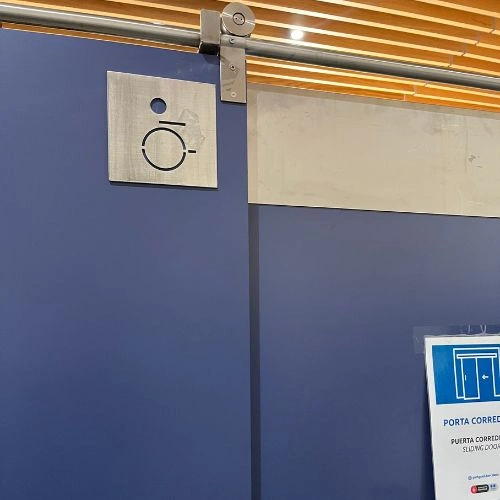
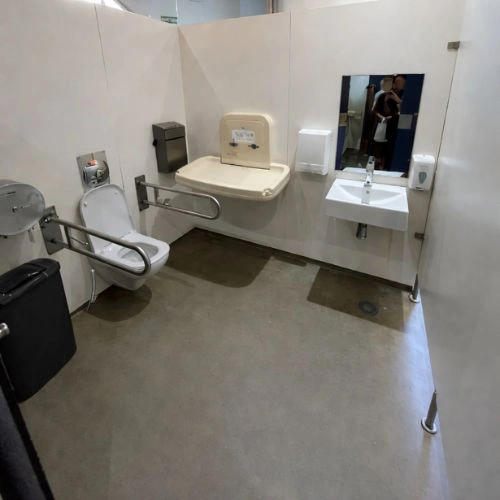
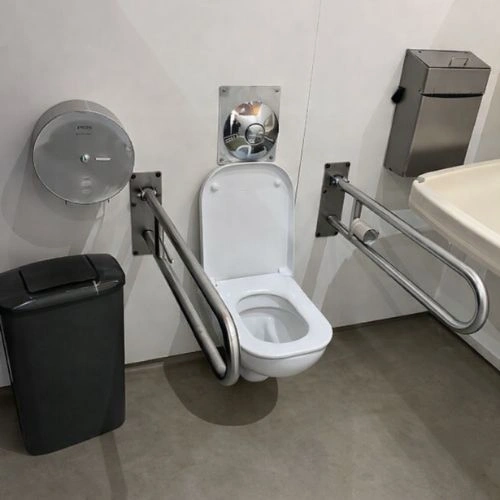
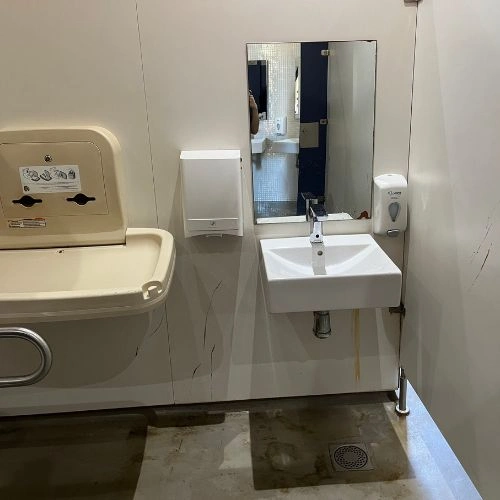
These toilets feature a sliding door, grab bars that can be moved up and down at both sides, as well as a sink with an open space under it and an automatic faucet.
You can find the exact location of this specific loo, and other accessible toilets, via our handy accessaloo app!
Park Güell Tickets and Discounts for Disabled Visitors
Visitors with disabilities can enter Park Güell free of charge. If your level of disability is 65% or higher, or if you can certify the need for assistance, one companion is also entitled to free admission. Please note that bookings with a total cost of €0 cannot be processed through the standard online system. For these cases, contact the Visitor Attention Service directly via parkguell@bsmsa.cat.
Please note that the free admission policy does not apply to guided tours, which follow separate pricing conditions.
Finally, once you are at the park entrance, you will be asked present valid entry passes. In addition, you will also need to provide official documentation to confirm eligibility for any discounts or free admission.
You can find more information about tickets prices and discounts on the website of Park Güell.
Getting to Park Güell
For those arriving by car, the park provides three dedicated parking spaces for visitors with reduced mobility and accredited vehicles. These spaces are located in the tourist coach parking area, directly in front of the Carretera del Carmel entrance.
By Public Transport
Barcelona’s public transport network offers several ways to get close to Park Güell. The busses 24 and V19 stop very close by the Carretera del Carmel entrance of Park Güell, requiring only a 3-minute walk/roll to reach the entrance. Please do note that the path from the busstop to the park entrance might be a bit sloped.
By Car
For those arriving by car, the park provides three dedicated parking spaces for visitors with reduced mobility and accredited vehicles. These spaces are located in the tourist coach parking area, directly in front of the Carretera del Carmel entrance. Do note that parking in the surrounding neighborhoods is limited, and traffic can be busy during peak hours.
Book a Private Transfer
If you prefer a more comfortable and stress-free experience, arranging a private transfer with an adapted vehicle can be a great option. This allows you to:
- Get dropped off as close as possible to an accessible entrance
- Avoid navigating public transport connections
- Travel at your own pace with assistance if needed
Discover more about accessible transfers in Barcelona here.
We wish you a wonderful visit to Park Güell and hope enjoy your time in Barcelona!

Keep reading
You might also like
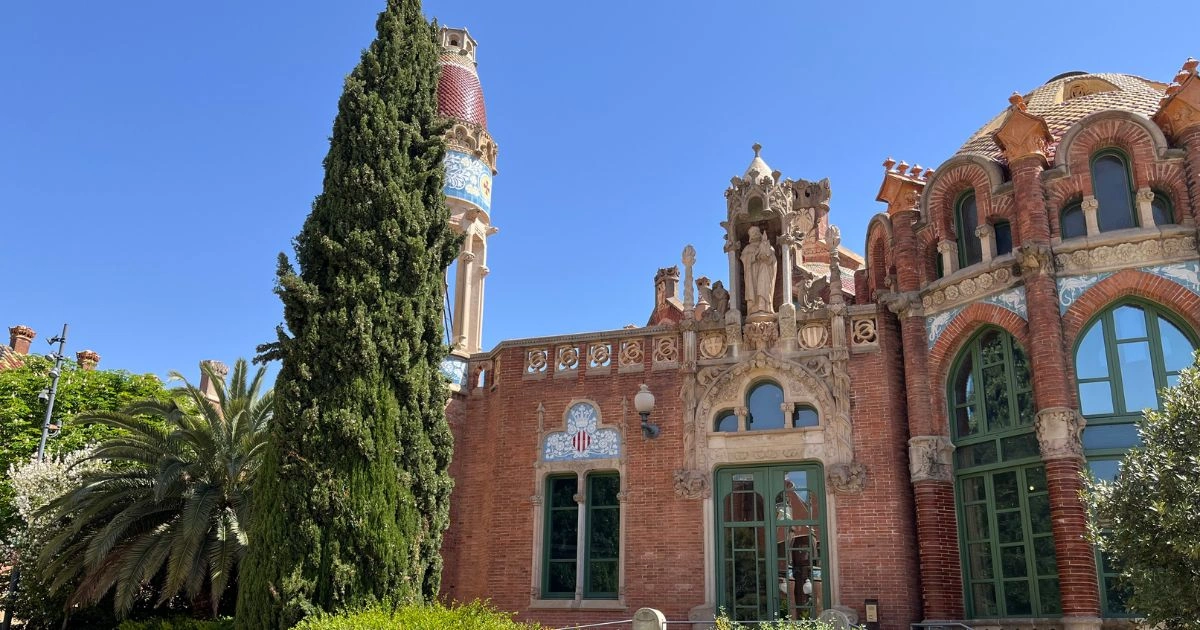
Wheelchair Accessibility of Hospital de Sant Pau
Visit one of Barcelona’s most extraordinary landmarks, where stunning Modernist architecture meets thoughtful accessibility at every turn. This guide shows how wheelchair…
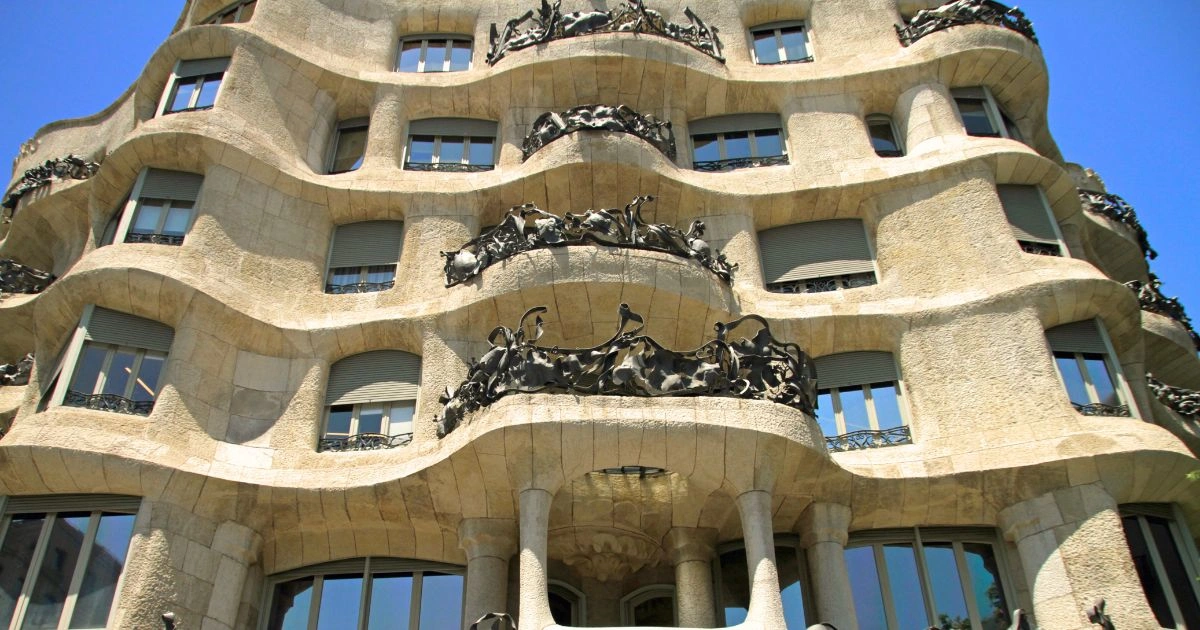
Wheelchair Accessible La Pedrera – Casa Milà
Explore the imaginative world of Gaudí at La Pedrera - Casa Milà, with this accessibility guide to help prepare your visit. Discover…
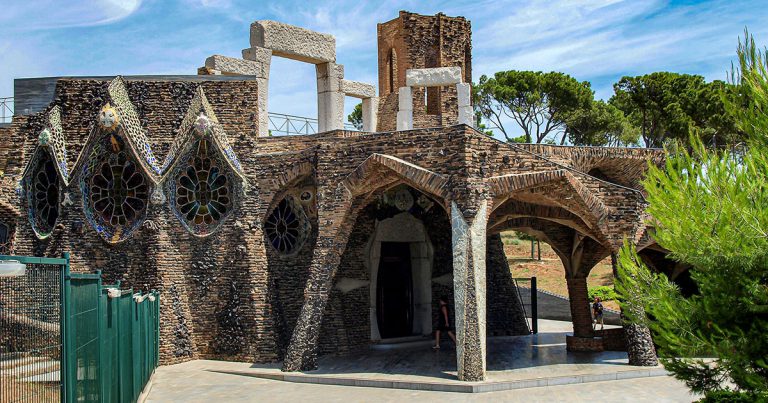
Wheelchair Accessibility of Colonia Güell
In this accessibility guide of Colonia Güell, you find all the information you need to have a joyful day at one of…