

Best Wheelchair Accessible Cities in Croatia: Dubrovnik, Split or Zadar?


Croatia is one of Europe’s most loved travel destinations, and it is easy to see why. Think crystal-clear waters, historic cities, and sun-soaked coastal views. But if you’re traveling with a wheelchair or scooter, the following question might come up: Which Croatian city is the best to visit for someone with reduced mobility?
The short answer? It depends on what you’re looking for.
Accessibility can vary between cities, and even within them. Everyone’s needs are different, and what feels comfortable for one traveler might be challenging for another. That’s why this guide is here: to give you a clear overview so you can make the best choice for your trip.
Quick Comparison: Dubrovnik vs Split vs Zadar
The table below provides a quick overview of wheelchair accessibility across Croatia’s three most popular coastal cities.
| Category | Dubrovnik | Split | Zadar |
|---|---|---|---|
| Old Town terrain | Smooth limestone main streets, but can be slippery when wet Some steep and uneven areas Not all streets are step-free. | Mostly stone-paved or cobblestone roads that are generally even. Some areas can be uneven or worn. Some pathways are not step-free. | Mostly flat, stone-paved paths with some uneven areas. In general, most paths are step-free, but there may be some small thresholds. |
| Waterfront access | Partially accessible | Fully accessible Riva promenade | Fully accessible modern promenade |
| Main attractions accessibility | Moderate, some step-free highlights | Mixed, with some exterior-only visits | Generally accessible, especially newer sites |
| Best for | Scenic views & history (with planning) | Balanced sightseeing + accessibility | Relaxed visit & smooth mobility experience |
Dubrovnik: Iconic Views and Historic Charm
Dubrovnik is a UNESCO World Heritage Site known for its well-preserved medieval architecture, limestone streets, and dramatic fortified walls. It is one of the most visually striking destinations in Croatia, and for many travelers, it is a must-see. However, when it comes to wheelchair accessibility, Dubrovnik can be a bit of a mixed experience depending on what your needs are and where you go.
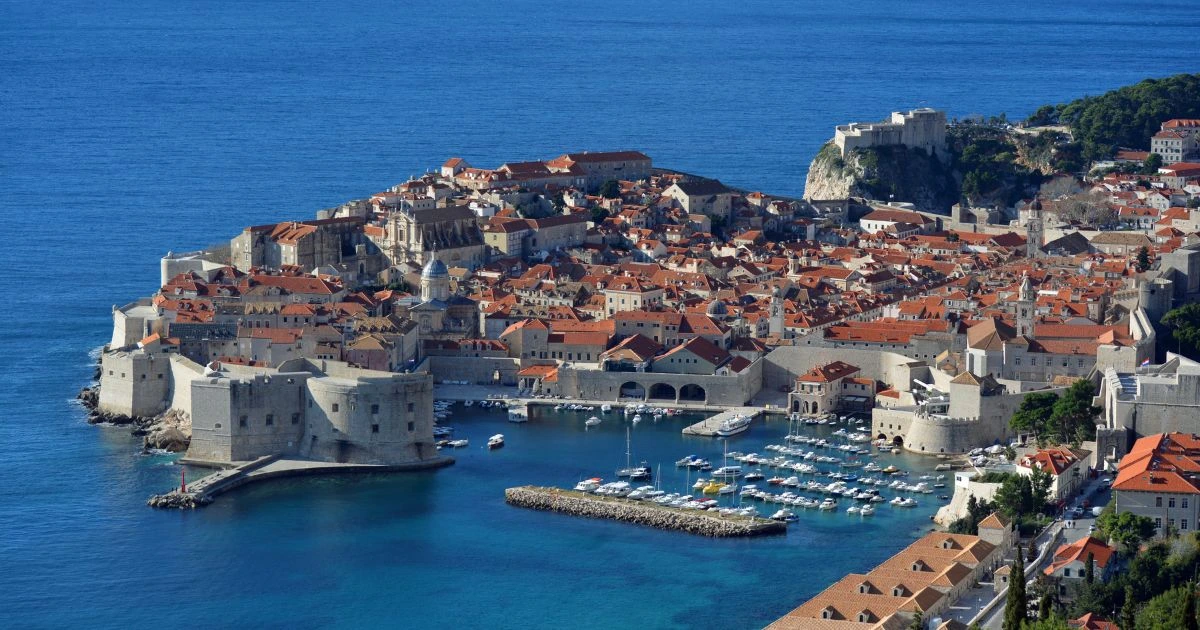
Main Attractions in Dubrovnik’s Old Town
A visit to Dubrovnik usually includes highlights such as the Rector’s Palace, Sponza Palace, St. Blaise Church, Dubrovnik Cathedral, and Orlando’s Column. While not all of these landmarks are fully wheelchair accessible inside, they can still be appreciated from the outside, and simply being in the Old Town, surrounded by centuries of history, is a big part of the experience.
Dubrovnik Attractions Accessibility Overview
To make things easier to compare at a glance, here’s a quick overview of accessibility for each:
| Attraction | Accessibility | Details |
|---|---|---|
| Rector’s Palace | Mostly accessible | A portable ramp can be placed at the entrance upon request. There is an elevator inside. The floor surfaces inside are smooth and flat. |
| Sponza Palace | Limited accessibility | There are about 5 steps to enter at the ground floor. Other levels can be reached via a stone staircase. The floor surfaces inside are mostly smooth and flat. |
| St. Blaise Church | Limited accessibility | The entrance features a stone staircase with multiple steps. Inside, floor surfaces are smooth and flat. |
| Dubrovnik Cathedral | Wheelchair accessible | Wheelchair accessible via a ramp at the southern entrance. Inside: ground level is mostly step-free but has low thresholds. |
| Orlando’s Column | Wheelchair accessible | Outdoor monument: fully accessible and easy to view. |
Getting Around Dubrovnik’s Old Town
The Old Town of Dubrovnik is more manageable than many people expect at first glance. The main streets are paved with relatively smooth limestone rather than rough cobblestones, which makes rolling easier, although the surface can become slippery when wet. There are some slopes, narrow passages, and occasional inclines, but overall, you can access most of the main routes step-free, except for a few areas with stairs.
Shops and restaurants often have a step at the entrance, but many restaurants have outdoor seating, especially in good weather, making it easier to stop and enjoy a meal. There is also a wheelchair-accessible restroom near the Ploče Gate of the Old Town.
Accessible Viewpoint: Mount Srđ
For panoramic views over Dubrovnik, Mount Srđ is a popular option and one of the more accessible ways to enjoy the scenery from above. You can either take the cable car or drive up. Both cable car stations are wheelchair accessible, with a ramp at the lower station and an elevator at the top.
Once at the summit, the terrain changes: the surface becomes compacted gravel, and there is a steep slope leading from the parking area to the main viewpoint. It is good to know that the cable car capacity is limited, and wait times can be long, especially during peak travel seasons or in good weather. Accessible restrooms are available at the cable car stations.
Split: Timeless History, Lively Atmosphere
Split offers a nice balance between accessibility and atmosphere. Despite its ancient layout and historical significance, the city is considered to be one of the most accessible coastal cities in Croatia.
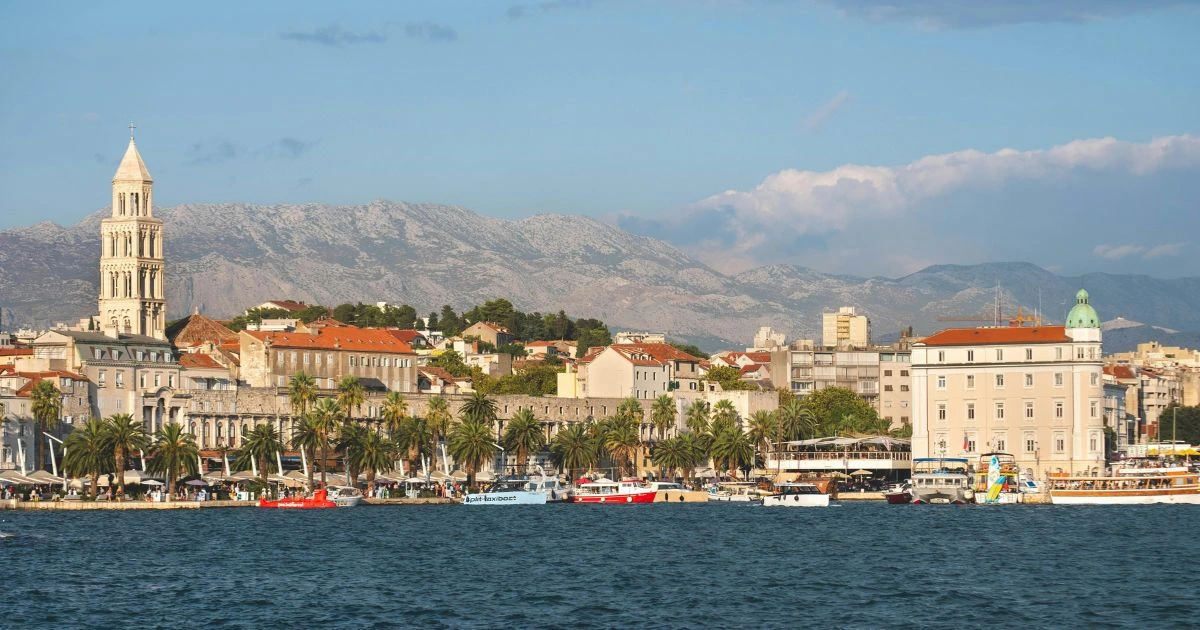
Top Attractions in Split’s Historic Centre
A typical route through Split includes the Diocletian’s Palace, with its Peristyle and the palace cellars, as well as the lively Riva Promenade. Along the way, you also encounter historic areas such as the former Jewish Ghetto and even recognizable filming locations from Game of Thrones, adding another layer of interest to the experience.
Here’s a quick overview:
| Attraction | Accessibility | Details |
|---|---|---|
| Diocletian’s Palace | Partially accessible | The palace features some uneven stone surfaces, as well as narrow passages and steps. |
| Diocletian’s Palace Cellars | Wheelchair accessible | Step-free access. Wide spaces and relatively smooth flooring. |
| Peristyle (central square) | Wheelchair accessible | Step-free access via a ramp through the palace cellars. The upper colonnades are only accessible via a large flight of stairs. |
| Cathedral of Saint Domnius | Limited accessibility | Large staircase at entrance, no step-free entrance. Inside, floors are generally smooth and flat but feature some small steps and uneven thresholds. |
| Temple of Jupiter | Limited accessibility | The entrance is located up a short flight of stairs, so there is no step-free access. Inside, there is one step down. The rest of the small space made of stone slabs is generally flat. |
Although not every attraction in Split is step-free, most landmarks can still be admired from the outside, and they remain an important part of the overall experience of the city.
Getting Around Split’s Old Town
Split’s Old Town is a pedestrian zone. The streets are paved with stones and are mostly even. However, some areas can be uneven and worn, particularly around the Diocletian’s Palace. Even so, much of the Old Town remains accessible, and there have been efforts to improve step-free routes and overall navigation.
The Riva Promenade: Fully Accessible Waterfront
The Riva Promenade is one of the standout features when it comes to accessibility. It is completely flat, wide, and step-free, making it ideal for a relaxed stroll along the waterfront. There are three accessible restrooms in the area, located along the promenade and near the Green Market.
Zadar: Modern Waterfront Meets Historic Old Town
Zadar offers a slightly calmer and more laid-back atmosphere compared to Dubrovnik and Split, while still combining history with modern design. In terms of accessibility, it stands out for its well-designed waterfront and relatively easy navigation in newer areas of the city.
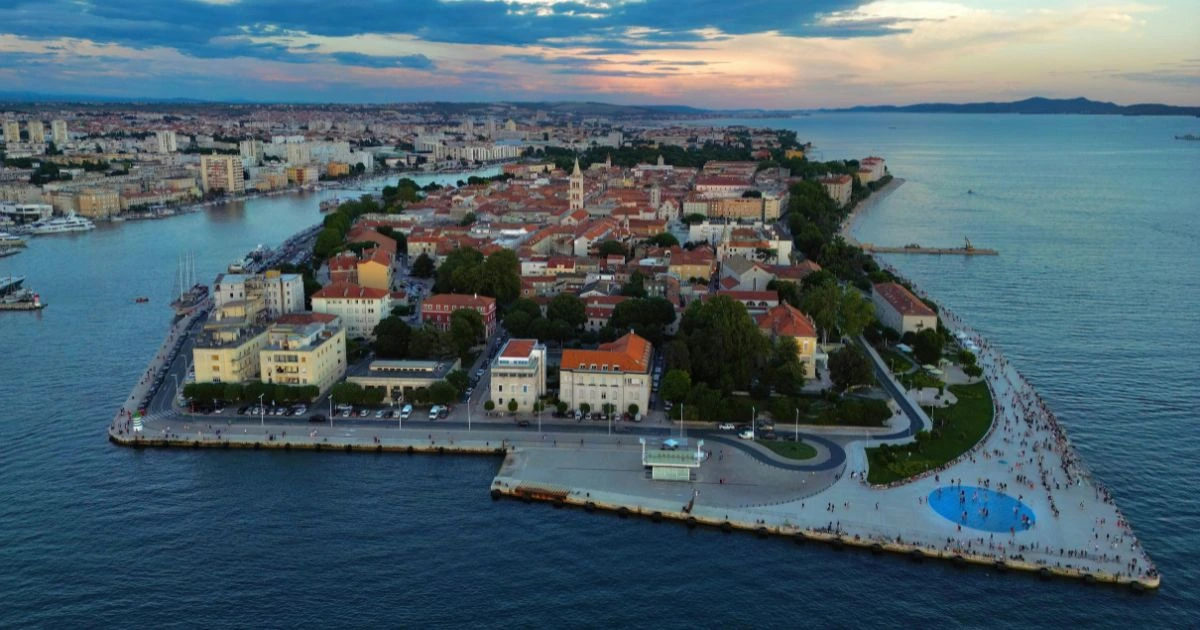
Top Attractions in Zadar
A visit to Zadar often includes the Old Town, the Sea Organ, and the Greeting to the Sun. Zadar also has multiple cultural stops or museums, of which one is the Museum of Ancient Glass.
Below, you will find a short overview of each attraction:
| Attraction | Accessibility | Details |
|---|---|---|
| Sea Organ | Mostly accessible | The installation is incorporated in the waterfront stairs. Although the stairs might not be accessible, you can see them and hear the music from the waterfront. |
| Greetings to the Sun | Wheelchair accessible | Flat, step-free, and smooth installation at the waterfront. |
| Museum of Ancient Glass | Wheelchair accessible | Fully adapted museum with flat and smooth floors inside. |
Zadar Waterfront Accessibility Overview
Zadar’s waterfront is one of its strongest points when it comes to accessibility. The area is modern, flat, and easy to navigate, making it ideal for wheelchair users who want a smooth and relaxed experience by the sea. Many of the city’s key attractions are located along this stretch, which means you can see quite a lot without needing to navigate difficult terrain.
Greeting to the Sun and Sea Organ: What to Expect
The Greeting to the Sun and the Sea Organ are two of Zadar’s most iconic modern attractions, both designed by architect Nikola Bašić and located along the city’s waterfront promenade.
The Sea Organ is an experimental musical instrument built into the steps by the sea. Hidden pipes use wave movement and air pressure to create soft sounds. Because it is powered entirely by nature, no two visits sound the same. While it isn’t directly accessible down the steps, the music can be clearly heard from the promenade.
Next to it, the Greeting to the Sun is a large circular installation made of glass panels that absorb sunlight during the day. It is fully wheelchair accessible and especially impressive in the evening, when it lights up and brings the waterfront to life.
Getting Around Zadar’s Old Town
The Old Town has a different feel, with more traditional stone streets and narrower passages. The main pedestrian routes are generally smooth, but once you move into smaller alleys, you may encounter uneven surfaces, small steps into shops, and cafés without ramp access.
The Museum of Ancient Glass: Accessible Indoor Visit
The Museum of Ancient Glass is a fully wheelchair accessible museum and a great indoor option. The building is a restored 18th-century palace, and offers a calm, step-free environment that is easy to navigate. This museum is especially worth visiting for its unique collection of Roman glassware, including bottles, bowls, and jewelry over 2,000 years old.
So, Which City Is Best?
If you are looking for the easiest overall experience, Split is often the most practical and balanced choice, combining accessibility with plenty to see and do. If your priority is iconic scenery and you don’t mind some limitations, Dubrovnik offers unforgettable views and atmosphere. And if you prefer a more relaxed pace with accessible waterfront areas, Zadar provides a comfortable middle ground.
In the end, the best choice comes down to your personal comfort level, how much uneven terrain you’re willing to navigate, and the kind of experience you want to have in Croatia. That said, you don’t necessarily have to choose just one city to visit!
Plan Your Trip Today!
If you’re planning a trip to Croatia, you can explore our wheelchair accessible tours in Dubrovnik, Split, and Zadar and find the option that best suits your needs. Our itineraries are designed to make each destination easier to navigate, so you can focus on enjoying the experience instead of the logistics.


Keep reading
You might also like

Paris’s 4 Most Accessible Highlights
Discover Paris's four most iconic highlights, from the Eiffel Tower to the Palace of Versailles, and find out how accessible they are…

Portuguese Islands to Add to your Travel List
Discover Madeira and Ponta Delgada, two of Portugal’s most beautiful islands, offering volcanic lakes, ocean views, and wheelchair accessible travel experiences.

Cultural Highlights of Spain
Spain has many wheelchair accessible cultural sights. But which ones are the highlights?