
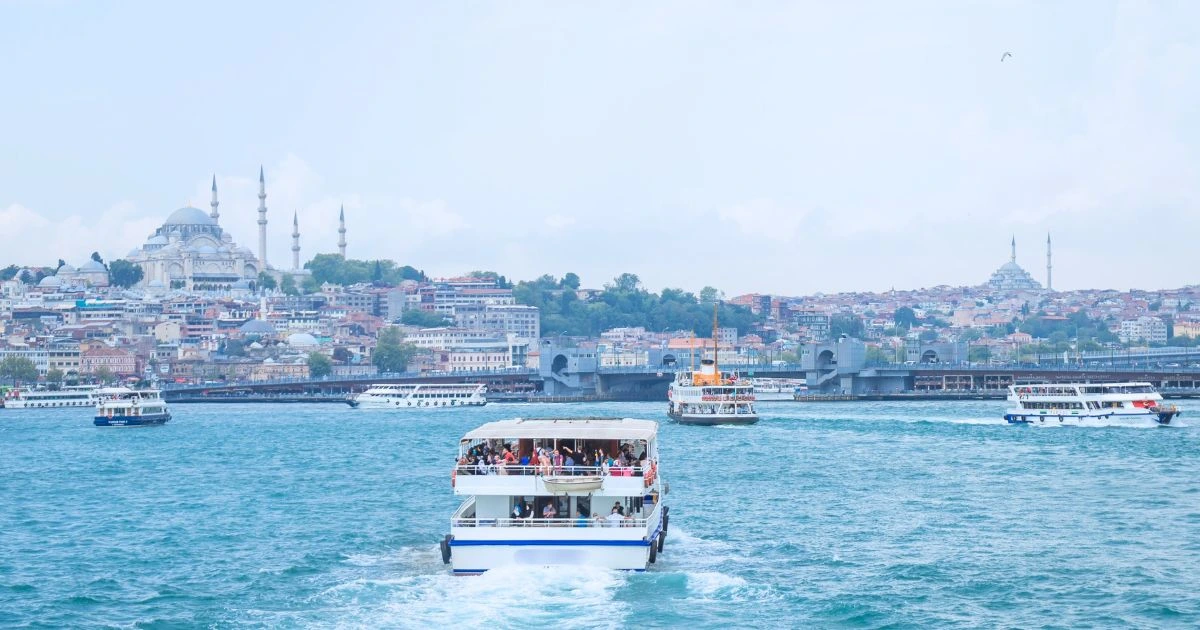

Top Things To Do in Istanbul & Their Wheelchair Accessibility
April, 2026

Istanbul is a city shaped by centuries of history, culture, and architecture. From ancient Byzantine structures to ottoman palaces and lively markets, the city offers a wide variety of experiences for visitors.
To make the most of this visit, this guide provides an overview of key Istanbul city attractions, with a focus on accessibility details to help you plan your time in the city with confidence.
Getting Around Istanbul and Reaching the Main Sights
Many of Istanbul’s most well-known landmarks are close to one another, especially in the historic Sultanahmet area. This makes it possible to combine visits to explore several sights within a relatively short distance. In terms of transportation, you have several options.
By Public Transport
If you wish to use public transport, the T1 tram line is particularly useful, as it stops near highlights such as Hagia Sophia, the Blue Mosque, and many more. Trams on this line are low-floor and provide level access from platforms. Please note that during busy hours, trams and stations can be crowded, which may affect travel time and available space.
Additional Walk/Roll Through the Fatih District
From the tram stops, you can reach most attractions with short walks/rolls of about 5 to 10 minutes, passing through open squares, sidewalks, and historic streets of the Fatih district. Surfaces often include cobblestones, gentle slopes, and some irregularities in the pavement, which are a typical part of the old city. Therefore, this is something to be aware of if you are visiting in a wheelchair.
While many pathways are wide and open, some sections may feel uneven due to historic paving. Because the main sights are close together, you can choose your pace and decide how many stops to include in a single trip.
By Taxi or Private Vehicle
Taxis and private vehicles can drop passengers close to the attraction entrances. While parking is limited around historic sites, drop-off points are common.
Another option, for those who prefer a bit more flexibility, are wheelchair accessible private tours. These offer door-to-door travel, wheelchair adapted vehicles, and the ability to move through the city at a pace that suits your individual mobility needs. This type of services can be especially useful when visiting multiple sites in one day or when avoiding busy public transport periods.
Hagia Sophia
Hagia Sophia is one of the most significant Istanbul city attractions, known for its large dome, rich history, and symbolic role in the city. Originally built as a cathedral in the 6th century, it later became a mosque, then a museum, and today functions again as an active mosque while welcoming visitors outside prayer times.
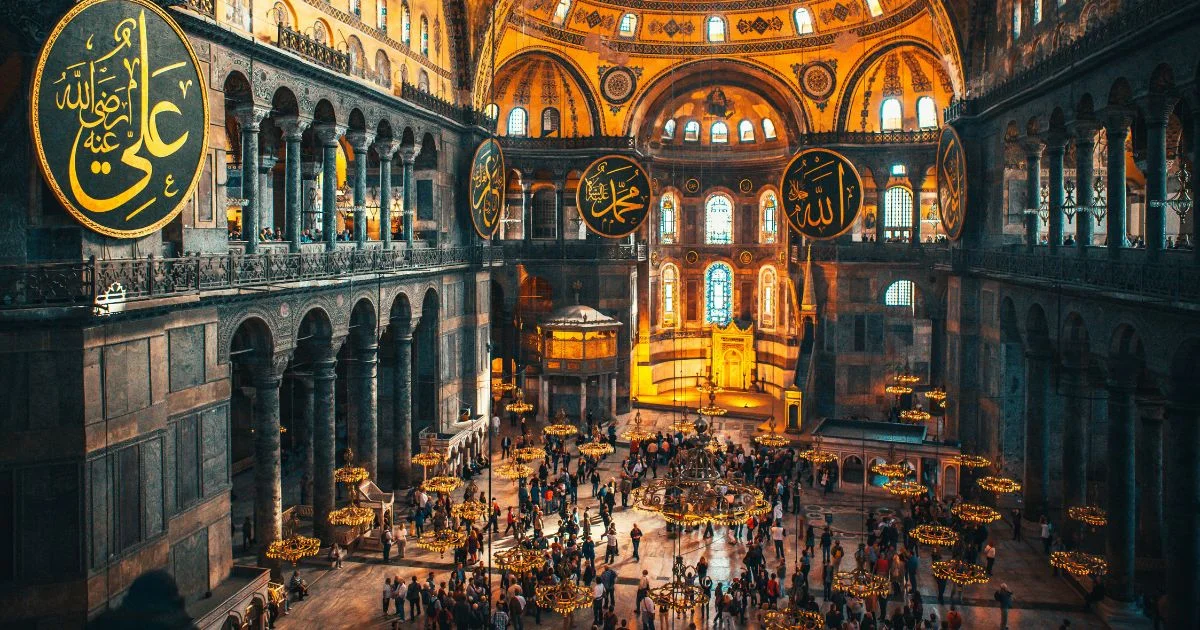
Wheelchair Accessibility of Hagia Sophia
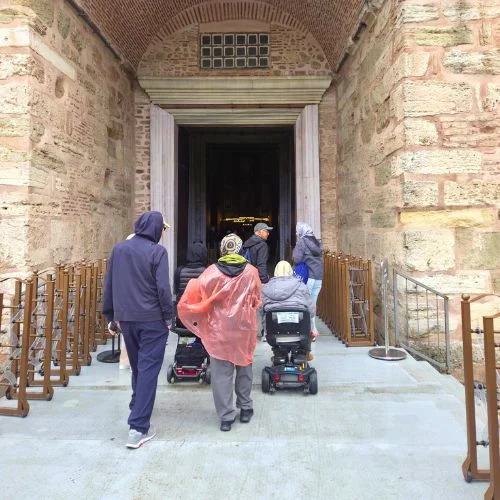
Hagia Sophia is partially wheelchair accessible. If you are visiting in an electric wheelchair or mobility scooter, you will have to transfer to a manual wheelchair to enter. If you are visiting with your own manual wheelchair, staff may ask you to tape the wheels or to transfer to a wheelchair provided on site. The mosque requires visitors entering on foot to remove their shoes. The mosque applies these measures to protect the carpets inside.
Tickets and Entering Hagia Sophia
To enter the building, visitors need to purchase a ticket. There are no discounts or free tickets for visitors with disabilities or their companions. The ticket gives you access to the upper gallery only, which is only accessible via stairs and steep, uneven ramps. It is important to note that there are no elevators.
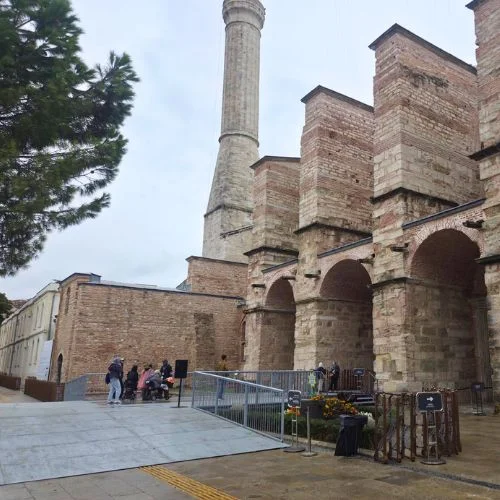
Visitors with reduced mobility are advised to use the west-side entrance on Almedar Street, which allows access to the lower area. Although ramps are available in the lower area, there is a step at the main entrance which may require assistance to move a manual wheelchair inside. Once inside, the ground floor is largely flat and step-free. From here, you can see most of the central interior, including the main dome, columns, and decorative features.
Accessible Restrooms
Hagia Sophia does not have accessible restroom facilities inside the building. That said, public toilets are available in nearby areas around Sultanahmet Square, within a short walking/rolling distance. You can plan restroom breaks before or after your visit to Hagia Sophia.
An Accessible Alternative or Addition to your Hagia Sophia Visit
For those looking for a fully accessible alternative or addition, the Hagia Sophia History and Experience Museum, located about a 10-minute walk/roll away, offers step-free access throughout and allows power wheelchairs.
Find our more!
Are you excited to travel to Istanbul and visit this historical monument? Learn more about Hagia Sophia and its accessibility, check out our dedicated blog!
Topkapi Palace
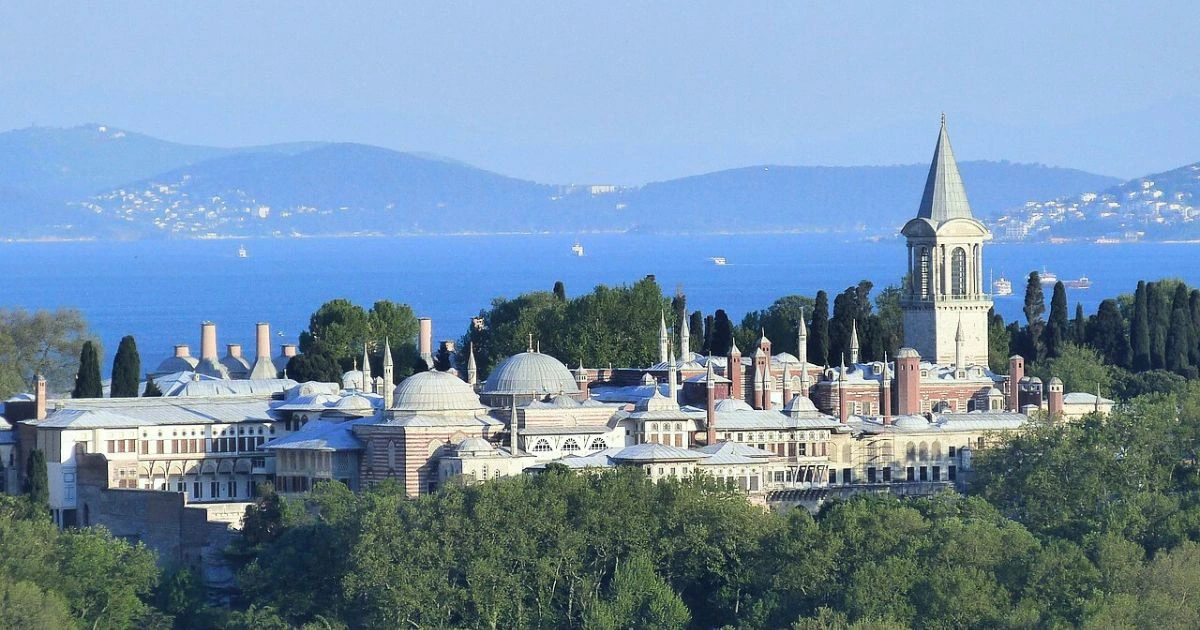
Topkapi Palace was the administrative, educational, and residential center of the Ottoman Empire for nearly 400 years. Spread across a large hillside overlooking the Bosphorus, the palace complex consists of four courtyards connected by monumental gates.
Wheelchair Accessibility of Topkapi Palace
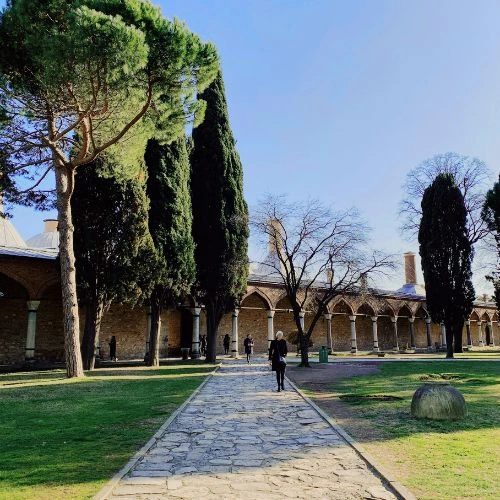
Topkapi Palace is partially wheelchair accessible. The First and Second Courtyards are the most accessible, with wide pathways, relatively level surfaces, and ramped access to key buildings. In these areas, you can explore highlights such as Hagia Irene Church, the Palace Kitchens, and sections of the Imperial Council. Please note that some exhibition entrances have small thresholds, and stone surfaces may be uneven in places.
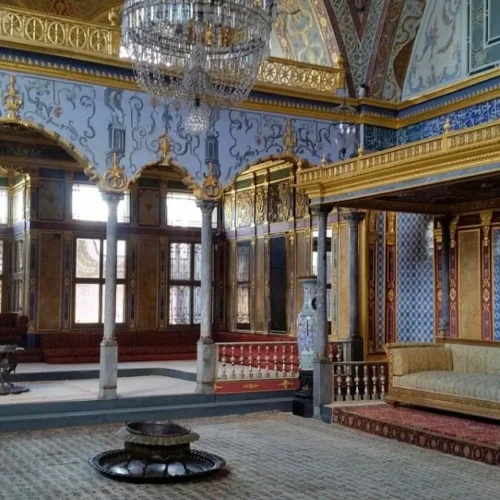
However, the Third and Fourth Courtyards include stairs, steeper slopes, and narrow paths. The Harem section is largely inaccessible in a wheelchair due to narrow corridors and multiple steps. As the Harem requires a separate ticket, you may wish to consider this before purchasing.
Tickets to Topkapi Palace
To enter the palace grounds, you need to purchase a ticket. Staff check them between the First and the Second Courtyard, at the Gate of Saluation. Like mentioned before, there’s a separate ticket for the Harem area.
If you are using a wheelchair, you can enter through an accessible gate. Topkapi Palace does not offer wheelchairs or rental services, so you should bring your own mobility aids.
Accessible Restrooms
Topkapi Palace provides wheelchair-accessible restrooms within the palace grounds. Facilities are located in the Second Courtyard and near the Konyali Restaurant. These restrooms have:
- Step-free access
- Wide doorways
- Grab bars
- Space for wheelchair maneuvering
Due to the size of the palace complex, it may take some time to reach these facilities from certain areas.
Find our more!
Interested in exploring Topkapı Palace in more detail? You can read more in our dedicated blog post.
The Blue Mosque
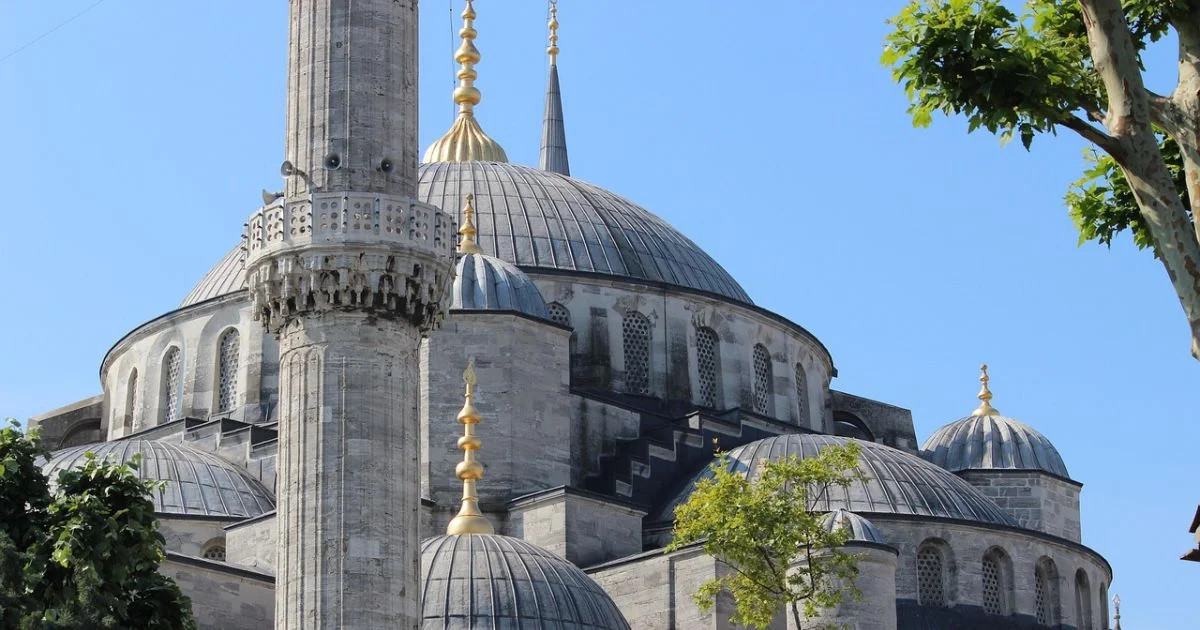
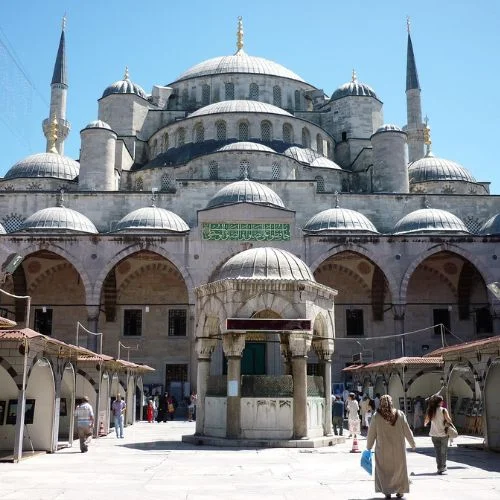
The Blue Mosque, or Sultan Ahmed Mosque, is one of the most visited things to do in Istanbul. It was built in the early 1600s and is well known for its layered domes, six minarets, and blue Iznik tile interior. Located directly opposite Hagia Sophia, it is an active place of worship but also welcomes visitors outside prayer times.
Wheelchair Accessibility of the Blue Mosque
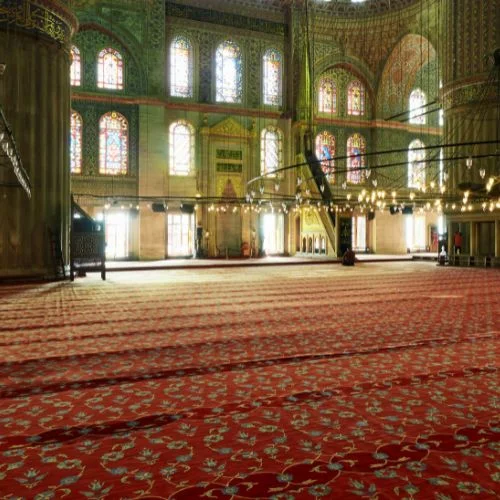
You can enter the Blue Mosque in a wheelchair via a ramped entrance on the northwest side of the mosque, facing the Hippodrome. To protect the hand-woven carpets inside, you will be asked to transfer to a manual wheelchair provided by the mosque, as the site does not allow personal wheelchairs and mobility scooters. Visitors must also remove their shoes, following mosque customs. Staff are usually present and can assist with transfers and navigation if requested.
The courtyard is spacious and mostly flat, with marble flooring and open views of the mosque’s exterior. Inside the prayer hall, the designated visitor area is accessible and allows visitors to view the interior decoration, central dome, and architectural details. A wooden barrier separates visitor and worshipper areas to maintain a respectful environment.
Entrance and Prayer Times
Entrance to the Blue Mosque is free, but you should be aware of the daily prayer times, since this is an active mosque. For this reason, it will be closed to visitors during these times. Make sure to check current prayer times before your visit.
Accessible Restrooms
There are no restrooms in the main prayer hall area, but accessible restrooms should be available in the mosque complex’s neighborhood. You can usually ask mosque staff or the information desk for directions to the nearest accessible toilet.
Find our more!
Want to plan your visit with even more confidence? Head to our dedicated blog page for a deeper look at the Blue Mosque’s accessibility and facilities.
Basilica Cistern
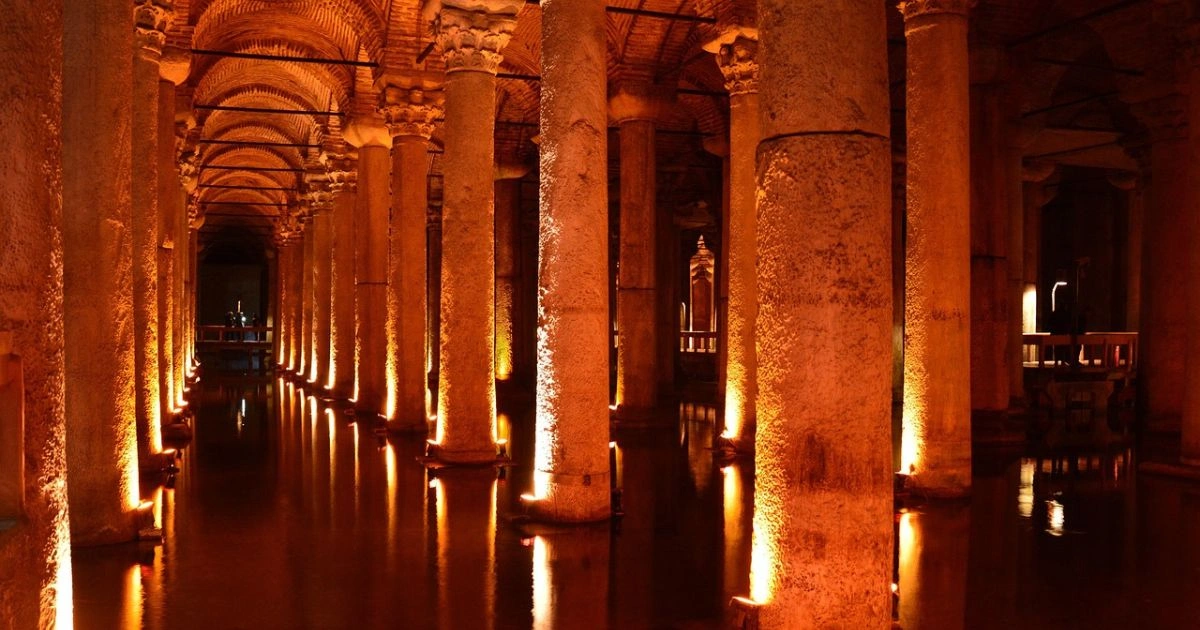
Another highlight of Istanbul is the Basilica Cistern, which visitors often consider one of Istanbul’s most fascinating historical sites. Located underground in the heart of the Sultanahmet district, this impressive structure was built in the 6th century by Eastern Roman Emperor Justinian I. Because of its underground location, and hundreds of marble columns rising from the water, locals often call it “Yerebatan Sarayı,” meaning “Sunken Palace.”
The cistern once stored and distributed water to the Great Palace and nearby buildings. Today, it is a museum and one of the most atmospheric places to visit in Istanbul. Soft lighting, shallow water, and iconic details such as the Medusa head columns create a unique experience for visitors.
Wheelchair Accessibility at Basilica Cistern
The Basilica Cistern is one of the most accessible historic attractions in Istanbul. A wheelchair-accessible entrance is located on Alemdar Street near the exit, where a platform lift allows visitors to descend into the cistern without needing to use any stairs. Staff are usually present to assist if needed. Keep in mind that only one wheelchair can use the lift at a time, and that you must bring your own mobility aids, as none are available on site.
Once inside, the cistern is fully step-free, with wide, flat walkways that allow you to explore the entire space and view all major features. Please be aware that lighting is intentionally low, and the environment is humid, with damp surfaces, the possibility of a slippery floor and occasional dripping water.
Tickets
To enter the Basilica Cistern, you need a valid ticket which you can buy on-site or online. Visitors with disabilities can be granted free admission upon presentation of official identification and proof of disability. When a visitor can prove a disability of 70% or higher, one accompanying person may also enter for free. Please make sure you have the necessary documents with you when visiting the Basilica Cistern.
Overall, the Basilica Cistern is one of the most accessible historic sites in Istanbul and offers a unique experience. With proper planning and awareness of the humidity and its consequences, it can be an enjoyable and memorable stop for visitors.
Accessible Restrooms
There is currently no confirmed information about accessible restroom facilities inside the Basilica Cistern. You may plan to use accessible toilets in nearby public spaces, such as Sultanahmet Square, or nearby restaurants and cafés before or after your visit.
Hippodrome Avenue
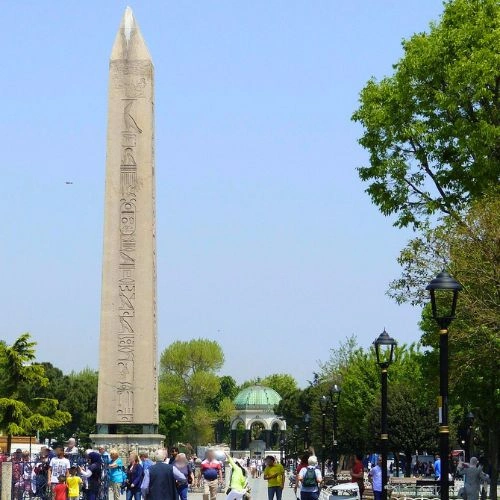
Although Hippodrome Avenue, also known as Sultanahmet Square, may feel calm and open today, it was once the social and sporting center of Byzantine Constantinople. This ceremonial space was originally a chariot-racing stadium that could hold up to 100,000 spectators. Emperors, crowds, and rival teams once filled the area.
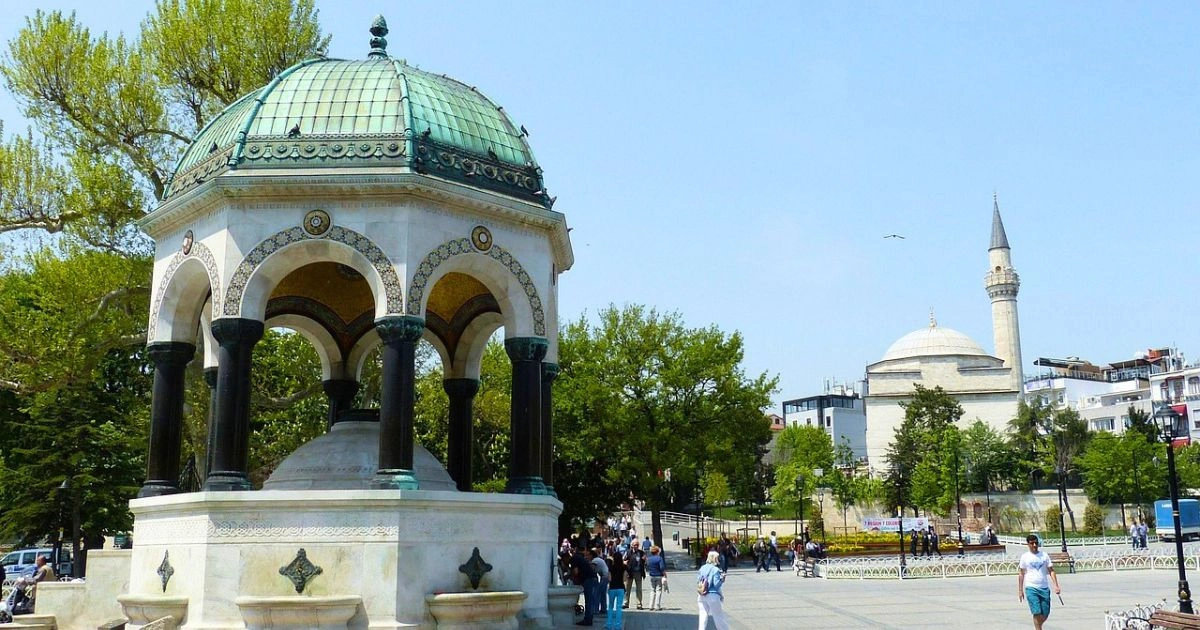
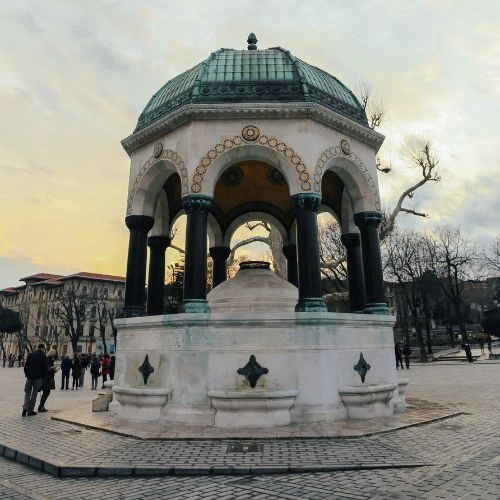
Now, the former racetrack is a spacious public square paved with stones and an open-air museum. You can see several monuments along the track, including the Obelisk of Theodosius, the Serpent Column, the Walled Obelisk, and the German Fountain. The square is located directly between the Blue Mosque and Hagia Sophia, making it one of the most visited and visually remarkable areas of Istanbul.
Wheelchair Accessibility of Hippodrome Avenue
Hippodrome Avenue is generally wheelchair accessible. The square is wide, open, and mostly flat, making it possible to move around without steps. Some areas are surfaced with cobblestones, which may feel uneven, but because it is an open public space, you can explore at your own pace and choose how much, or what parts, of the area you wish to cover.
As Hippodrome Avenue connects different landmarks like the Blue Mosque, Hagia Sophia and Basilica Cistern, it is easy to include in any wheelchair accessible travel itinerary. You can choose to visit early in the morning to avoid crowds or in the evening for cooler temperatures and lively street life.
There is no entrance fee to visit Hippodrome Avenue. It is an open public space and can be accessed at any time of the day. No tickets, reservations, or security checks are required to enjoy this site.
Accessible Restrooms
Accessible public toilets are available near Hippodrome Avenue, including facilities close to the Blue Mosque complex. While they are not located directly within the center of the square, they are generally within a short walking/rolling distance. Please note that availability may vary, depending on when you visit.
Grand Bazaar
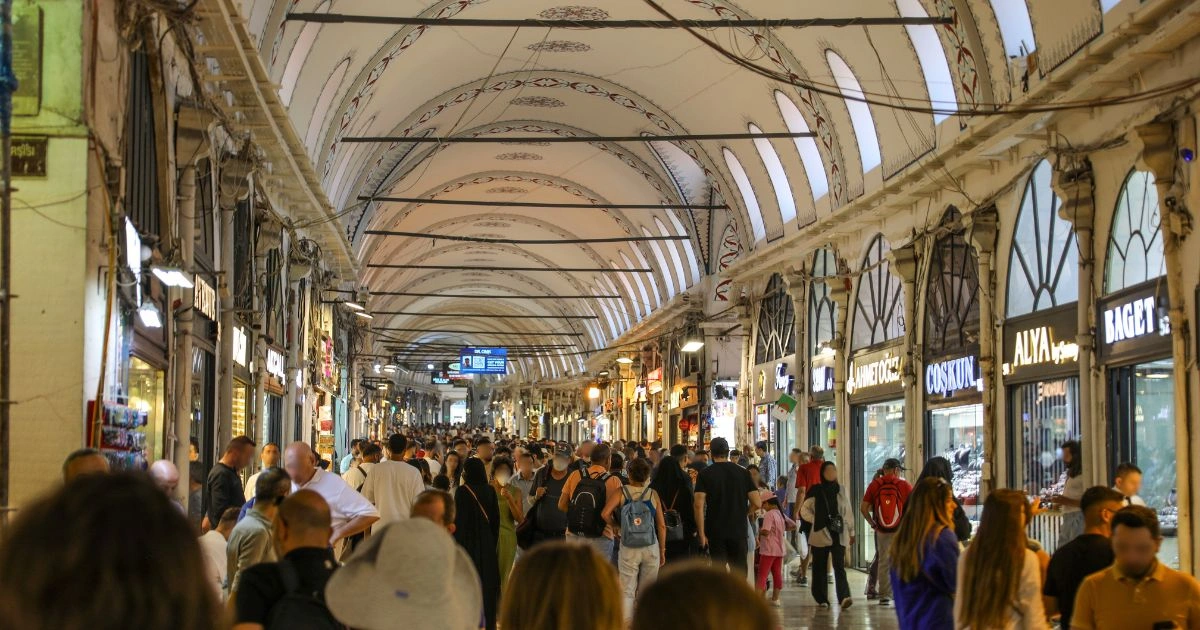
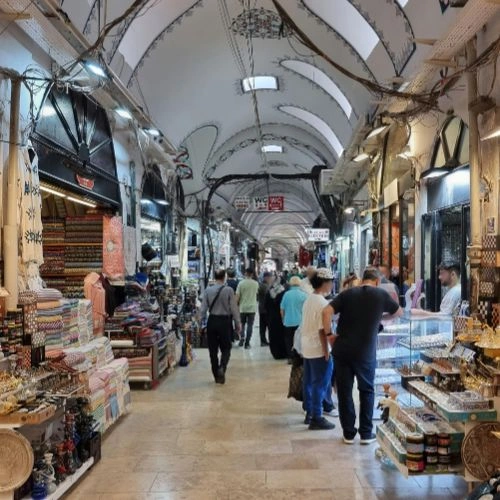
As one of the world’s largest and oldest covered markets, the Grand Bazaar in Istanbul is a city highlight. With about 60 streets and over 4,000 shops, you can find anything from clothing and jewelry to carpets and lamps, along with a variety of restaurants and cafés. It is a real must-see for food-lovers, souvenir hunters, and anyone interested in traditional crafts or the area’s rich commercial history.
The Grand Bazaar was built in the 15th century by Sultan Fatih to support Hagia Sophia and to this day remains a lively, historic market where shopkeepers continue centuries-old trade traditions.
How to Reach the Grand Bazaar
The Grand Bazaar sits in Sultanahmet, within reach of the Beyazıt and Nuruosmaniye Mosques.
By Public Transport
If you are using public transport, the nearest stops are the Beyazit-Kapali Çarşi tram stop and Vezneciler metro station, though it’s good to note that some older stations or streets nearby may still have steeper ramps or narrower sidewalks.
By Taxi or Private Vehicle
Taxis can drop visitors off close to several entrances, or you may choose to book a wheelchair accessible tour offering a private adapted vehicle and the opportunity to combine your visit to the Grand Bazaar with other highlights of Istanbul.
Accessibility
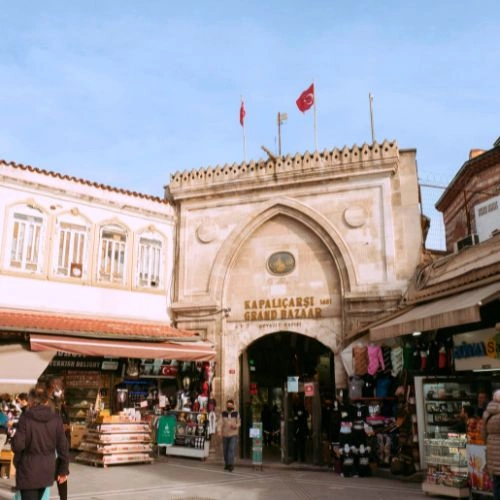
The Grand Bazaar is mostly wheelchair accessible and has step-free entrances like Gate 1 and the Swordsman entrance, providing direct access to the main pathways. Inside, shopkeepers are usually helpful, often bringing items out so you can see and handle products comfortably. While most streets are wide enough for maneuvering, a few shops are on the smaller side or have a small step at the door.
Please note that the Grand Bazaar is not only a place visited by tourists, but also many locals. As a result, the streets of this covered market can get quite crowded at times. Please plan your visit accordingly and make sure to schedule enough time in your itinerary to explore and get lost in the many streets of this Grand Bazaar.
Accessible Restrooms
While there are restrooms inside the Grand Bazaar complex, they’re not accessible for wheelchairs. However, you can check with nearby in cafés, hotels and public spaces or buildings for an accessible restroom before or after your visit.
Finding Accessible Restrooms
Accessible restroom availability in Istanbul’s historic areas varies depending on the site. One reason is that many major landmarks are located within protected or centuries-old buildings, which means accessible toilets are not always available inside the attraction itself. However, in areas such as Sultanahmet, several landmarks are close together, making it possible to plan restroom breaks between visits.
Accessible toilets are typically found in larger museum complexes, open squares, and well-visited public areas. Availability and waiting times can change throughout the day, particularly during busy periods. In addition, some nearby cafés, hotels, and public buildings may offer accessible restroom facilities depending on their layout and policies.
Accessaloo
To help with planning on the go, you can use the accessaloo app. This application shows the location of accessible toilets near you, as well as user reviews, photos and practical details. You can also share your own experiences or add a new toilet you discover.

EXPLORE MORE