
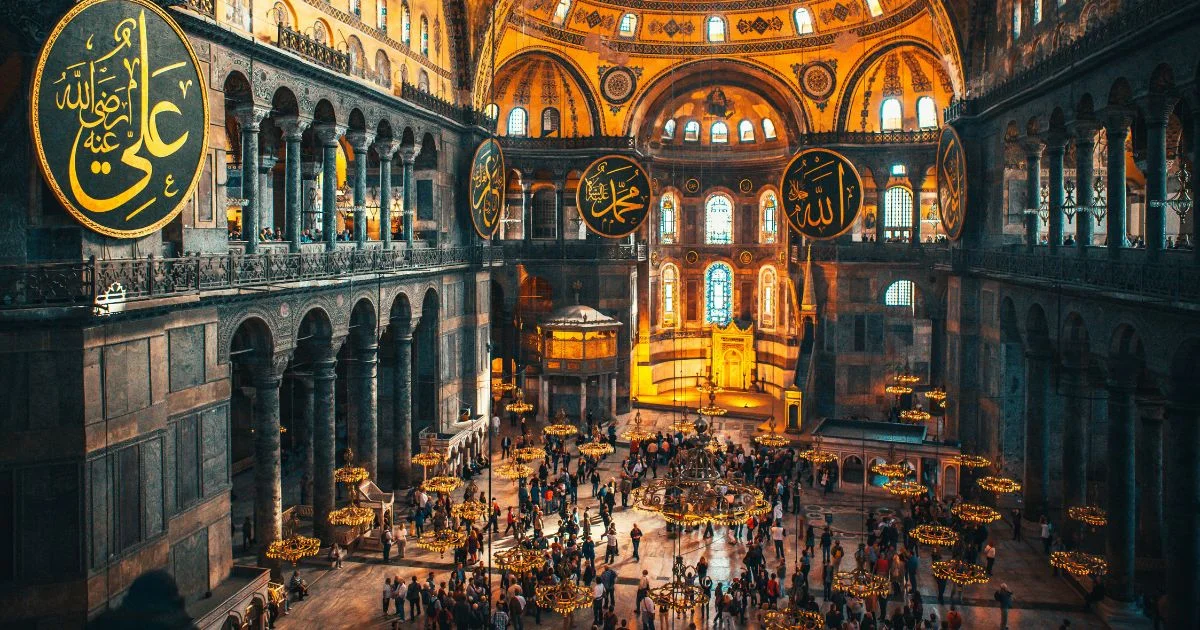

Exploring Hagia Sophia: Accessibility Information to Help You Plan Your Visit
March, 2026

Hagia Sophia is one of Istanbul’s most visited landmarks and an important cultural and religious site. This blog provides you with practical information about wheelchair accessibility at Hagia Sophia, helping you plan your visit if you use a wheelchair or other mobility aid.
About Hagia Sophia
As one of Istanbul’s most iconic landmarks, the Hagia Sophia attracts visitors from around the world. This building reflects both Ottoman and Byzantine architectural influences and has served different purposes throughout history.
Originally constructed as a cathedral, it was later converted into a mosque. In 1935, Hagia Sophia became a museum and was reconverted into an active grand mosque in 2020. Visitors are welcome to enter this cultural and religious site, being mindful of prayer times and the dress code.
How to Reach Hagia Sophia
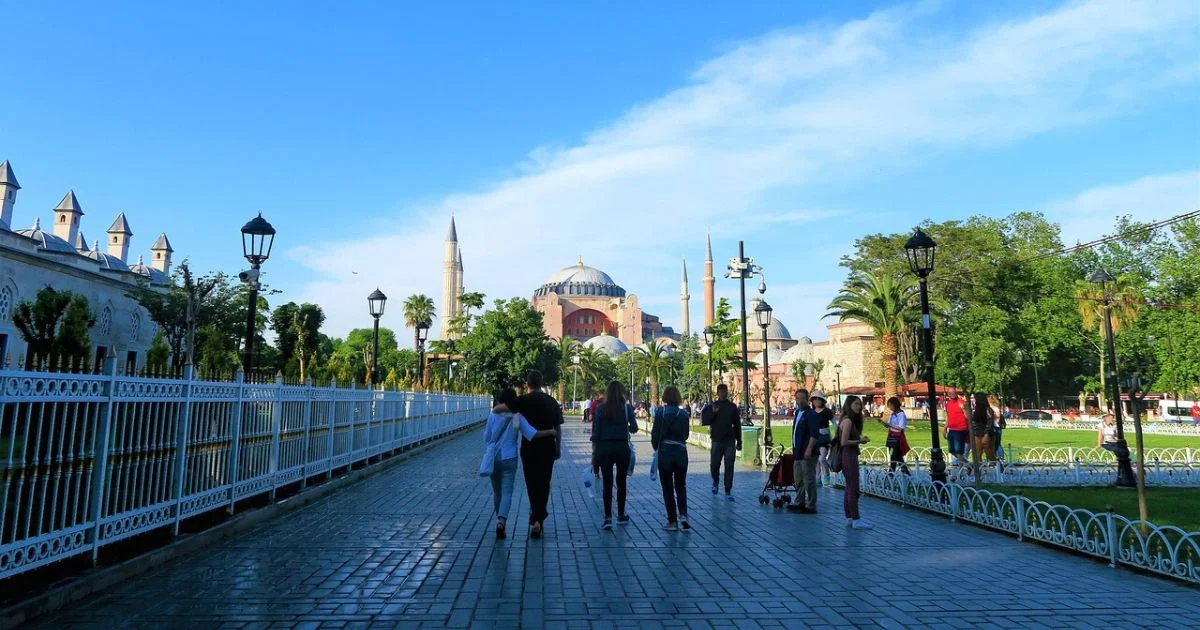
Hagia Sophia is located in the Sultanahmet district, one of the busiest areas of Istanbul. There is often a high number of visitors, especially between late morning and mid-afternoon, which may affect movement for people using wheelchairs or other mobility aids.
By Public Transport
To get to Hagia Sophia, you can take public transport, with the easiest option being the T1 tram line, stopping at Sultanahmet. This tram uses low-floor trams with level access from the platform.
However, it is important to note that these trams can get very crowded, especially during peak hours. From the tram stop to Hagia Sophia, the route is slightly uphill and paved with cobblestones. While the surface is mostly even, some sections may cause vibrations when using a wheelchair.
By Car
If you wish to visit Hagia Sophia by car, please be aware that the site does not have dedicated on-site parking. Limited parking is available in the surrounding area, approximately a 5–10 minute walk/roll away.
By Taxi or Private Vehicle
Taxis and private vehicles can drop you close to the accessible entrance, and travelling with an assisted service or booking a wheelchair accessible private tour could be a comfortable alternative, as this can offer door-to-door transport, dedicated assistance if desired, and the ability to travel at a pace that suits individual mobility needs.
Is Hagia Sophia wheelchair accessible?
Hagia Sophia is partially wheelchair accessible, with certain limitations that should be considered when planning a visit:
- Electric wheelchairs and mobility scooters cannot enter the main areas of the site
- Users of these types of mobility aids are asked to transfer to a manual wheelchair
- Manual wheelchair users are asked to tape the wheels or transfer to a wheelchair on site
These measures are applied consistently to protect the carpets inside the mosque. Additionally, please note that there are no rental wheelchairs available at Hagia Sophia, so plan your visit accordingly.
Accessibility around Hagia Sophia
Accessibility in the area surrounding Hagia Sophia is generally good, though there are some things to be aware of. The monument is in a historic area with wide open squares but also has some uneven cobblestone roads and occasional slopes.
Most main pathways around Hagia Sophia and Sultanahmet Square are relatively flat and spacious, allowing wheelchair users to move around freely. However, some pathways are cobbled and may cause vibrations due to the uneven surface. During peak visiting hours, higher visitor numbers can affect navigation.
Wheelchair Accessible Entrance
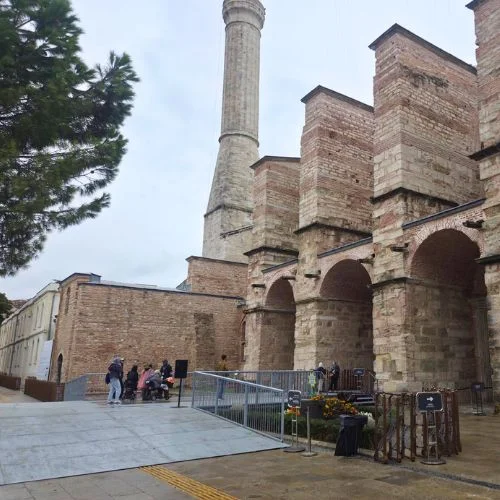
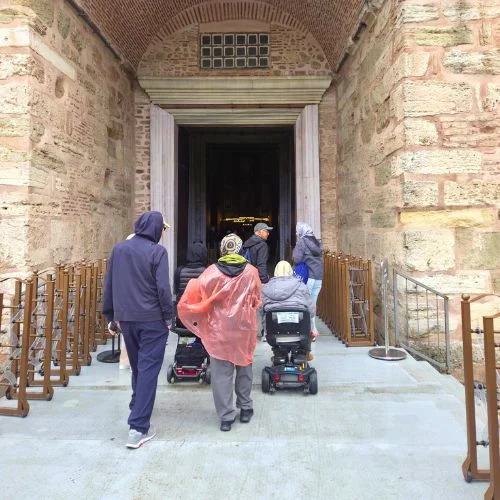
Visitors with reduced mobility can use the main entrance of the building, which is located at the west corner, from Almedar Street. This entrance is equipped with ramps of about one meter, with a gentle slope and a non-slip surface. The doors are not automated, but staff are generally present during visiting hours and can provide assistance if needed.
As mentioned before, it is important to note that power wheelchairs and scooters cannot enter the main areas at Hagia Sophia, and a transfer to a manual wheelchair is necessary. Sometimes, manual wheelchair users may also be asked to transfer, so please prepare your visit accordingly.
Accessibility Inside Hagia Sophia
Although ramps are available, some physical barriers remain when entering Hagia Sophia. There is a step at the main entrance, which may require assistance to move a manual wheelchair inside. Once inside, the ground floor is largely flat and step-free.
From the ground floor, you can view approximately 70% of Hagia Sophia, including its most iconic features. The upper gallery, however, is not wheelchair accessible. It can only be reached via long, steep stone ramps and stairs, with uneven and slippery surfaces. Unfortunately, there are no elevators or stair lifts available.
Are you already curious about what the inside of this iconic building looks like? With this 360° virtual tour you can take a look at Hagia Sophia.
Accessible Restrooms near Hagia Sophia
Hagia Sophia does not have accessible restroom facilities inside the building. The nearest accessible toilets are located in nearby public areas, such as Sultanahmet Square or Hippodrome Avenue. Staff in the area are generally available to assist visitors when required. Below you can find some pictures of a public accessible toilet located at the Hippodrome Avenue.
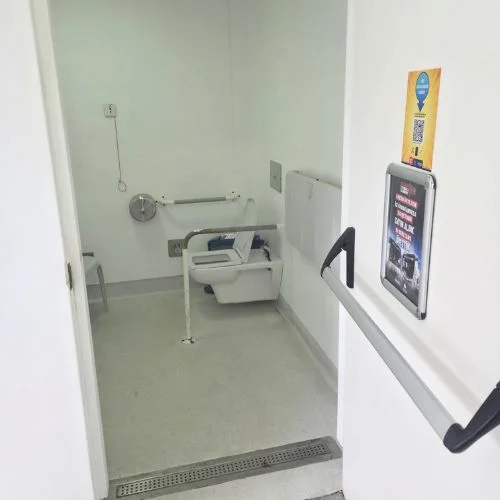
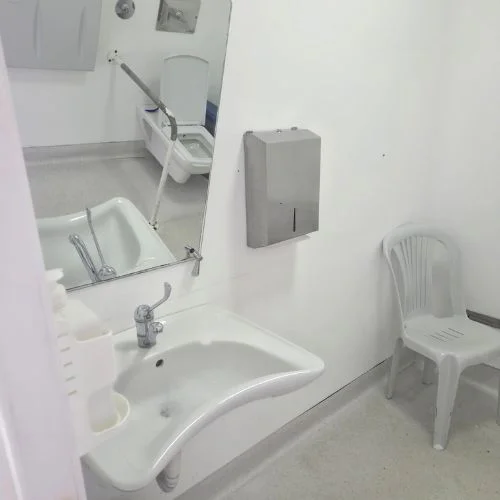
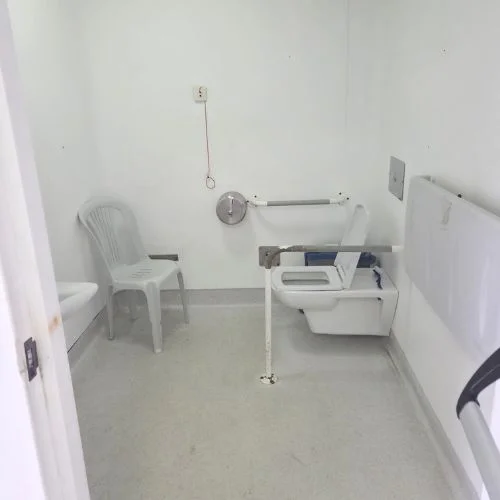
You can also download the Accessaloo App to see accessible toilets near you, read user reviews, and access practical information, as well as share your own experience or add a new toilet you discover.
Tickets and Access Regulations
Foreign visitors are required to purchase a ticket to enter Hagia Sophia, which costs about 25 euros and can be purchased at the official ticket office in front of the Sultan Ahmet III Fountain. You can also buy verified online tickets or make reservations through trusted tourism platforms. There are currently no discounted or free tickets for visitors with disabilities or their companions.
The ticket grants access to the upper gallery, which is not wheelchair accessible due to stairs and steep, uneven ramps. Visitors with reduced mobility are advised to use the west-side entrance, which allows them access to the lower area instead.
Planning Ahead
Hagia Sophia is a culturally significant site, but it comes with some accessibility limits. Knowing these in advance will help you plan and decide how to include it in your Istanbul itinerary. Here you can find some tips for planning your visit:
- Visit early in the morning or later in the afternoon to avoid peak visitor numbers and be aware of prayer times
- Be prepared for a transfer to a manual wheelchair on-site, or taping the wheels of your manual wheelchair
- Plan restroom breaks outside the complex
An Accessible Alternative: The Hagia Sophia History & Experience Museum
The Hagia Sophia History and Experience Museum, located approximately a 10-minute walk/roll from Hagia Sophia, is an accessible option for visitors with mobility limitations. The museum is wheelchair accessible and also allows power wheelchairs, making it a comfortable addition or alternative to Hagia Sophia itself.
Ready to visit Hagia Sophia?
Planning ahead makes all the difference. With our Wheelchair Accessible Highlights of Istanbul Tour, you can explore several must-sees of the city, including Hagia Sophia! With door-to-door transport, experienced local guides, and support tailored to your mobility needs, this tour lets you explore the beauty and history of Istanbul’s iconic landmark.
Book your accessible Istanbul tour today and discover the city’s gems, including the impressive Hagia Sophia.


READ RELATED BLOGS