

Colosseum Wheelchair Accessibility Guide (2026): Entrances, Elevators & Tips

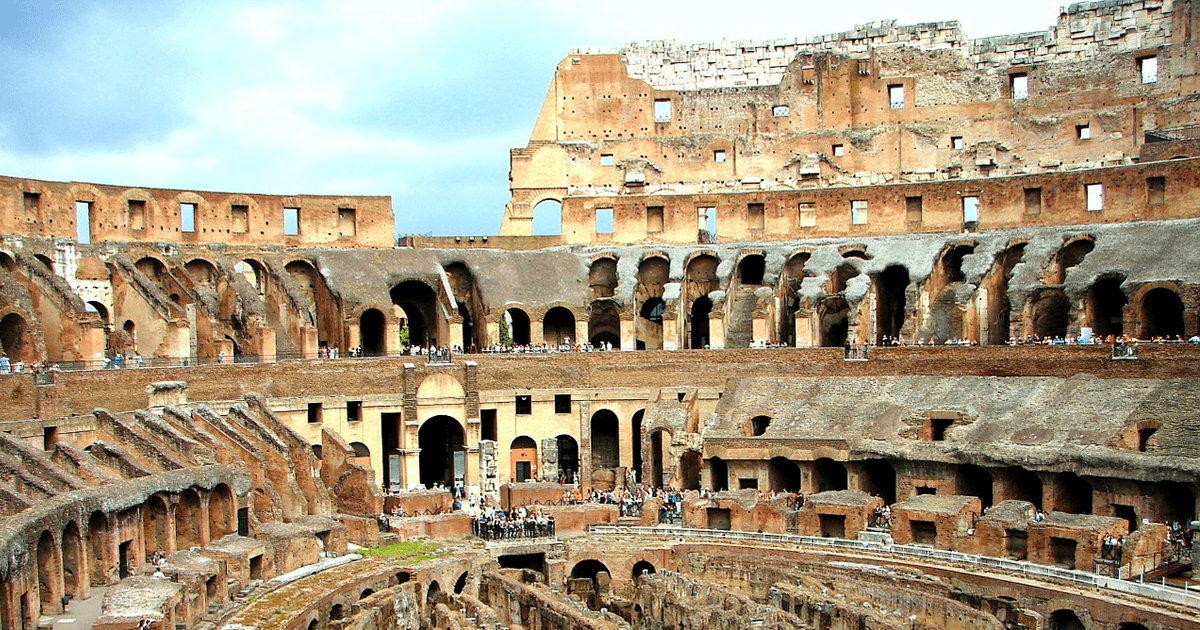
Visiting the Colosseum in a wheelchair is absolutely possible, but it helps to know what to expect before you go. As one of the most iconic landmarks in Rome, the Colosseum attracts millions of visitors each year, yet its ancient structure means accessibility is not always straightforward.
In this guide, we walk you through everything you need to know about Colosseum wheelchair access, from entrances and elevators to terrain and practical tips. Whether you are planning a short visit or a longer stay in Rome, understanding how accessibility works here will make your experience much smoother.
Many travellers combine their visit to the Colosseum with nearby highlights such as the Roman Forum and Palatine Hill, but also with other major attractions like the Vatican Museums or even day trips to places like Pompeii. Planning these visits in advance, especially from an accessibility perspective, can make a significant difference in how comfortable and enjoyable your trip will be.
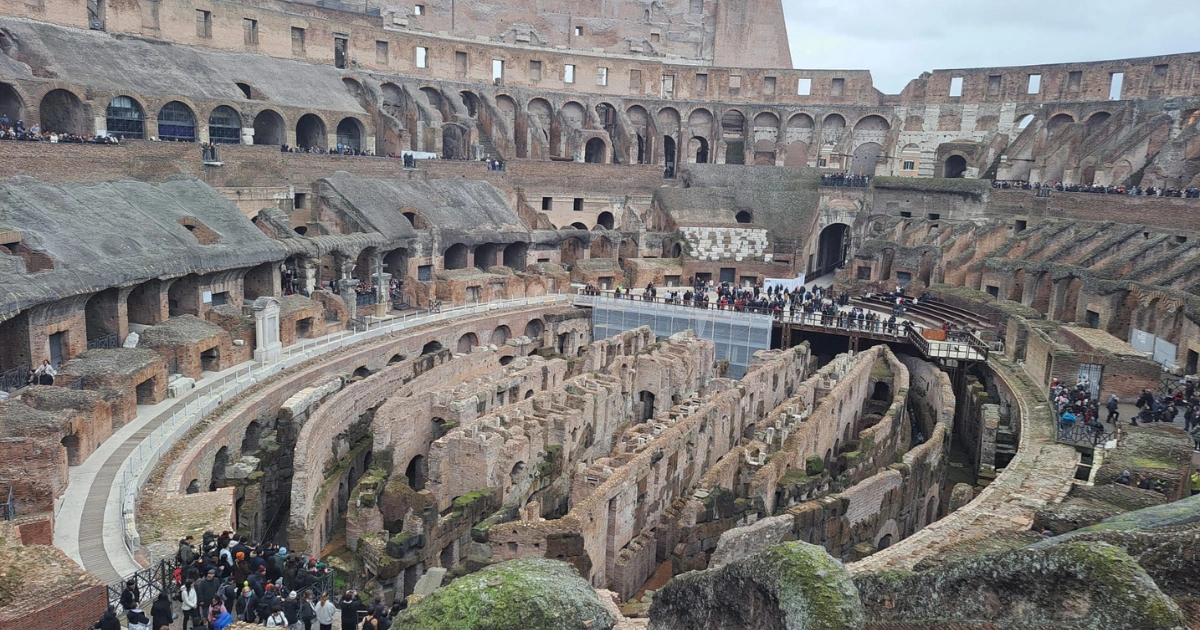
Is the Colosseum wheelchair accessible?
Yes, the Colosseum is partially wheelchair accessible.
Visitors with reduced mobility can enter through step-free access points and use elevators to reach different levels. However, due to the historic structure, not all areas are accessible.
This means you can experience the Colosseum in a meaningful way, but you will not be able to visit every section.
Want to learn more about our accessible tours in Rome?
Why not plan your visit to the Colosseum with an officially licensed guide and skip-the-line tickets? Check out our wheelchair accesssible Rome tours today and start planning your next trip!
Wheelchair Accessible Colosseum: Routes, Entrances & Tips
Visiting the Colosseum requires a bit of planning, but once you know where to go, the process becomes much easier. The accessible route is clearly defined and supported by staff on site.
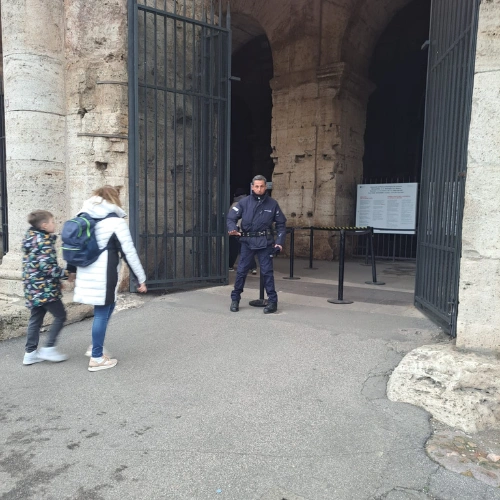
The main accessible entrance is located at the Sperone Valadier entrance, which is specifically designed for visitors with reduced mobility. Here, you can enter without stairs and receive assistance if needed.
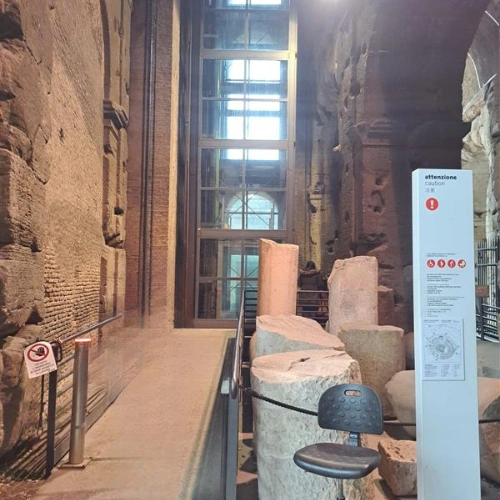
Once inside, elevators provide access to different levels of the Colosseum. These elevators are important for navigating the structure and allow you to reach areas that would otherwise only be accessible by stairs.
About the Colosseum
The Colosseum is one of the most famous landmarks in the world and a symbol of ancient Rome. Built nearly 2,000 years ago, it was originally used for gladiator contests and public spectacles.
Because of its age, the structure was not designed with accessibility in mind. Over time, modern adaptations have been added to improve access for visitors with disabilities. These include elevators, designated routes and accessible facilities.
Even with these improvements, the Colosseum remains a historical monument first, which explains why accessibility is partial rather than complete.
Is the Colosseum wheelchair accessible in practice?
Visiting the Colosseum in a wheelchair is manageable, but expectations matter.
You will be able to enter easily, move between certain levels, and enjoy views of the arena. However, you will also encounter limitations that are important to be aware of before your visit.
The most accessible parts of the Colosseum include the main levels that can be reached via elevator. These areas provide a strong sense of the scale and history of the monument.
Accessible entrances and routes
There are dedicated access points and routes for wheelchair users, making entry relatively straightforward.
At the accessible entrance, staff are available to guide you and help you navigate the process. Security checks are usually adapted to accommodate visitors with reduced mobility.
Once inside, the route is designed to take you through the most important parts of the Colosseum while avoiding stairs as much as possible.
You can expect:
- Step-free access at the main entrance
- Elevators connecting key levels
- Clearly indicated accessible pathways
Want to visit the Colosseum?
We offer a tour that is fully adapted to your needs. Skip the line with an officially licensed guide who will share all the ins and outs of this incredible structure in about three hours.
Elevators and access between levels
Elevators are the key feature that makes the Colosseum accessible.
They allow visitors to move between levels without relying on stairs. Typically, you will be able to access the first and second tiers, which already provide impressive views over the arena.
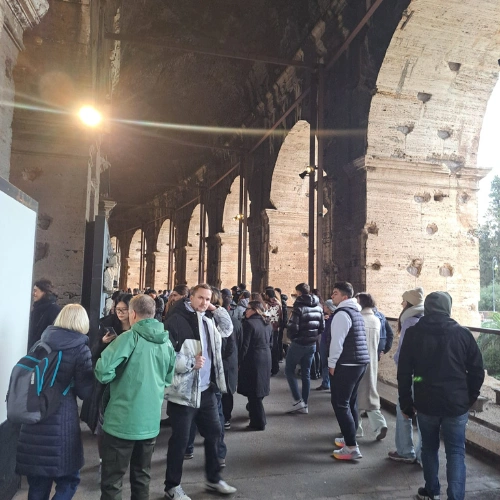
It is important to note that elevators may have limited capacity, and during busy periods, you might need to wait. Staff are usually present to assist and manage access when needed.
Terrain inside the Colosseum
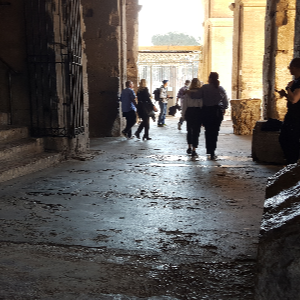
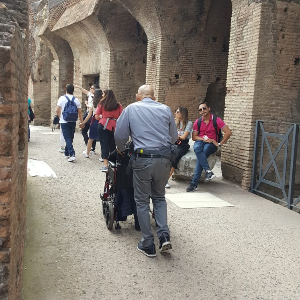
The terrain inside the Colosseum reflects its ancient origins. While some areas have been adapted, others remain uneven.
You may encounter cobblestones, slopes and rough surfaces throughout your visit. These elements can make navigation slightly more challenging, especially for manual wheelchair users.
For electric wheelchairs, movement is generally easier, although care is still required in certain areas. For manual wheelchairs, having assistance can make the experience smoother.
Accessible toilets in the Colosseum
There are two accessible toilets. The first one is in the Colosseum itself and is indicated throughout the building. Then, there is another one just outside the building.
The bathroom outside has opening hours and is open to the public. You find this toilet when you exit the Colosseum via the back entrance and make a left. The opening times of this toilet are from 10 am to 7 pm and there is always a person who keeps it clean. You find pictures of the toilet outside the Colosseum below and in our app.
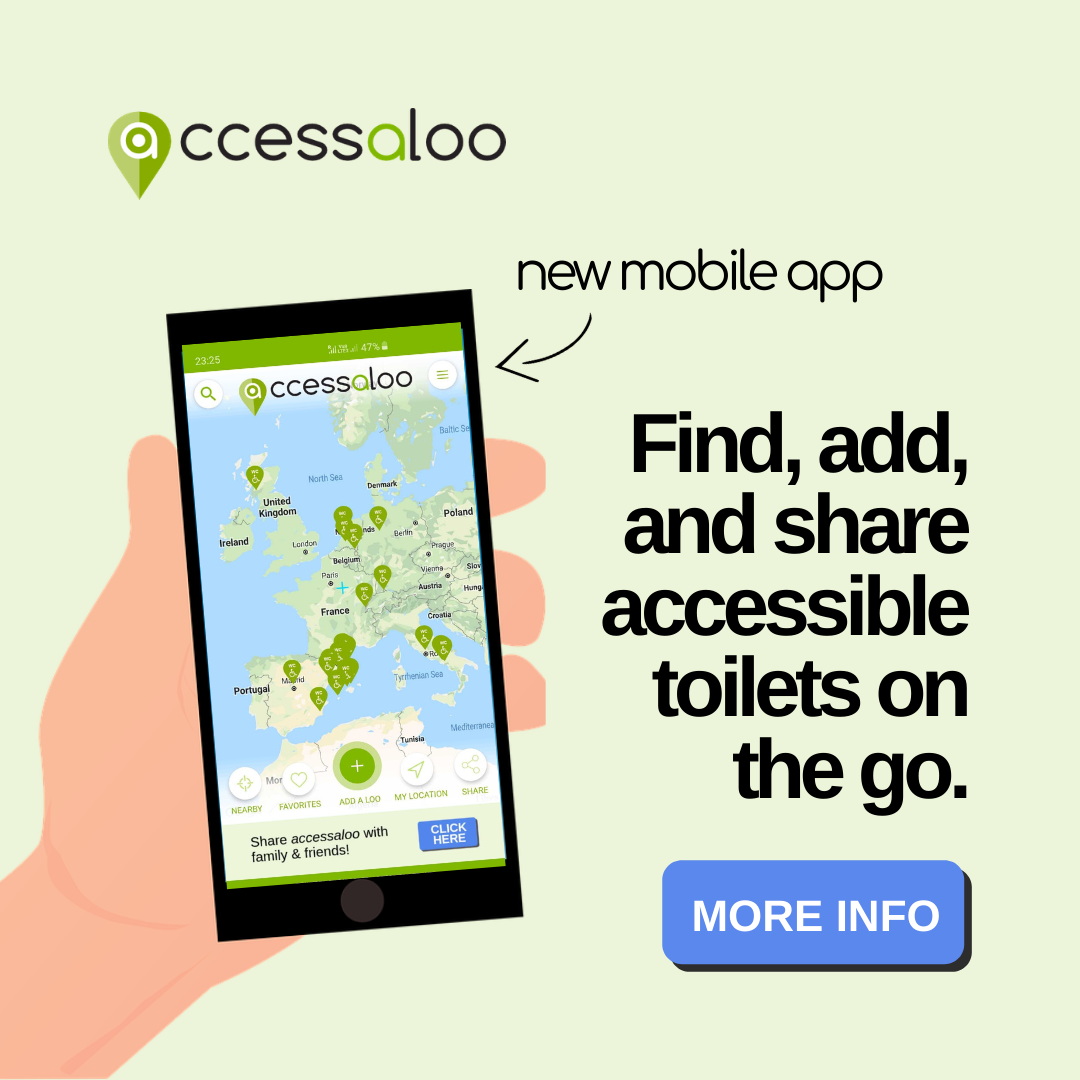
Want to know where to find this accessible toilet? With our newest app, accessaloo, you can find the exact location of this accessible toilet and many more.
Download accessaloo, to find the exact location of the toilet and navigate.


Additional accessibility services in the Colosseum and Roman Forum
Beyond entrances, elevators, and routes, the Colosseum and the wider Archaeological Park (including the Roman Forum and Palatine Hill) offer several additional services to support visitors with reduced mobility or specific accessibility needs.
These services are helpful, but it’s important to understand that availability can be limited and not all areas are fully accessible due to the historic nature of the site.
Wheelchair availability on-site at the Colosseum
Wheelchairs are available free of charge at the main entrances of the Roman Forum and Palatine Hill.
At the Colosseum, a small number of wheelchairs may also be available at the entrance or security desk.
Availability is limited and cannot be guaranteed, so if possible, it is recommended to bring your own wheelchair to ensure a smoother visit.
Golf carts (what to expect)
Within the Colosseum Archaeological Park, a small number of electric golf carts are present across the site. These vehicles are mainly used by park staff for security, maintenance, and operational purposes, rather than as a general transport service for visitors.
Golf carts are therefore not freely available for public use.
There is one dedicated golf cart for visitors with mobility difficulties, but this service:
- Is only available on request
- Is intended for visitors who already use their own wheelchair
- May require assistance or prior coordination
Because availability is extremely limited, visitors should not rely on golf carts as a primary way to move around the site. It’s best to plan your visit using accessible paths, elevators, and rest areas instead.
Accessibility for visual and hearing impairments
The Archaeological Park has introduced several initiatives to improve accessibility for visitors with visual or hearing impairments.
Tactile panels and maps are available in certain areas, allowing visitors to better understand the structure and history of the site through touch.
There are also educational and accessibility programs designed for visitors who are deaf or hard of hearing. However, services such as adapted audio guides or guided tours may vary, so it is recommended to check availability in advance.
Rest areas and facilities
Due to the large size of the site, rest areas are available throughout the Colosseum.
Visitors will find:
- Benches along main routes
- Drinking water fountains
- Accessible toilets near key areas
These facilities can make a significant difference when visiting, especially during longer tours or in warm weather.
Free Entry and Priority Access for Disabled Visitors
There is free entry for one wheelchair user + companion upon showing the disability tag.
Please remember to bring a disability certificate on the tour.
Keep in mind that the tickets are nominative, so the full names are required at the time of booking.
For more information regarding the tickets click here.
What is a disability tag?
A disability tag refers to a special form of identification that grants access to certain services or benefits. It is most commonly used as a parking permit or Blu badge.
As in some countries, the parking permit is not eligible, we recommend bringing a medical certificate or doctor’s note as well, which includes your name, ID, and disability percentage, so you can present both documents if requested.
F.A.Q.
Is Rome disability friendly?
While Rome’s infrastructure may not be as universally accessible as that of other major cities, the experience is well worth the visit. With careful planning, helpful tips, and local insights, wheelchair users can enjoy a fantastic trip. The city offers an unparalleled opportunity to immerse oneself in ancient Roman history with so much to see and do.
Is the Colosseum worth visiting in a wheelchair?
Yes, the Colosseum is definitely worth visiting in a wheelchair, as long as you know what to expect.
While the Colosseum is not fully accessible, large parts of the monument can be explored using step-free entrances and elevators. You can access the main levels and enjoy impressive views over the arena, which already gives a strong sense of the history and scale of the site.
For many visitors, the experience becomes even more valuable when combined with the surrounding archaeological sites. The Colosseum is directly connected to the Roman Forum and Palatine Hill, and the Vatican museums are also nearby. If you are planning to visit all of them, it helps to understand the accessibility in advance. You can read more in our guide on the wheelchair accessible Roman Forum & Palatine Hill here. We also created a guide for the Vatican Museums.
If you prefer a smoother and more structured experience, many travellers choose a guided option such as this private wheelchair accessible Colosseum tour, which includes assistance, skip-the-line access and a clear route through the monument.
For those staying longer in the city, it can also be worth combining your visit with a broader itinerary, for example through a full-day wheelchair accessible Rome tour or a wheelchair accessible city center tour of Rome, where multiple highlights are included in one accessible route.
Even with some limitations, most wheelchair users consider the Colosseum one of the highlights of their trip to Rome. With the right preparation, it offers a meaningful and memorable experience.
Want stress-free access to the Colosseum?
We offer a private wheelchair accessible tour through the Colosseum, Roman Forum and Palatine Hill, which allows you to skip the line to have a fast entry and elevator access guidance. This tour is guided by an official licensed guide.
Are you planning to visit the Vatican Museums and the Sistine Chapel?
We also offer a private tour of this incredible Museum with an English-speaking licensed guide. Please have a look at our Accessible Vatican Museums blog to learn more about its accessibility.
Are you staying multiple days in Rome?
We offer a wide range of accessible tours across many destinations around Italy. Please have a look at our top destinations.

Keep reading
You might also like
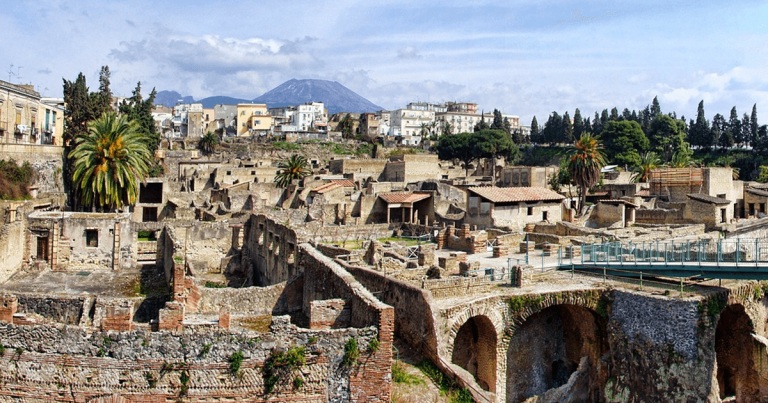
Accessible Herculaneum
Accessibility information about Herculaneum. The little brother of Pompeii
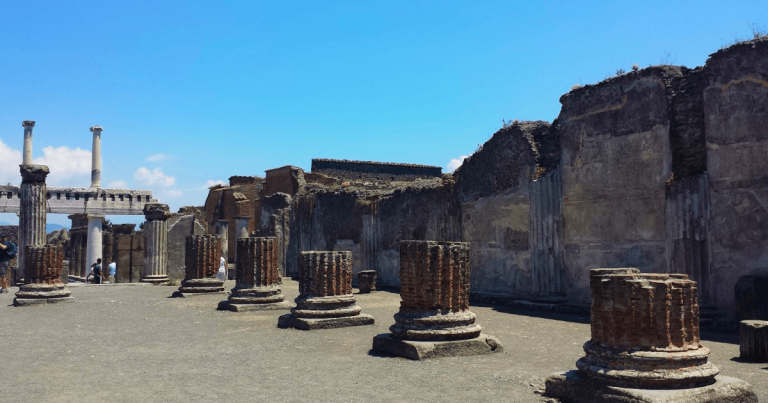
Accessibility of Pompeii
Accessibility of Pompeii explained. Discover routes, terrain, toilets, entrances, and tips for a smoother visit.
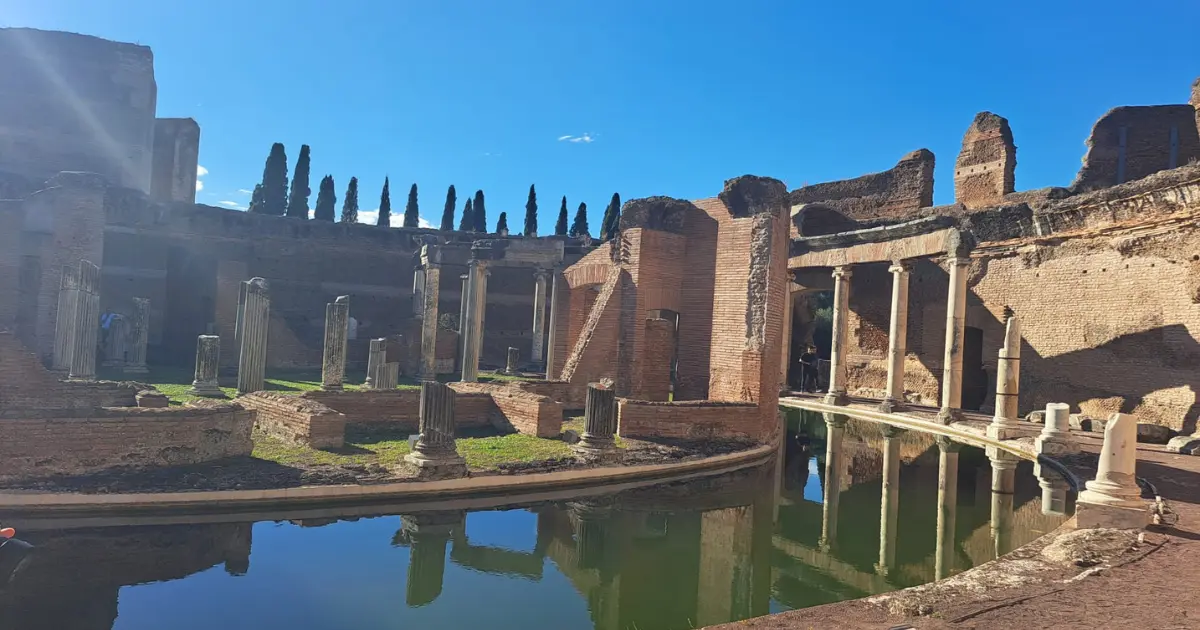
Accessibility Villa Adriana in Tivoli
If you’re looking to spend a day outside Rome, Hadrian’s Villa in Tivoli is a must-see. One of the best-preserved and most…