About this Riga Historic Old Town and City Center Walking Rolling Tour
Discover Riga’s rich history and architectural heritage on a private guided tour of the city center and Old Town. Explore historic squares, impressive churches, green parks and iconic buildings while learning about Latvia’s capital. Your private guide will meet you at your city center accommodation or at a designated meeting point in the city.
Architectural Highlights
Your tour begins with an exploration of Riga’s city center, known for its impressive architecture and rich cultural heritage. Together with your guide, you pass the Latvian National Museum of Art, the Art Academy and Kronvalda Park before reaching the striking Orthodox Cathedral, famous for its golden domes that can be seen from many parts of the city. It is the largest Orthodox church in the Baltic States and offers a fascinating contrast to Riga’s well-known Art Nouveau architecture. From here, you continue to the Freedom Monument, one of Latvia’s most important national symbols. The 42-metre-high monument honors those who fought for Latvia’s independence and is topped by a female figure affectionately known as “Milda,” holding three stars that represent Latvia’s historic regions. Today, it remains a popular gathering place and a powerful symbol of national pride.
Along the way, you see the University of Latvia and the Latvian National Opera and Ballet. Take in the peaceful surroundings of Bastejkalns Park before continuing into the historic Old Town.
The route follows mainly smooth city sidewalks and paved park paths. Some gentle slopes may be encountered in Bastejkalns Park, while the historic Old Town includes sections of uneven cobblestones that may require extra care for wheelchair users and those with limited mobility.
Līvu Square & Historic Old Town
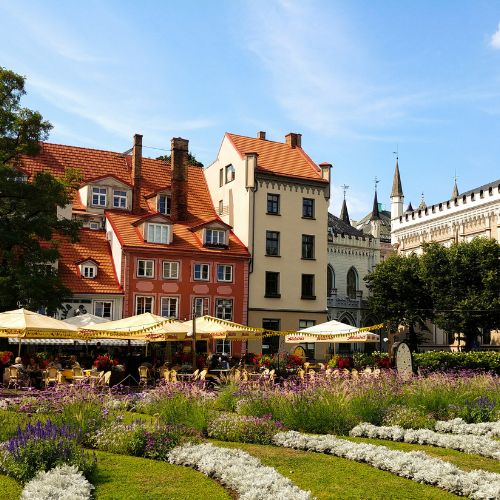
Visit Līvu Square, where you can admire colorful historic buildings and beautiful old architecture. Look out for the famous Cat House, known for the black cats on its roof. According to a local story, the owner placed the cats facing away from the nearby Great Guild after being refused membership.
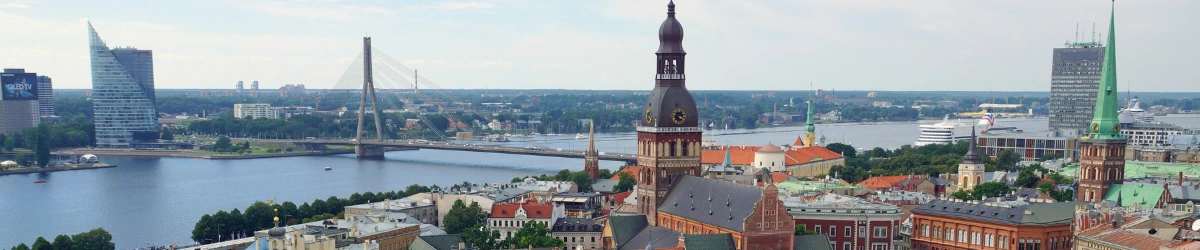
As you continue through the streets of Riga’s Old Town, you reach St. Peter’s Church, one of the oldest churches in the city, first mentioned in 1209. You can admire its impressive tower, which has been rebuilt several times after fires and damage. From here, head towards the Daugava River, where you can enjoy views of the waterfront and city skyline. For centuries, the river has connected Riga with other parts of Europe and played an important role in the city’s development and prosperity. Today, it remains one of Riga’s most important landmarks and a defining feature of the city.
Please note that the Old Town has cobblestones, uneven surfaces and occasional curbs.
Town Hall Square & House of the Blackheads
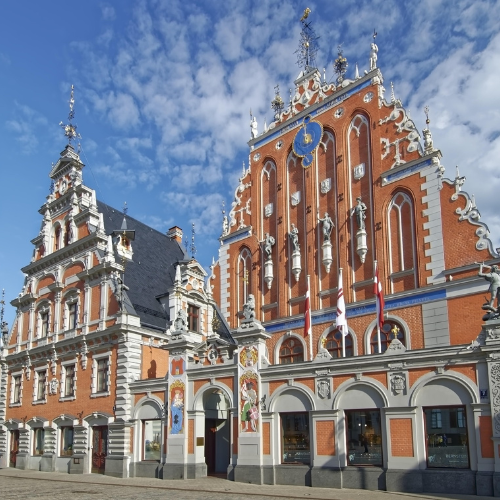
Next you will continue to Town Hall Square and admire the striking House of the Blackheads, originally built in 1334 as a meeting place for public organizations. The building later became the home of the Brotherhood of the Blackheads, a group of unmarried merchants and shipowners who played an important role in Riga’s trading history. After being destroyed during the Second World War, it was rebuilt in the 1990s. Inside, you can explore the richly decorated rooms and learn more about Riga’s merchant history.
The building has an elevator serving all floors, wide corridors and step-free access between rooms. An accessible restroom is available on the ground floor.
Dome Square & Historic Churches
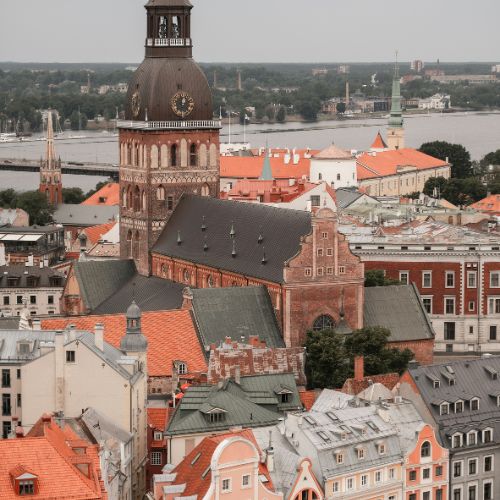
Continue to Dome Square, the largest square in Riga’s Old Town, surrounded by historic buildings and home to Riga Cathedral. Construction of the cathedral began in 1211, and you can spot a mix of Romanesque, Gothic and Baroque styles in its architecture. You’ll also pass the Three Brothers, three historic houses built in different centuries that show how Riga’s architecture changed over time. The route continues past St. James’s Cathedral, a medieval church that has changed between Catholic and Lutheran ownership throughout its history.
Riga’s Old Town has cobblestones and uneven surfaces.
Swedish Gate & Powder Tower
Before returning to the city center, you pass the Swedish Gate, built in 1698 as part of Riga’s historic city walls. According to local legend, the gate was connected to a romantic story involving a Swedish soldier. Continue to the Powder Tower, a former defensive tower that once formed part of Riga’s fortifications and now houses the Latvian War Museum. These historic landmarks offer a glimpse into the city’s military past. The route then takes you back to the starting point.