Highlights of this tour
- Alcazaba
- Nasrid Palaces
- Generalife Gardens
- Granada Views


In the heart of Granada lies the world-famous Alhambra, overlooking the city from Sabika Hill.
If you are staying in Granada, we can arrange for a private adapted vehicle to pick you up from your city centre accommodation or from a suitable location nearby. From there, your driver will take you directly to the Alhambra.
Once you arrive, you will meet your private licensed guide, who will accompany you during the visit and explain more about the history, architecture and different parts of the Alhambra.
If you are staying in Motril or arriving by cruise ship, your driver will meet you at your accommodation or at the Motril cruise port with private adapted transport. You will then travel with your driver to Granada.
The journey from Motril to Granada takes approximately 1 hour. Once you arrive at the Alhambra, you will meet your private licensed guide, who will accompany you during the visit and tell you more about the complex.
The tour from Motril takes approximately 5 hours in total, including the return transfer to Granada and your guided visit to the Alhambra.
If you are staying in Málaga or arriving by cruise ship, your driver will meet you at your accommodation or at the Málaga Cruise Port with private adapted transport. From Málaga, you will then travel with your driver to Granada.
The one-way journey takes approximately 1.5 hours. Once you arrive at the Alhambra, you will meet your private licensed guide, who will accompany you throughout the visit and explain the history and details of this remarkable complex, including the palaces, fortress and gardens.
The total tour duration from Málaga is approximately 8 hours, including the journey to and from Granada and the guided visit to the Alhambra.
The Alhambra is one of Spain’s most famous historical sites and sits on the Sabika hill overlooking Granada and the surrounding mountains. The name Alhambra comes from the Arabic word Al-Hamra, meaning “the red one”, referring to the reddish colour of its walls.
The complex has developed over many centuries and shows the different cultures and periods that shaped the history of Granada.
During your visit, you will explore the different parts of the Alhambra, each with its own character and purpose. The Nasrid Palaces are known for their beautifully decorated rooms, detailed geometric patterns, carved walls and peaceful courtyards. You will also see how water was used throughout the palaces, with fountains, pools and small channels adding to the atmosphere.
You will also visit the Generalife Gardens, where you can walk through landscaped gardens surrounded by flowers, trees and water features. From different points in the gardens, you can enjoy views across Granada and the surrounding landscape. The gardens were originally used by the rulers of the Alhambra as a place to relax away from palace life.
The Alhambra also includes later Christian buildings, such as the Palace of Carlos V and the Church of Santa Maria, which was built on the site of the former mosque.
Throughout the visit, your private guide will explain what you are seeing and tell you more about the history and purpose of the different areas. You will discover detailed architecture, historic courtyards, gardens, water features and views across Granada.
The Alcazaba is the defensive area of the Alhambra and one of the oldest parts of the complex. It was built as a fortress and was home to the soldiers and people responsible for protecting the Alhambra. Mohamed I strengthened the area and built several important towers, including the Torre del Homenaje, Torre Quebrada and Torre de la Vela.
Today, the strong walls, towers and open spaces give a very different impression from the richly decorated Nasrid Palaces. Your guide will explain how the Alcazaba was used and how it formed an important part of the wider Alhambra complex.
For visitors using a wheelchair, accessible routes are available through the areas that can be visited. As the Alcazaba is a historic fortress, some surfaces and sections can be uneven, but ramps are available along the accessible route where needed.
The Generalife is the former palace and recreational estate of the Nasrid rulers. It was used as a place of rest and retreat away from the main palace complex, especially during the hot summer months.
The Generalife is surrounded by beautiful gardens, water features, fountains and greenery. As you move through the Generalife, your guide will explain more about the purpose of the estate and how it was used. The gardens also offer beautiful views over Granada and the surrounding hills.
Accessible sections of the Generalife include ramps and areas with relatively flat terrain, allowing wheelchair users to experience important parts of the gardens.
The Nasrid Palaces are the royal palaces of the Alhambra and one of the main highlights of the visit. This part of the complex was used by the Nasrid rulers and their court and was the centre of royal life and official affairs. The enclosure is divided into three main areas: the Mexuar, the Comares Palace and the Palace of the Lions.
The Mexuar was used for the administration of justice and the management of state affairs.
The Comares Palace, built by King Yusuf I, had an important representative function and is known for its detailed architecture and impressive interiors.
The Palace of the Lions, built by order of Mohamed V, was intended as a more private area for the royal family and the harem. It is one of the most recognizable parts of the Alhambra and is known for its richly decorated architecture and famous courtyard.
The Patio de los Leones is one of the most famous courtyards in the Nasrid Palaces. At the centre of the courtyard is the Fountain of the Lions, surrounded by decorated arches and columns.
The courtyard is flat and has mostly smooth paths, making it one of the more accessible areas of the Nasrid Palaces. Here, you can take in the detailed architecture while your guide explains more about the palace and its history.
The accessible route provides wheelchair access to the areas that can be visited, although some historic sections may still have narrow spaces or uneven surfaces.
After your visit, your private driver will take you back to the Cruise Port or your City Centre accommodation.
To find out more about the Alhambra, take a look at our detailed accessibility blog. There, you can read more about the accessible routes, facilities and practical information to help you prepare for your visit.

Read about the facilities the beaches in Mallorca offers
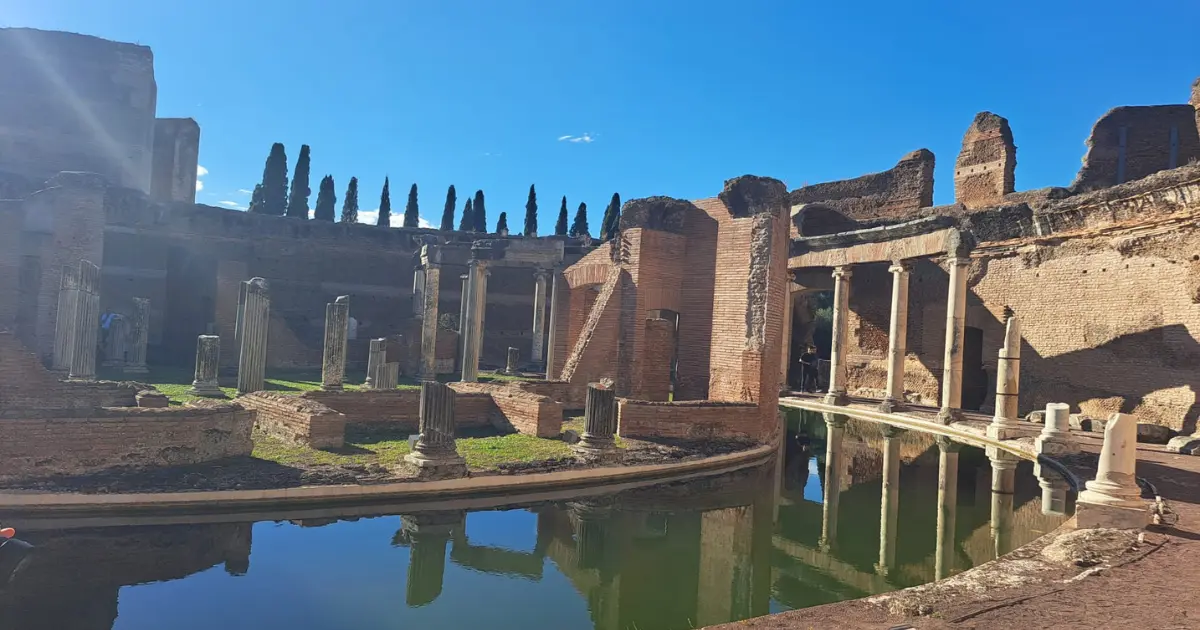
If you’re looking to spend a day outside Rome, Hadrian’s Villa in Tivoli is a must-see. One of the best-preserved and most visited archaeological sites in Italy.

Read about the accessibility of Casa Vicens, one of Gaudí’s pieces of art in Barcelona.

The perfect list to discover Barcelona with wheelchair accessible activities.

Discover how to travel with a disability confidently. Explore expert tips, wheelchair-friendly destinations, and real stories from disabled travelers. Your complete accessible travel guide starts here.


Gillian P, December 2019
Lisbon Tour
“…I would highly recommend the company, everything went perfectly. ” Read more

Divya B, October 2019
Transfers, Tours, Barcelona
“…Three Cheers to this awesome team! I am one super happy customer of Disabled Accessible Travel.” Read more

Yveline Q, October 2019
Tours, transfers, mobility equipment rental
“…We unreservedly recommend her to any travellers requiring accessible assistance.” Read more