About this flexible wheelchair accessible Porto tour
Your day begins at Porto City Hall, located at the top of the city’s main avenue, Avenida dos Aliados. This impressive building represents the importance and pride of Porto and stands at the centre of daily city life. The surrounding square is often filled with locals and visitors, making it the perfect place to get a first impression of the atmosphere and character of the city.
Clérigos Tower
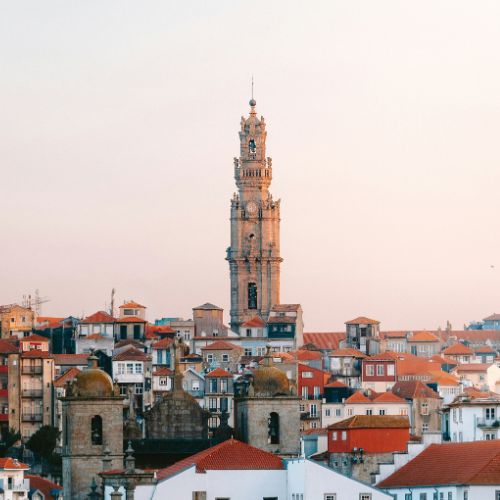
The Clérigos Tower is one of the most recognizable buildings in Porto. Built in the eighteenth century by the Italian architect Nicolau Nasoni, the tower has dominated the city’s skyline for centuries. In the past, sailors could use it as a point of reference when approaching Porto. Today, it remains an important symbol of the city and can be seen from many different locations throughout the historic centre.
Bridges over the Douro River
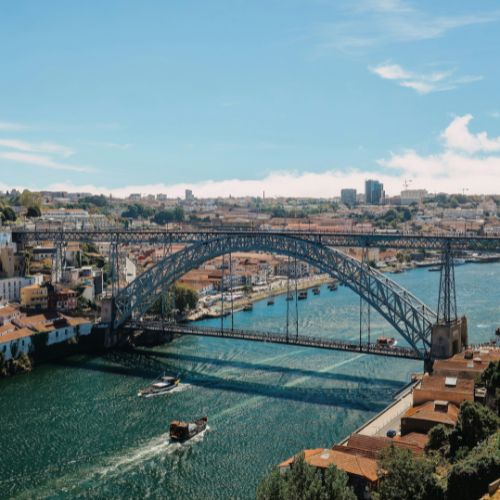
The Douro River has played a central role in Porto’s history for hundreds of years. It connected the city with inland Portugal and helped Porto grow into an important trading centre, particularly through the port wine trade. Several bridges connect Porto with Vila Nova de Gaia on the other side of the river.
The most famous bridge is the Dom Luís I Bridge. Its impressive iron design has made it one of Porto’s most recognizable sights. As you travel through Porto, you can enjoy views of several bridges and the beautiful scenery along the Douro River.
Throughout the tour, private adapted transportation ensures a comfortable journey between the different highlights.
Batalha Square
Batalha Square has been an important gathering place for centuries and remains a lively part of Porto’s historic centre. Surrounded by beautiful buildings and cultural attractions, the square reflects the city’s rich past while still playing an important role in everyday life. It is a pleasant location to experience the atmosphere of Porto and admire the architecture that characterizes this part of the city.
São Bento Train Station
São Bento Train Station is much more than a transport hub. Inside, more than 20,000 blue and white azulejo tiles decorate the walls, illustrating important moments from Portuguese history as well as scenes from traditional daily life.
Visitors can enter the station via a step-free entrance to admire these beautiful tile panels, which offer a fascinating glimpse into Portugal’s history and culture.
São João National Theatre
Located near Batalha Square, São João National Theatre has long been a centre for culture and performance in Porto. The elegant building was constructed at the beginning of the twentieth century after a previous theatre on the site was destroyed by fire. Today, it continues to host performances and events while remaining an attractive example of Porto’s architectural heritage.
Porto Coliseum
The Porto Coliseum has entertained generations of locals and visitors since opening in the 1940s. Its Art Deco style makes it look different from many of Porto’s historic buildings. Over the years, the venue has welcomed countless concerts, theatre productions and cultural events, making it an important part of the city’s cultural identity.
Palácio da Bolsa
Close to Porto’s historic riverside district stands the Palácio da Bolsa, a magnificent nineteenth-century building that reflects the wealth and success of Porto’s trading community. The palace was built by Porto’s commercial association and reflects the city’s success as an international trading centre.
Although this tour includes an exterior visit only, you can admire the elegant architecture and decorative details of the building. The palace is especially famous for its richly decorated Arabian Room, which is considered one of the most impressive interiors in Portugal.
Lello Bookshop
Livraria Lello is one of Porto’s most famous attractions. Since opening in 1906, the bookshop has attracted visitors with its beautiful staircase, stained-glass ceiling and decorative wooden details. It is often linked to J.K. Rowling, who lived in Porto before becoming a world-famous author. Today, visitors come not only for the books, but also to admire the unique architecture and atmosphere of this historic building.
Casa da Música
Casa da Música shows Porto’s modern side. Opened in 2005, this concert hall is easy to recognize because of its unusual geometric shape and large glass windows. The building was designed by Dutch architect Rem Koolhaas and was created as a space for concerts and cultural events. Its modern appearance stands out from the historic buildings found throughout Porto and shows how the city combines old and new architecture. The surrounding area is spacious and easy to navigate.
Serralves Foundation
The Serralves Foundation combines art, architecture and nature in a peaceful setting. The site includes a contemporary art museum, beautiful gardens and an Art Deco villa. Visitors can enjoy a relaxing walk through the gardens while discovering modern art and culture. It is a peaceful and enjoyable way to end your day in Porto.
After your visit, your private driver guide will take you back to the Cruise Port or your city centre accommodation.