


Neuschwanstein Castle Accessibility: A Guide for Visitors with Reduced Mobility
February, 2026

Located high in the Bavarian Alps, Neuschwanstein Castle offers breathtaking views and romantic architecture. However, understanding the castle’s accessibility is essential when planning a visit to Germany’s most famous fairytale castle.
This guide explains what to expect when visiting Neuschwanstein Castle with reduced mobility, including wheelchair access, transport options, and the castle’s overall accessibility.
Why Visit Neuschwanstein Castle?
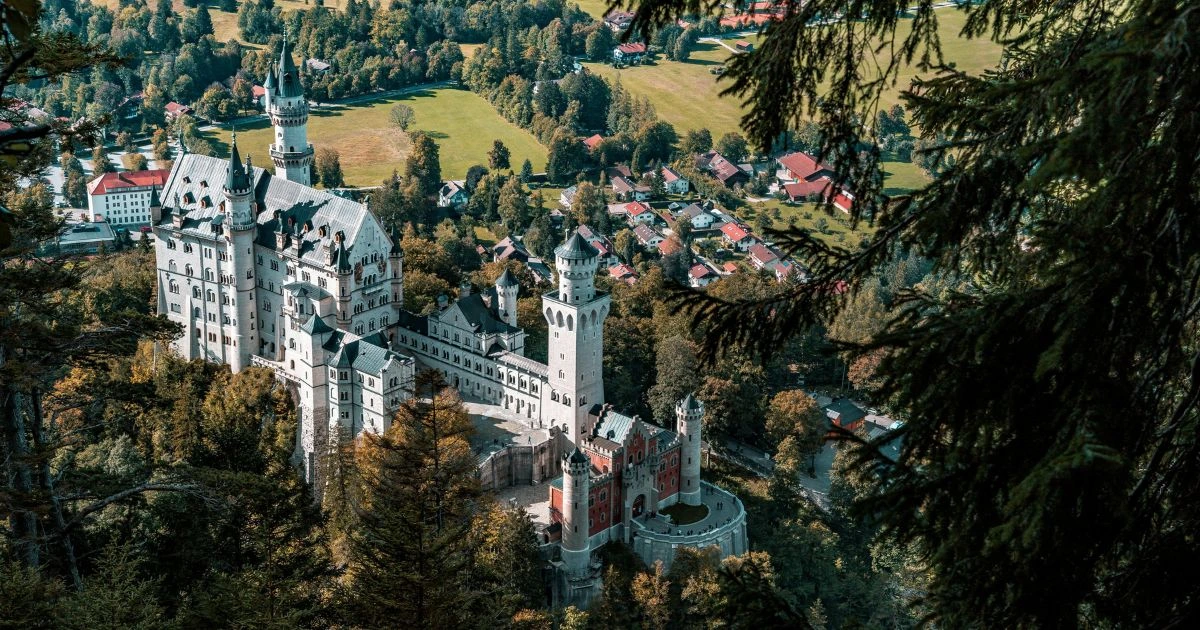
The Castle of Neuschwanstein, built in the 19th century by King Ludwig II of Bavaria, is one of the most recognizable landmarks in Europe. With its romantic architecture, richly decorated interiors, and panoramic alpine views, the castle attracts travelers from around the world. For many visitors, a trip to Neuschwanstein Castle is a once-in-a-lifetime experience.
Inside Neuschwanstein Castle: Guided Tour
Many people know Neuschwanstein Castle from photos of its towers and mountain views. But the guided tour inside the castle is where visitors can discover King Ludwig II’s everyday fantasy life.
The tour focuses on the third and fourth floors, where the main rooms of the castle are located. It does not show every room in the castle, but it includes some of the most impressive interiors, which demonstrate the king’s ideas, interests, and dreams.
Key Rooms to See
During the tour, visitors see King Ludwig II’s private rooms, such as his bedroom, living room, and study. These rooms are all richly decorated with wall paintings and medieval symbols. The tour also includes:
- Throne Hall, inspired by Byzantine churches and left unfinished without a throne
- Singer’s Hall, a large space inspired by medieval legends and Wagner’s operas
Together, these rooms show that Neuschwanstein was created as a world of imagination and art.
If you want a better overview of the layout of the castle, the official castle map shows where every room is located.
Traveling from Munich to Neuschwanstein Castle
Most visits to Neuschwanstein Castle begin in Munich, with several ways to reach the castle area. These include public transportation, traveling by private car, or using a pre-arranged transfer or private tour from Munich. The overall journey to the castle takes around two hours and passes through the Bavarian countryside.
Choosing the most suitable transport option depends on individual preference, mobility, stamina, and the level of assistance you may require.
Public Transport
Public transportation is a commonly used option. The journey usually involves multiple connections between trains and buses, along with walking, steps, uneven surfaces, and time-sensitive transfers.
Private Adapted Vehicle
Traveling by private adapted car offers greater independence and flexibility in terms of timing. Accessible parking is only available in Hohenschwangau, and there is no disabled parking near the castle. From the parking areas, all visitors must continue uphill by shuttle bus, horse carriage, or on foot, which can still be demanding for those with limited mobility.
For visitors who prefer a more supported approach, traveling with an assisted service can be a comfortable alternative. A wheelchair accessible private tour allows for additional assistance with timing, ticket arrangements, elevator reservations, coordination on arrival, or a more structured visit. This can make the experience feel calmer and more manageable without requiring visitors to navigate every step on their own.
Arriving Neuschwanstein Castle and Reaching the Entrance
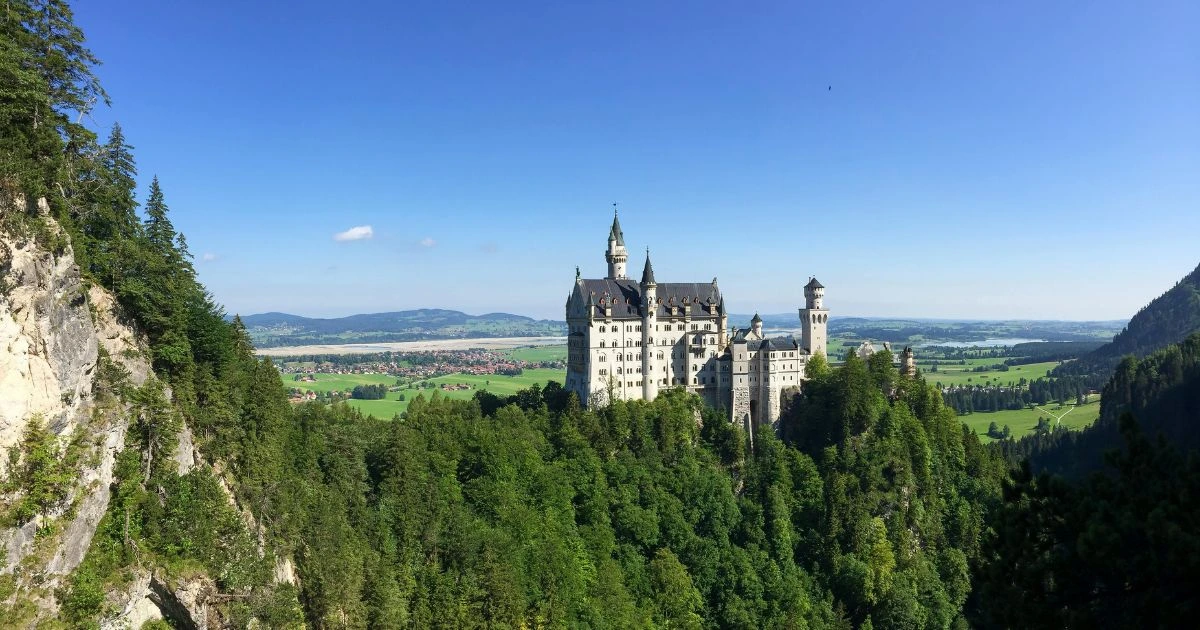
There is no disabled parking directly at Neuschwanstein Castle. Visitors with reduced mobility can park in one of the three designated disabled parking spaces in the P2 parking lot near the ticket center in Hohenschwangau. From there, all visitors must continue uphill to reach the castle entrance.
Please note that Neuschwanstein Castle does not offer wheelchair rentals on site. Visitors who require a wheelchair should bring their own or arrange to rent one for the day in advance.
Shuttle Bus
One option is the shuttle bus, which has a fold-out ramp and can accommodate both manual and electric wheelchair users. Wheelchairs are not secured or tied down inside the bus, which may be uncomfortable for some passengers. The bus stops near Mary’s Bridge (Marienbrücke), from where the final 15-minute walk/roll to the castle begins.
It is important to note that, since Neuschwanstein Castle is located in the Alps, when weather conditions change in autumn or winter, there may be days when the shuttle bus does not operate due to snowfall or mudslides, at discretion of the site.
Horse Carriage
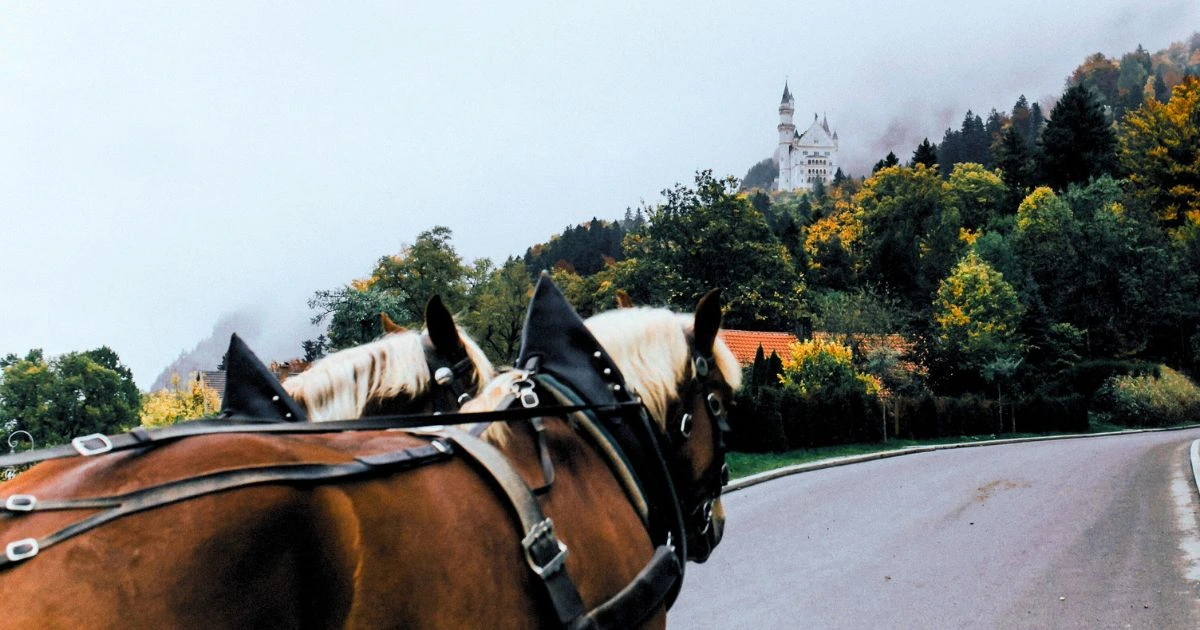
Another option is the traditional horse carriage, which offers a scenic approach but has more limited accessibility. There is no ramp, and visitors must be able to transfer into the carriage independently or with assistance. Only foldable manual wheelchairs can be transported, making this option unsuitable for visitors using an electric wheelchair or mobility scooter.
The horse carriage also stops at about 15 minutes walking/rolling from the castle entrance. Similarly to the shuttle bus, it is possible that the horse carriages are not operating at certain times due to local weather conditions.
Walk/Roll Your Way Up
The alternative to the bus or carriage is to walk/roll to the castle entrance via a paved pedestrian path, which takes approx. 45 minutes. Be aware that the path upwards to the castle can be very steep in some sections and is not always smooth.
Accessibility note: the path to the castle is uphill and steep. If you use a manual chair, we strongly recommend you take a companion with you that can help you with the climb, as this walk/roll may be physically demanding. Make sure to prepare accordingly.
If you want tickets for the shuttle bus or horse carriages, you need to buy them separately since they are not included in the ticket to enter the castle. For an overview of all walking, shuttle, and carriage routes to the castle, as well as the prices, you can view the official Neuschwanstein Castle routes here.
Strolling Up to Neuschwanstein Castle
From the shuttle bus stop or horse carriage drop-off point, visitors still need to walk/roll uphill to the castle entrance. This part takes approximately 10 to 15 minutes and follows an asphalted path. However, some sections are steep, with gradients of around 12 to 19 percent.
For manual wheelchair users or companions pushing a wheelchair, this part of the visit can be physically demanding. Therefore, it’s recommended to travel with a companion who can assist you.
Additionally, weather conditions or crowd levels can have an impact on your navigation towards the castle. Along the route, however, there are amazing opportunities to stop for photos.
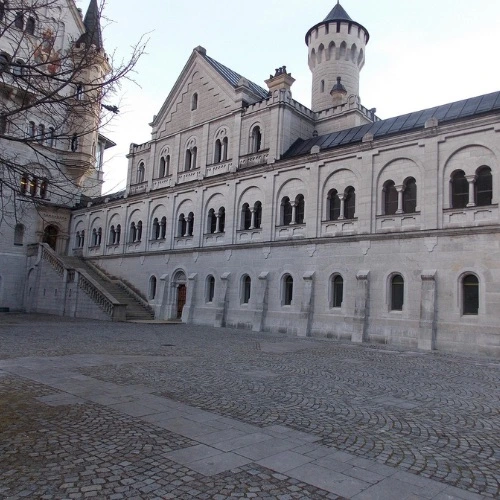
Wheelchair Accessibility Inside Neuschwanstein Castle
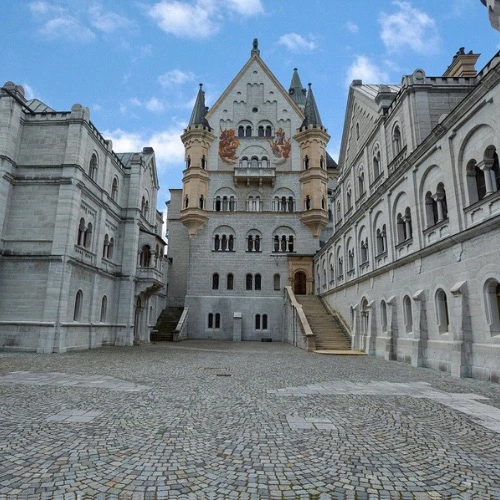
Neuschwanstein Castle regulates access carefully to ensure safety and comfort for all visitors. For fire safety reasons, the castle permits only one wheelchair user or visitor using a walker inside the castle per hour, which also means wheelchair groups cannot enter together.
Official castle staff guide all interior visits. The guided portion inside the castle lasts approximately 40 minutes, while the total visit time, including waiting, elevator access, and other procedures, is usually around three hours.
A standard tour of Neuschwanstein Castle involves climbing around 300 to 350 steps in total, with approximately 165 steps up and 181 steps down, including several narrow and winding staircases. For visitors with reduced mobility, an elevator is available.
Elevator Access and Wheelchair Dimensions
An elevator is available for visitors with reduced mobility; its size is 85 cm wide and 130 cm deep. Make sure to measure your wheelchair in advance to ensure safe use of the elevator.
It is also very important to contact the castle in advance and make a reservation. If you wish to use the elevator, schedule access ahead of time to guarantee entry on the day of your visit. Without prior arrangement, it may not be possible to use the elevator or enter the castle efficiently.
Upon arrival at the castle, local staff will meet visitors with an elevator reservation at the exit of Neuschwanstein Castle, where the elevator is located. The staff will then guide the guests into the tour group and bring them back at the end of the journey.
Wheelchair Accessible Toilets
Neuschwanstein Castle has accessible toilets for visitors with reduced mobility. They are located next to the castle, close to the café and visitor facilities. It may be convenient to use them before or after your guided tour, since the main castle floors do not have separate restrooms.
Want to help others find this accessible toilet? With our newest app, Accessaloo, you can add the exact location of this accessible toilet and find many more.
Download Accessaloo to find the exact location of toilets and navigate.
Tickets and Elevator Reservations
Standard tickets are required for all visitors, although visitors with a disability card or proof may be eligible for reduced-price tickets. If the necessity is registered in the disability verification, a companion may enter for free. More information about admission fees can be found on the website of Neuschwanstein Castle.
While you can purchase tickets at the box office near the castle, due to the high number of visitors, it is recommended to book your tickets in advance. When purchasing discounted tickets, be aware that you must prove your eligibility at the entrance to the castle. Make sure to have the appropriate documents and your ticket ready at the entrance of the castle.
Planning Ahead
With realistic expectations and the right preparation, visiting Neuschwanstein Castle can be a magical experience, even if it requires a little extra effort. Make sure to:
- Reserve tickets and elevator access early
- Check wheelchair dimensions (elevator: 85 cm wide, 130 cm deep)
- Consider taking a companion with you to assist with steep slopes and hilly areas
Being prepared can ensure that your visit to Neuschwanstein Castle is both enjoyable and accessible, allowing you to experience its historic rooms and breathtaking views without unnecessary stress.
Book your Neuschwanstein Castle tour
Can’t wait to see this dreamy castle for yourself? Click the button for more information!


READ RELATED BLOGS