About this Wheelchair Accessible Walking/Rolling Tour of the Highlights of Riga
Starting the tour, your personal guide will welcome you directly at your city centre accommodation or cruise port. From there, he will introduce you to the city’s inspiring story; from its medieval origins dating back to 1201 and rich trading past to its status today as one of the Baltic’s most impressive cities.
Discover Riga’s Art Nouveau Quarter
Firstly, your tour begins in Riga’s famous Art Nouveau district, which is home to one of Europe’s finest collections of Art Nouveau architecture. Here you can admire hundreds of decorated buildings, each featuring mythical figures, expressive faces, and elegant iron balconies. Meanwhile, your guide will lead you on a gentle walk or roll through the quarter, making it ideal for photography.
Accessibility note: The roads in the Art Nouveau quarter are cobbled; however, the sidewalks are wide and generally in good condition.
Latvian National Opera
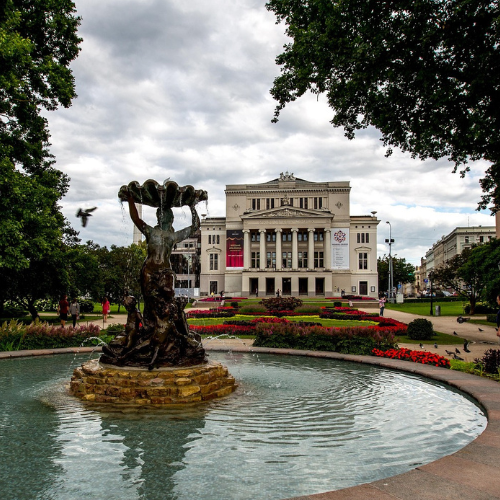
Next, you will visit an elegant neoclassical landmark beside the city canal. Originally built in 1863 and later rebuilt after a fire, the Latvian National Opera is one of Riga’s most beautiful buildings. Furthermore are the flat pathways around the building ensure an easy and comfortable outside visit.
Freedom Monument
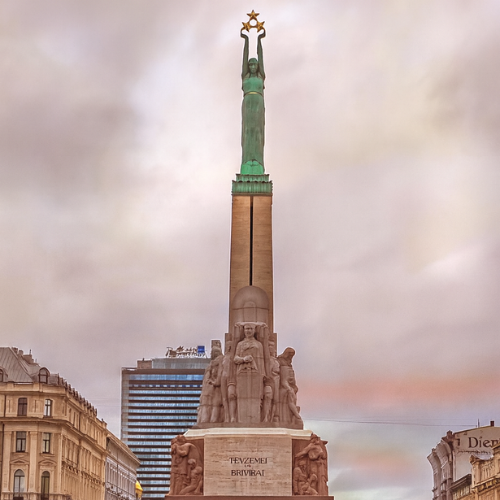
Afterwards, you will visit the Freedom Monument, a powerful symbol of Latvian independence. It was unveiled in 1935 and, notably, stands 42 metres tall, topped by the iconic female figure “Milda” holding three stars. As a result of its setting on a flat, open plaza, it is an easy and accessible outside stop and, therefore, a meaningful place to pause and reflect.
Explore Riga’s Medieval Old Town
Following the monument, you will (st)roll through the charming streets of Riga’s Old Town, a UNESCO World Heritage Site, where you will, in addition, enjoy outside visits to the city’s must-see landmarks.
Historic Homes & Medieval Streets
In Riga’s Old Town, the Three Brothers form the city’s oldest residential complex, dating back to the late 15th century and, therefore illustrating the development of medieval domestic architecture.
Nearby, the Swedish Gate stands as the only surviving city gate from Riga’s former fortifications; moreover, visible remnants of the 17th-century defensive walls remain close by. Together these landmarks consequently reflect how Riga evolved from a fortified medieval town into a thriving trading city.
Market Square & Merchant Power
Following the Swedish Gates’s you will see the Town Hall Square. It long served as the historic heart of the city, hosting public markets, festivals, and even medieval punishments.
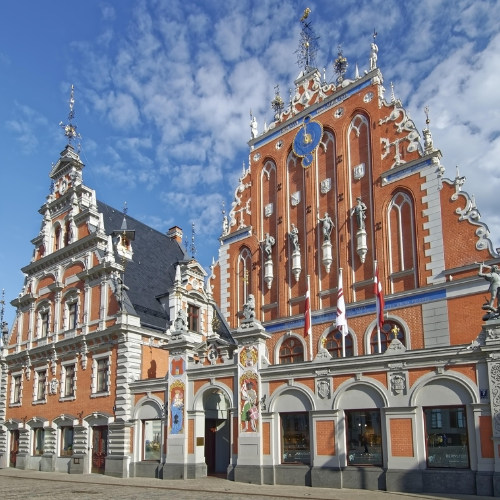
Overlooking the square is the House of Blackheads, a richly decorated Gothic building dedicated to Saint Maurice and rebuilt after World War II. In addition, its gilded façade recalls Riga’s prosperity during the Hanseatic trading era.
Nearby, the Great Guild and the Small Guild once belonged to powerful merchant guilds that organized lavish banquets and social gatherings during Riga’s commercial peak.
Church & Cathedral
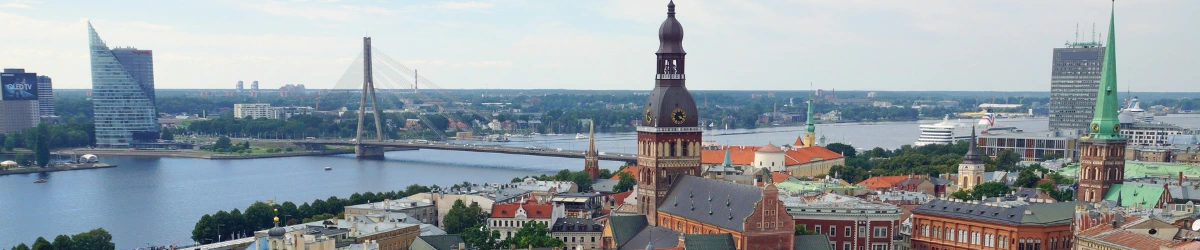
The Riga Dome Cathedral, founded in the early 13th century, is one of the city’s most important religious landmarks, and its known for its mix of Gothic and Romanesque architecture and its dominant bell tower on the skyline.
Close by, St. Jacob’s Church adds to the historic cityscape with its red brick exterior and centuries-old religious heritage. Together, these churches reflect Riga’s long spiritual tradition.
Accessibility note: The streets in the Old Town are cobbled; however, there are generally good sidewalks throughout the area. As always, your guide will choose the most accessible routes.
End of Tour Options
As the tour concludes, you have the option to explore the rest of Riga’s centre on your own or, alternatively, discover Riga’s cuisine by lunching at a local restaurant. In any case, your guide will advise you on the most accessible route back to your city centre accommodation or your cruise ship.