
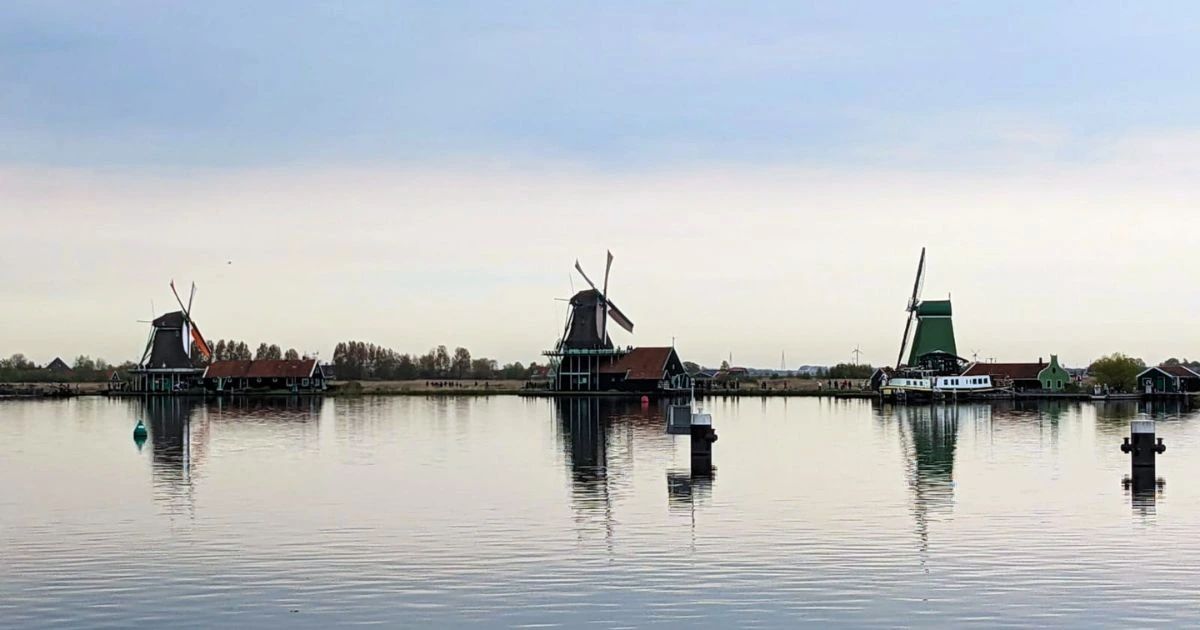

Zaanse Schans in the Netherlands: Everything You Need to Know About its Wheelchair Accessibility
April, 2026

Windmills, wooden houses, and canals: Zaanse Schans feels like stepping into a living postcard. But is it also wheelchair accessible? The short answer is ‘yes’. Zaanse Schans is mostly wheelchair accessible. This guide breaks it all down so you can plan with confidence, avoid surprises, and make the most of your visit.
Quick Answer: Is Zaanse Schans Wheelchair Accessible?
Yes, for the most part.
- Main paths: mostly accessible with flat but some uneven surfaces
- Terrain: Asphalt, paved with stones, cobblestone, and gravel, depending on the area
- Windmills: Only the windmill “Het Jonge Schaap” (The Young Sheep) is wheelchair accessible
- Museums & shops: Many are accessible or partially accessible
- Restaurants & facilities: Generally accessible with adapted toilets available
What is Zaanse Schans?
Zaanse Schans is an open-air heritage village just outside Amsterdam. It recreates traditional Dutch life with historic windmills, artisan workshops, museums, and heritage houses. You can also find clog-making demonstrations, cheese tastings, and much more.
With its peaceful riverside setting, Zaanse Schans is considered to be one of the most photogenic places in the Netherlands and a must-see of the country.
A Brief History of Zaanse Schans
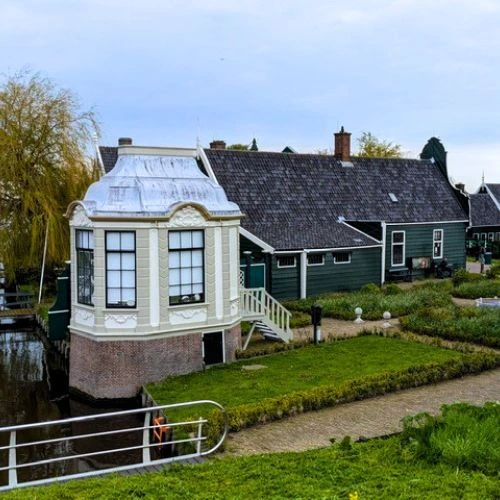
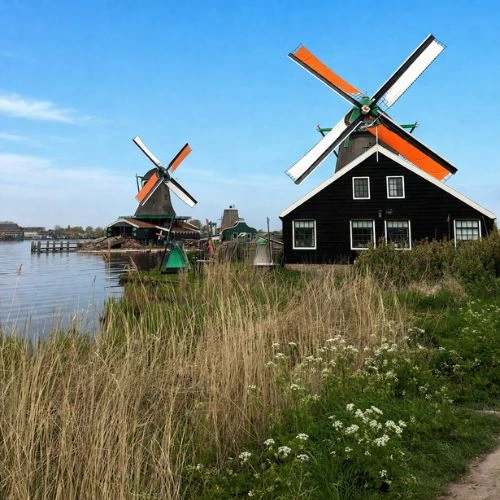
Zaanse Schans isn’t an original, untouched village from the past, but rather a carefully preserved piece of Dutch history, brought together in one place.
During the 17th and 18th centuries, the Zaan region was one of the earliest industrial areas in the world with hundreds of windmills operating to power different industries. This period, which is often linked to the Dutch Golden Age, turned the area in an economic powerhouse.
By the mid-20th century, many of these historic buildings and windmills were at risk of disappearing because of modern developments. To protect this heritage, a conservation project began in the 1960s. Traditional houses, barns, and windmills were relocated in what is now Zaanse Schans. Today, some buildings function as museums, while others are still in use, giving you a glimpse into both the past and present of Dutch life.
Wheelchair Accessiblity at Zaanse Schans
Zaanse Schans is relatively flat, with no steep hills or long inclines to worry about. However, the surface changes frequently. While some sections near the entrance and main street are asphalted and smooth, other areas transition into brick pavement, cobblestones, or compacted gravel. In wet weather it is possible that surfaces get softer or slippery, but the paths are generally well maintained.
The location offers many different attractions such as museums, windmills, or restaurants and shops. You can find more information about them on this interactive map of the Zaanse Schans. However, the accessibility of each attraction or activity varies.
Can You Go Inside the Windmills at Zaanse Schans?
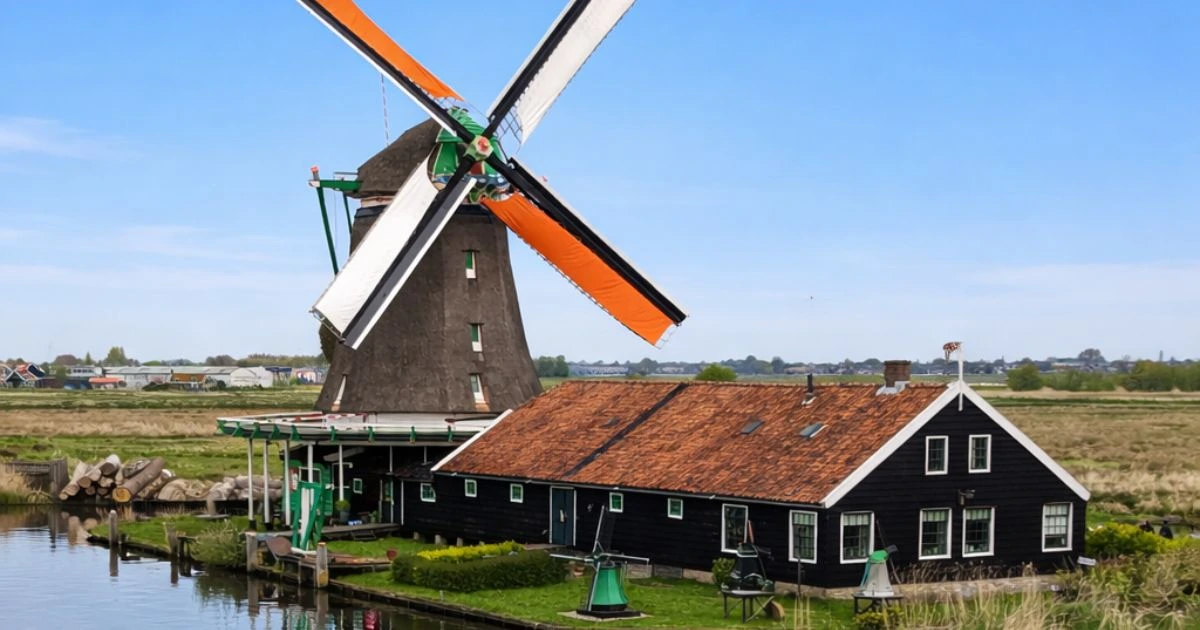
The windmills are historic structures with narrow doorways, steep staircases, and multiple levels. As a result, most are unfortunately not wheelchair accessible inside. The only wheelchair accessible windmill is “Het Jonge Schaap,” which translates to “The Young Sheep.”
Although the other windmills are not accessible inside, you can still get close to them and admire their scale, take photos, and enjoy the atmosphere around them.
Museums, Workshops, and Shops
Many of the artisan workshops, such as the clog-making and cheese demonstration, are either step-free or have small ramps. These spaces tend to be more modern or adapted for visitors, with wider layouts that are easier to navigate.
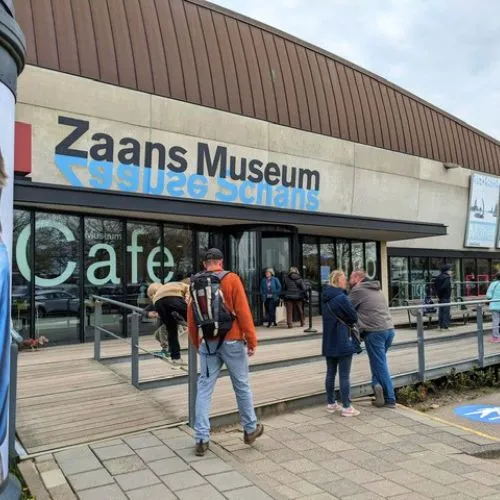
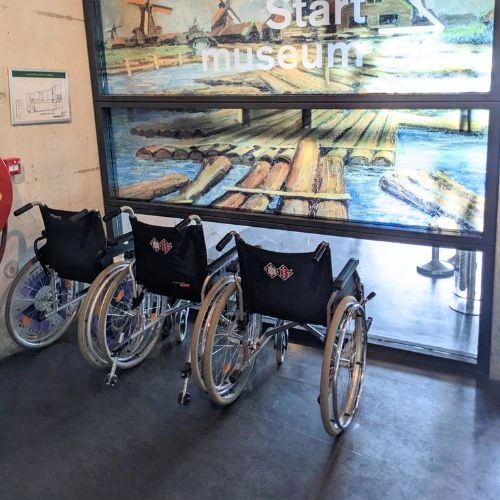
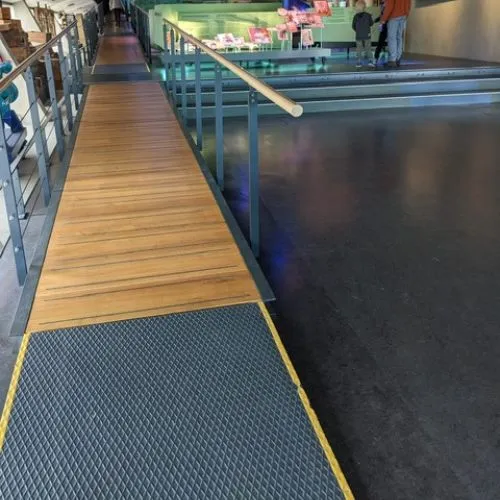
The Mill Museum and the Zaans Museum are wheelchair accessible. In addition, the Zaans Museum offers wheelchairs for visitors with reduced mobility. Please note that there is only a limited number available, so it is best to make a reservation via info@zaansmuseum.nl or by calling +31 (0)75 681 00 00. Museum Zaanse Tijd has a mobile ramp at its entrance and is partially accessible. However, wheelchairs with a large or tilted seat don’t always fit or through the door
Smaller historic houses and older buildings at Zaanse Schans often have steps at the entrance or tight interiors that make wheelchair access difficult or impossible in some cases.
Restaurants and Accessible Toilets
Most restaurants are wheelchair accessible with entrances that are often step-free or ramped. Outdoor seating is common and usually easier to access, especially during warmer summer months.
Unfortunately, not every venue at the Zaanse Schans has accessible toilets. However, you can find adapted restrooms at Schipperplein, Kalverringdijk, and in the Zaans Museum.
Getting to Zaanse Schans
There are several options to reach Zaanse Schans from Amsterdam.
The train route via Amsterdam Centraal Station is fast and convenient. The nearest station to Zaanse Schans is “Zaandijk – Zaanse Schans”, and the train journey takes approximately 20 minutes. After that, there is an additional 15-minute walk/roll to the entrance. However, that walk/roll includes some uneven or narrow pavements and a bridge.
Bus routes 800 and 801 are often the better option for wheelchair users as they are typically equipped with ramps and stop closer to the entrance of Zaanse Schans.
If you are arriving by car, accessible parking is available near the main entrance, which minimizes the distance you need to cover on foot/wheels. The cost for the parking is € 15 for a visit, and is usually open from 8 AM to 7 PM.
Travel to Zaanse Schans Worry-free: Book an Adapted Transfer or Accessible Tour!
Another possibility is to book a private, adapted transfer, allowing you to travel directly to Zaanse Schans in comfort.
Are you interested in extending your visit beyond Zaanse Schans? A wheelchair accessible tour might be just what you are looking for! Discover more by clicking the button.
The Best Times to Visit Zaanse Schans
Try to visit early in the morning or later in the afternoon, when crowds are thinner and navigating the paths is easier. Busy periods and large crowds can have an impact on your navigation. You can find a calendar indicating the estimation of busy times on the bottom of the website of Zaanse Schans.
Another thing to keep in mind is that weather also plays a role. Dry days are ideal, as gravel paths can become softer and cobblestones more slippery in the rain.
Opening hours of Zaanse Schans
The village area and its surroundings are generally accessible all day, every day. However, not all attractions, windmills, or shops are open daily. Most usually operate between 9:00 am and 5:00 pm, with some opening later or closing earlier during the low season (November – March).
On this webpage, you can find the general opening hours and the status of several attractions.
Tickets for Zaanse Schans
Although you do not need tickets to visit the village area and its surroundings, some attractions like museums, windmills, or craft houses do charge an entrance fee.
Depending on what you want to visit, it might be more beneficial to buy a Zaanse Schans Card rather than separate tickets for the attractions. This card costs € 29.50, and gives you access to the following attractions:
- Zaans Museum
- Windmill museum De Zaansche Molen
- Museum Zaanse Tijd – please note accessibility is limited
- Coopery “Tiemstra” from Oostzaan – there is ramp at the entrance, but limited moving space inside
- Weaver’s house
- Heritage Chambers Kalverringdijk
- Two windmills of your choice – please note only the windmill “The Young Sheep” is wheelchair accessible
In addition, you also get access to the digital audio tour and receive a discount of 10% at the Restaurant De Kraai.
What You Can Visit Free of Charge
All craft centers and workshops besides the Weaver’s house and Coopery are free of charge. In addition, there’s three museums that are also free: the museum shop ‘Albert Heijn,’ the bakery museum ‘In de Gecroonde Duyvekater,’ and the clog museum ‘Warehouse De Vrede.’ And lastly, all shops and restaurants are free to access.
Please be aware that not all buildings that are listed here are wheelchair accessible since many feature entrance steps or narrow interiors.
Beyond the indoor attractions, you are also welcome to enjoy the surrounding outdoor areas free of charge. Take some time to wander at your own pace and soak in the atmosphere with a relaxed (st)roll through the scenic surroundings of Zaanse Schans.
Discover Zaanse Schans at Your Own Pace
Even with partial accessibility, Zaanse Schans offers a memorable glimpse into Dutch heritage that’s well worth experiencing. We hope this blog has been able to provide you with all the details you need to prepare for your visit!
Let us assist you in planning your experience. Discover our private, wheelchair accessible guided tour here!


READ RELATED BLOGS